


The main ballroom of Taipei's Formosa Regent Hotel was the place to be for the local literati yesterday afternoon, as Taiwan's largest bookstore chain, Kingstone (
Now in its 21st year, the annual awards ceremony has not only become one of the nation's leading literature-related events, but is also seen by those in the publishing industry as the most significant indicator of Taiwan's reading habits.
"Although this event is now in its 21st year we're still seeing fresh
literary ideas, be they from local authors or international ones," said Kingstone Director Chou Chuan-feng (周傳芳).
"All of which just goes to show just how rich the written word really is. Even at a time when computers are becoming more and more influential in everyday life, people still make time to buy and read books," Chou said.
Last year the Taiwanese public made the time to read more books than ever before. While SARS blighted everything from the economy to the sporting calendar, the bookstore was busy celebrating record-breaking annual sales of NT$31million, an increase of 39 percent.
Topping Kingstone's bestseller list was J.K. Rowling's latest tale of mystery and magic Harry Potter and the Order of the Phoenix, a book which sold more than 100,000 copies within the first two months of its publication at Kingstone book stores nationwide. The local translation of Rowling's international best seller may have stolen the show, but local author, Hou Wen-yung (侯文詠) came a close second for his tale of a dysfunctional 15 year-old rebel, Dangerous Mind (
The prize for the "Most Influential Figure" in the local publishing world was shared this year. Financial and investment guru Cheng Hung-yi's (
Too numerous to award individually, Kingstone's "Most Influential Books of the Year" comprised an odd assortment of novels, biographies and inspirational books. Leading the pack was Cheng Ta-chun (
Foreign authors topped the polls in the "Inspirational," or "Self Help" category also, with the Chinese-language versions of Larry Bossidy and Ram Charan's Execution and Jim Collins' Good to Great taking the top slots. Local financial adviser and author, Cheng Hung-yi (
Along with books, the book store also released the results of its best selling magazines for last year. The gossip magazine, Next Magazine (
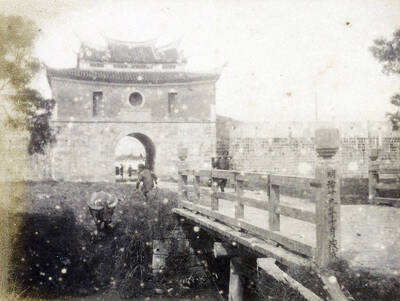
June 9 to June 15 A photo of two men riding trendy high-wheel Penny-Farthing bicycles past a Qing Dynasty gate aptly captures the essence of Taipei in 1897 — a newly colonized city on the cusp of great change. The Japanese began making significant modifications to the cityscape in 1899, tearing down Qing-era structures, widening boulevards and installing Western-style infrastructure and buildings. The photographer, Minosuke Imamura, only spent a year in Taiwan as a cartographer for the governor-general’s office, but he left behind a treasure trove of 130 images showing life at the onset of Japanese rule, spanning July 1897 to
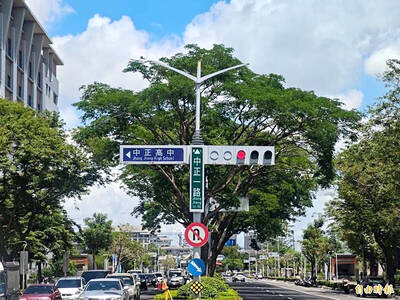
One of the most important gripes that Taiwanese have about the Democratic Progressive Party (DPP) is that it has failed to deliver concretely on higher wages, housing prices and other bread-and-butter issues. The parallel complaint is that the DPP cares only about glamor issues, such as removing markers of Chinese Nationalist Party (KMT) colonialism by renaming them, or what the KMT codes as “de-Sinification.” Once again, as a critical election looms, the DPP is presenting evidence for that charge. The KMT was quick to jump on the recent proposal of the Ministry of the Interior (MOI) to rename roads that symbolize

On the evening of June 1, Control Yuan Secretary-General Lee Chun-yi (李俊俋) apologized and resigned in disgrace. His crime was instructing his driver to use a Control Yuan vehicle to transport his dog to a pet grooming salon. The Control Yuan is the government branch that investigates, audits and impeaches government officials for, among other things, misuse of government funds, so his misuse of a government vehicle was highly inappropriate. If this story were told to anyone living in the golden era of swaggering gangsters, flashy nouveau riche businessmen, and corrupt “black gold” politics of the 1980s and 1990s, they would have laughed.
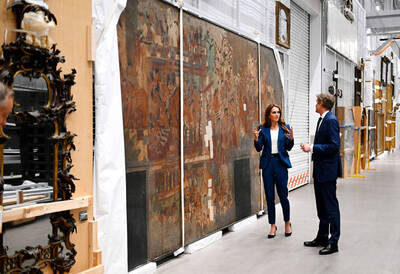
Imagine being able to visit a museum and examine up close thousand-year-old pottery, revel alone in jewelry from centuries past, or peer inside a Versace bag. Now London’s V&A has launched a revolutionary new exhibition space, where visitors can choose from some 250,000 objects, order something they want to spend time looking at and have it delivered to a room for a private viewing. Most museums have thousands of precious and historic items hidden away in their stores, which the public never gets to see or enjoy. But the V&A Storehouse, which opened on May 31 in a converted warehouse, has come up


 RSS
RSS