


Taiwanese actress Rene Liu's (劉若英) latest film to screen in Taiwan is the romantic comedy Migratory Birds (候鳥), which has been produced in cooperation with Oscar-nominated scriptwriter Wang Hui-ling (王蕙玲) and producer Hsu Li-kong (徐立功). Advance tickets are already on sale, with the inclusion of a promotional gift -- a VCD of Liu, also a talented songstress, performing the theme song. Stock is limited, so Rene Liu fans are urged to get their tickets for Migratory Birds soon.
Another associated product is the movie soundtrack, now available on CD. The theme music was written and produced by local pop band Mayday (五月天). Some of the CDs include free tickets to the film.

PHOTO: COURTESY OF ZOOM HUNT
Migratory Birds deals with the lives of Chinese immigrants living in Western cities, which has proved a recurring theme in contemporary Taiwan and Hong Kong films. Most of these films have focused on the often tragic lives and the feelings of homesickness felt by these members of the Chinese diaspora.
But on this occasion, first-time director Ding Yar-ming (丁亞民), who has made his name as a scriptwriter, presents a light and humorous look at how Taiwanese immigrants adjust to life in Vancouver, especially regarding the subjects of extra-marital affairs and sex.
Rene Liu has starred in numerous local box office success stories such as The Personals (徵婚啟事) and Fleeting by Night (夜奔). She has recently completed shooting on Double Vision (雙瞳), a big-budget production funded entirely by Columbia Asia Productions.
Liu plays a young housewife left alone with a two- year-old son in Vancouver. She is torn between two men -- her businessman husband who shuttles between Shanghai, Vancouver and Taipei, and a liberal-minded, laid-back Canadian man.
Actor Michael Teigen, who plays the role of Sean in the film, looks like a taller and slimmer Russell Crowe. He gives Liu's character a sweet memory when they dance hand in hand in the light of the beautiful sunset of Vancouver's port. Liu's husband is played by Huang Pin-yuan (黃品源) who is himself also a pop singer. His character, despite his hectic travel schedule, is not bored nor alone, meeting a girl from China on the plane from Vancouver to Shanghai.
Migratory Bird is another presentation of Hsu Li-kong and his Zoom Hunt International (縱橫國際影視), which gained recognition by producing Crouching Tiger, Hidden Dragon (臥龍藏虎). In Migratory Birds, Hsu again cooperates with his old partner, Crouching Tiger scriptwriter Wang Hui-ling, who is now living in Vancouver.
Director Ding, the writer and director of famous TV dramas such as April Rhapsody (人間四月天), is also an immigrant to Vancouver. Together they present a funny and intriguing new immigration story based upon their own observations of life in Vancouver. Pre-release tickets are available online at url:http://ticket.acer121.com
Film Notes
What: Migratory Birds (
When: July 14
Where: Taipei: Majestic, Carnival, Scholar Theaters
Tainan: Yanping Theater
Kaohsiung: Cannes Theater
Other: English subtitled screenings will be shown at 9pm every night at Majestic Theater, Taipei
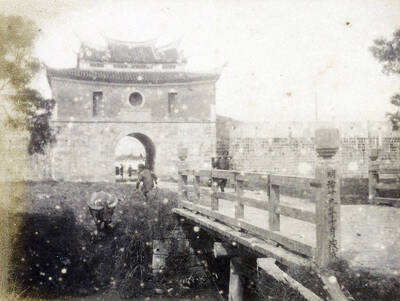
June 9 to June 15 A photo of two men riding trendy high-wheel Penny-Farthing bicycles past a Qing Dynasty gate aptly captures the essence of Taipei in 1897 — a newly colonized city on the cusp of great change. The Japanese began making significant modifications to the cityscape in 1899, tearing down Qing-era structures, widening boulevards and installing Western-style infrastructure and buildings. The photographer, Minosuke Imamura, only spent a year in Taiwan as a cartographer for the governor-general’s office, but he left behind a treasure trove of 130 images showing life at the onset of Japanese rule, spanning July 1897 to
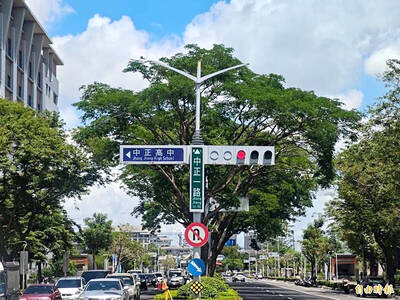
One of the most important gripes that Taiwanese have about the Democratic Progressive Party (DPP) is that it has failed to deliver concretely on higher wages, housing prices and other bread-and-butter issues. The parallel complaint is that the DPP cares only about glamor issues, such as removing markers of Chinese Nationalist Party (KMT) colonialism by renaming them, or what the KMT codes as “de-Sinification.” Once again, as a critical election looms, the DPP is presenting evidence for that charge. The KMT was quick to jump on the recent proposal of the Ministry of the Interior (MOI) to rename roads that symbolize

On the evening of June 1, Control Yuan Secretary-General Lee Chun-yi (李俊俋) apologized and resigned in disgrace. His crime was instructing his driver to use a Control Yuan vehicle to transport his dog to a pet grooming salon. The Control Yuan is the government branch that investigates, audits and impeaches government officials for, among other things, misuse of government funds, so his misuse of a government vehicle was highly inappropriate. If this story were told to anyone living in the golden era of swaggering gangsters, flashy nouveau riche businessmen, and corrupt “black gold” politics of the 1980s and 1990s, they would have laughed.

It was just before 6am on a sunny November morning and I could hardly contain my excitement as I arrived at the wharf where I would catch the boat to one of Penghu’s most difficult-to-access islands, a trip that had been on my list for nearly a decade. Little did I know, my dream would soon be crushed. Unsure about which boat was heading to Huayu (花嶼), I found someone who appeared to be a local and asked if this was the right place to wait. “Oh, the boat to Huayu’s been canceled today,” she told me. I couldn’t believe my ears. Surely,


 RSS
RSS