

Washington is increasingly treating pharmaceutical security as a strategic priority. Just last week, the Hudson Institute hosted a discussion on financing a secure pharmaceutical supply chain, featuring US International Development Finance Corp chief policy officer Caroline Vik.
Earlier this year, Vik identified pharmaceuticals alongside critical minerals, semiconductors and batteries as supply chains that Washington wants to diversify. She described the institution as the US government’s “international strategic investment arm,” equipped with tools including debt and equity financing, loan guarantees and political risk insurance.
Taiwan should reassess its health partnership with the US. In 2020, during then-US secretary of health and human services Alex Azar’s historic visit to Taiwan, the nation and the US signed a memorandum of understanding (MOU) on health cooperation. The agreement formalized more than two decades of collaboration on infectious diseases, vaccine research, information sharing and other public health priorities. At the time, the COVID-19 pandemic created an urgent need for closer bilateral cooperation. Six years later, those priorities remain important, but the conception of health security has changed substantially.
COVID-19 exposed the vulnerabilities inherent in highly concentrated medical supply chains. Governments worldwide have since placed greater emphasis on diversifying supply chains and reducing overreliance on any single source of essential medicines, pharmaceutical ingredients and other critical health technologies.
The concept of pharmaceutical resilience is also expanding beyond manufacturing. In June, the US House Select Committee on China opened investigations into clinical trials conducted in China by five major pharmaceutical companies, including Merck, Pfizer and Eli Lilly. The inquiry raised questions about data protection and research practices, as well as the rapid concentration of early-stage drug development there.
One study cited in the investigation found that China’s share of global early drug development programs had risen from 8 percent in 2015 to more than 32 percent in 2024, while the US’ share fell from 48 percent to about 37 percent.
The broader lesson applies to all countries: No critical component of a health system, whether manufacturing, research or clinical development, should become excessively concentrated in any single market.
Taiwan and the US should respond to this changing environment by renewing their health MOU and making pharmaceutical resilience a central pillar of the next agreement. The foundation for expanding the partnership has already been established. The 2021 National Defense Authorization Act called for examining deeper Taiwan-US medical security cooperation. US Senator Tom Cotton and a bipartisan group of senators later introduced the US-Taiwan Public Health Protection Act, proposing an infectious disease monitoring center in Taiwan that could provide early warning of outbreaks across the Indo-Pacific region.
These initiatives treated Taiwan not merely as a recipient of US health cooperation, but as a contributor to regional health security. A renewed MOU could build on that principle in three areas.
First, the two sides should bolster critical medicine resilience by mapping vulnerabilities in essential medicines, active pharmaceutical ingredients and key starting materials, developing mechanisms for earlier detection of shortages and improving supply coordination during disruptions.
This should be a reciprocal partnership. Taiwan can contribute to more diversified US supply chains, but the US should also help Taiwan improve access to essential medicines during emergencies. For a nation vulnerable to disruptions of maritime and international supply routes, pharmaceutical resilience is integral to Taiwan’s national resilience.
Second, pharmaceutical security should be connected to the rapidly expanding Taiwan-US technology partnership. Taiwan cannot and should not seek to compete with major pharmaceutical producers on manufacturing scale alone. Its comparative advantages are different: world-leading semiconductor capabilities, an expanding artificial intelligence (AI) ecosystem, sophisticated hospitals, biomedical research, advanced manufacturing and extensive health data resources.
These strengths could support deeper cooperation in AI-assisted drug discovery, clinical research, precision medicine, health data applications and advanced pharmaceutical manufacturing. The goal should be to position Taiwan as a high-value node in a diversified and trusted pharmaceutical ecosystem, much as it has become indispensable to global technology supply chains.
Third, a renewed bilateral framework could eventually support cooperation with other trusted Indo-Pacific partners. India is an obvious candidate. Its pharmaceutical manufacturing capacity could complement US innovation and capital, and Taiwan’s strengths in technology, clinical research and advanced manufacturing. Such cooperation could also draw on the strategic financing tools that Washington is increasingly considering to bolster critical supply chains.
The objective should not be pharmaceutical decoupling, but pharmaceutical resilience: building enough diversity and redundancy that disruption in one part of the system does not threaten access to essential medicines elsewhere.
The MOU in 2020 responded to the health security challenge of its time. Six years later, Taiwan and the US need an updated framework that reflects the challenges they are facing now.
The foundations of trust and cooperation are already in place. What is needed now is a renewed agenda. Renewing the Taiwan-US health MOU would reorient the bilateral partnership from a framework centered on pandemic preparedness toward one anchored in pharmaceutical resilience.
Hanson Wu is a Taiwan-based healthcare policy professional with experience in pharmaceutical policy, health security and public affairs. He is a graduate researcher of healthcare policy at National Taiwan University.
Beijing’s National Security Commission coordinates 50,000 to 100,000 Taiwanese informants via gray-zone tactics to alter elections through covert financing, criminal proxies, digital blackmail, and street intimidation. To secure the vote, this article proposes shifting from a top-down military model to a comprehensive Whole-of-Society Deterrence Framework. Central to this defense is a proposed Taiwanese Democratic Resilience and Whole-of-Society Omnibus Security Bill, turning open democratic systems into counterintelligence defenses against espionage and United Front Work Department (UFWD) operations. Below are key proposed gap fillers. The current Anti-Infiltration Act (反滲透法) is reactive, tracking illicit cross-strait capital only after distribution. This structural delay can leave
During a recent visit to Shenzhen, China, entrepreneur Elon Musk participated virtually in a technology summit held in the US. In his remarks, he expressed great admiration for China’s economic and technological development and stated that “probably at some point in the coming years, there will be some geopolitical bumps in the road over a certain country that starts with the letter T.” Although Musk did not explicitly name the country, his comment has been widely understood as referring to Taiwan. This was not the first time that Musk showed a poor understanding of relations across the Taiwan Strait. He previously
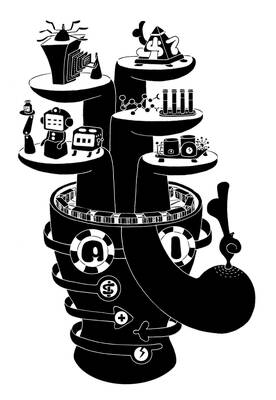
It was not immediately clear whether I was stepping into the past or the future when I got a peek at a computer that took up an entire room. As in quantum mechanics, it felt as if two possibilities could exist at once. At a research facility on the outskirts of Tokyo, I donned a hair net, blue plastic coverings over my shoes and a lab coat before entering an air-shower chamber to blast off residual dust. Then, I got to gawk at the massive collection of neatly organized cords, lasers housed in thick metal boxes and giant tanks of helium
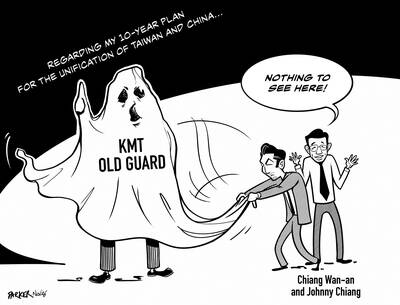
EDITORIAL CARTOON


 RSS