


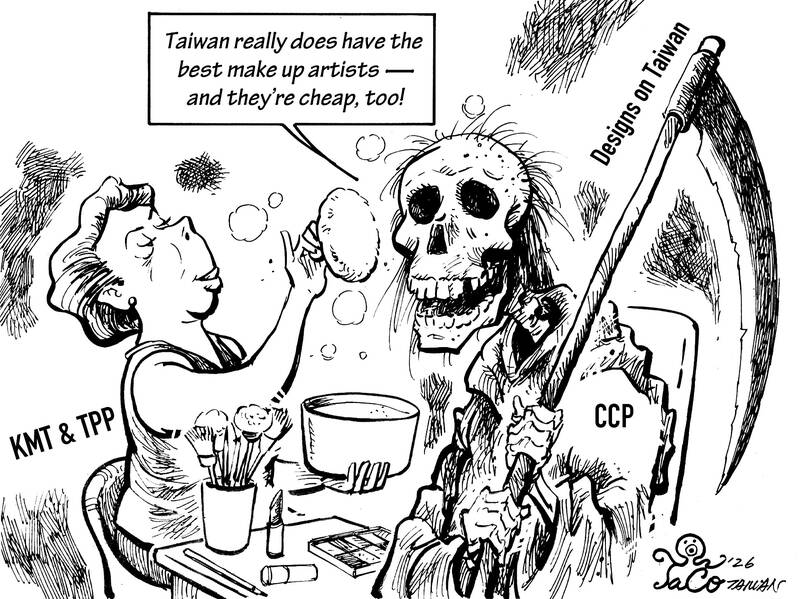
Taiwan might just give up. That’s the argument Simon Shuster made in The Atlantic’s October issue. The US is unreliable, the Chinese Nationalist Party (KMT) leadership is aligned with the Chinese Communist Party (CCP), and Taiwan does not have the military capability to defend itself in a prolonged war without help. What hope does Taiwan have? Quite a bit more, in fact, than Shuster lets on. Shuster points to genuine problems. The first Donald Trump administration had a mostly positive record on Taiwan policy. It regularized the arms sales process, enhanced the military-to-military relationship, and treated Taiwan more like a normal
On Oct. 10, 1911, gunfire in Wuchang (武昌) shattered the stillness of late-Qing China. What began as a regional uprising quickly ignited a chain reaction across the empire, toppling a dynastic order that had endured for more than two millennia and ushering in one of Asia’s first republics — the Republic of China (ROC). From that moment, the 10th day of the 10th month became a date of epochal significance, not merely in Chinese history, but in the broader arc of Asia’s encounter with modernity. Yet today, as Taiwan marks Double Ten National Day, the holiday’s meaning has undergone a transformation
A Facebook post by Taipei Mayor Chiang Wan-an (蔣萬安) earlier this month achieved record levels of engagement — although perhaps inadvertently. In it, he attacked Democratic Progressive Party (DPP) Legislator and Taipei mayoral candidate Puma Shen (沈伯洋) for an op-ed published in 2014 discussing drug harm reduction policies. In attempting to stir up fear with talk of community centers, drugs and needles, Chiang’s comment section exploded. More than 100,000 comments poured in within the first two hours; more than 330,000 after the first 12; and more than 400,000 by noon the following day. Rather embarrassingly, many commenters made a point
Last year, Legislative Speaker Han Kuo-yu (韓國瑜) turned the Double Ten National Day ceremony into a platform for grievances against the government. Yesterday, standing before the president and foreign dignitaries, he warned against Taiwan becoming a “false democracy, in reality a dictatorship.” Then he called for unity. Democratic leaders must tolerate criticism, even on ceremonial occasions, but Han misused his position and a national celebration to insinuate that Taiwan’s elected president was steering the country toward dictatorship and cast himself as a statesman offering reconciliation. Han asked how Taiwan’s security should be examined, using a medical analogy. If he insists on playing



 RSS
RSS