

The Chinese Nationalist Party (KMT) on Saturday held a “I am human, I oppose a toxic Taiwan” rally on Ketagalan Boulevard, with a self-claimed turnout of 150,000 participants. They called for the president to apologize and the premier to step down over a food safety scandal involving the carcinogen benzopyrene found in cooking oil produced by Central Union Oil Corp (CUOC).
The KMT said the central government did not properly deal with the tainted oil scandal — sacrificing public health and not apologizing for it — while some accused the government of initially covering up the issue.
The rally was suggested by Taipei Mayor Chiang Wan-an (蔣萬安) on July 17, shortly after city councilors asked him why he missed more than 70 percent of the city’s food safety meetings. He on the same day visited KMT Chairwoman Cheng Li-wun (鄭麗文), who took over the initiative and called for the demonstration to be held after the scheduled KMT National Party Congress on Saturday afternoon.
Chiang invited KMT heavyweights to the rally, including Taichung Mayor Lu Shiow-yen (盧秀燕) and Legislative Speaker Han Kuo-yu (韓國瑜). Meanwhile, Taipei City Councilor Yang Chih-tou (楊植斗) and three other KMT city councilor candidates staged a “relay hunger strike” on Ketagalan Boulevard from July 19, which some have described as a joke due to their apparent lack of determination and seriousness.
Some protesters expressed their discontent by echoing chants during the rally, but the KMT’s actions in the name of “guarding food safety” over the past week have become a circus of grandstanding.
The theme of the rally is unclear — was it “demanding better food safety” or “tracing the root cause and holding those accountable”? — but the KMT’s intended goals are clear: fearmongering, scapegoating and fanning public anger, in an attempt to gain an edge in the upcoming elections.
No one denies the importance of food safety, but it is achieved through well-established systems and regulations based on science-based standards and methods, as well as clear oversight responsibilities and thorough execution — such as routine meetings to track risks, inspections and penalties. It is not attained by political stunts, buck-passing or cutting Food and Drug Administration (FDA) budgets, which is what the KMT has been doing during the current oil scandal.
Lu and Chang have been accused of neglecting their duties of overseeing oil production, as CUOC and its three main oil companies are in Taichung. Taichung only inspected CUOC’s oil plants once and had not tested for benzopyrene in the past eight years. Taipei has no major oil plants, but it has not conducted benzopyrene tests for cooking oil products in five years.
In stark contrast, critics said Tainan and Kaohsiung, where two of Taiwan’s major raw cooking oil manufacturers are located, have inspected oil plants 19 and six times respectively. Tainan has also tested for benzopyrene 32 times, while Kaohsiung has tested oil products 18 times. The mayors of both places are from the Democratic Progressive Party (DPP).
Although Taiwan has a relatively strict standard for benzopyrene in human food-grade oils and fats — no more than 2 parts per billion (ppb), compared with China’s 10ppb and other countries that do not impose a limit — local governments’ failure to thoroughly conduct routine inspections and tests might result in increased food safety risks.
Moreover, KMT heavyweights and those with an eye on the upcoming elections have chosen to ignore the facts, and instead put on a loud and empty political show filled with their own cheap applause and dramatic posturing, hoping to score political points.
As the KMT hopes to unseat the DPP government, Chiang and Lu are shifting blame and testing their nationwide appeal, possibly to best position themselves as the party’s presidential nominee; Cheng is securing her leadership position; and Han and KMT caucus whip Fu Kun-chi (?) are acting as if they genuinely care about food safety by pledging to amend laws.
Meanwhile, the FDA and Cabinet quickly responded to the scandal by inspecting CUOC’s plant, recalling tainted oil products and potentially problematic items, tracking the flow of the oil products, reviewing the systems and proposing legal amendments to food safety. They also launched an independent third-party investigation to trace the cause and hold the guilty parties accountable, and handed findings to prosecutors.
As the KMT’s rally turned out to be essentially a political campaign event, poorly packaged as concern for food safety, it has decided to try again by calling for another demonstration against “driving under the influence” on Saturday. The KMT should be more honest and stop trying to fool the public; its self-serving intentions are too easy to recognize.
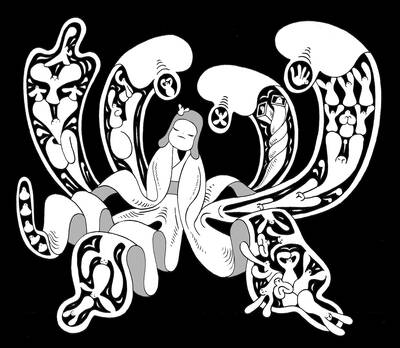
When people lose faith in the future, they begin looking for answers in the past. As economic opportunities narrow, China’s Gen Z is finding comfort in an idealized version of the imperial era. That might look like a harmless social media trend, but it is a symptom of something much deeper: A disillusioned generation, fearing it will not do as well as the ones before it. Under Chinese President Xi Jinping (習近平), the nostalgia has become a valuable political tool. The Chinese Communist Party (CCP) once derived much of its legitimacy by rejecting imperial China. During the Cultural Revolution, temples were destroyed,
The strategic architecture of East Asia and the Western Pacific is routinely criticized as inherently fragile due to the lack of a collective, multilateral defense treaty like NATO. Instead, the region relies on the US-led “hub-and-spokes” network of bilateral alliances. This fragmented structure exists for pragmatic reasons: America’s regional partners — including Japan, South Korea, the Philippines, Australia and New Zealand — possess vastly disparate threat perceptions, historical grievances and constitutional limits. Consequently, when then-Japanese prime minister Shigeru Ishiba revived the concept of an “Asian NATO” in October 2024, his proposal was swiftly dismissed as geopolitically unrealistic. Yet, this perceived vulnerability
Taipei LAST MONTH reached the dizzying heights of the artificial intelligence (AI) boom. Jensen Huang (黃仁勳) delivered a almost two-hour long keynote at Nvidia’s GTC Taipei, touting the arrival of the era of agentic AI, AI factories, AI PCs and physical AI, and crowds filled the halls of Computex; once again, Taiwan found itself at the center of the global technology stage. Among the most attention grabbing displays were the humanoid robots. No longer confined to science fiction scenarios, as Huang said, “useful AI has arrived.” It is set to move into factories, warehouses, hospitals, care facilities and hazardous work
Chinese Nationalist Party (KMT) Legislator Weng Hsiao-ling (翁曉玲) has proposed cutting more than NT$1 billion (US$30.9 million) from the Ministry of Culture’s proposed budget during the second round of legislative reviews. The proposal would eliminate the ministry’s entire NT$47.38 million public communications budget and reduce funding for than 30 other items covering operations, personnel, administration, equipment and subsidies. The ministry said the cuts would affect funding for performing arts groups, visual arts organizations, publishers, bookstores, community cultural projects and local museums, adding that they would undermine efforts to strengthen Taiwan’s cultural sector and expand its international presence. Cultural organizations have criticized the


 RSS
RSS