


“I have not seen a desk with bent knees, although I have seen intellectuals who kneel,” Lam Wing-kei (林榮基), a self-exiled Hong Kong bookseller who passed away in Taipei on Thursday last week, said in 2016. He was referencing a poem written by Shu Xiangcheng (舒巷城) at a news conference at which he described how he was kidnapped in China.
Lam, who founded Causeway Bay Books in 1994, and several of his colleagues disappeared in 2015. He was detained in China for eight months and was allowed back into Hong Kong on condition that he retrieve and turn over a hard drive listing the bookstore’s customers. The bookstore, known for selling gossip-filled tomes about Chinese leaders, was popular among Chinese tourists.
After smoking three cigarettes outside the Kowloon Tong Station, he decided to skip bail and head to the Legislative Council in Admiralty, where he testified about how he was illegally detained and spent months being interrogated after crossing the border.
“I read way more than others. If I do what they told me to, wouldn’t all that be a waste?” he told the news conference 10 years ago.
He said he did not want to betray his fellow publishers and the thousands of Hong Kongers who took to the streets calling for his release.
His bookstore was closed and he was put on a wanted list by Chinese authorities for “illegal book sales.” There was never such a crime in Hong Kong, he said. He fled to Taiwan in 2019 after the Hong Kong Government announced its plan to introduce a bill that would authorize extradition to China.
Once the Chinese authorities have a target, they never cease their intimidation efforts. A year after he relocated to Taiwan, Lam was attacked by two unidentified men who threw red paint at him near his new bookstore in Taipei. He was also threatened on Facebook by someone identified as a member of the China Unification Promotion Party warning him to be “careful.”
“Hong Kongers are not afraid,” he said of the incidents.
The Taipei bookstore, which was opened in 2020, aimed to “safeguard freedom of press for dissidents” and to “connect Hong Kongers and Taiwanese by providing a platform for exchanges on cross-strait affairs,” he wrote on a fundraising Web site. “The bookstore will exist for free souls.”
While he was viewed as a dissident, a freedom fighter and a symbol of resistance, he called himself “merely a bookseller” who buried himself in piles of books and slept on a bunk bed under banners that read: “Taiwanese independence” and “Free Hong Kong, revolution now.”
Lam was indeed an intellectual. A concept defined by Palestinian academic Edward Said as an exiled “amateur” and outsider who is driven by an unyielding commitment to justice and human freedom. They raise moral, political and historical questions, challenge dominant narratives and give a voice to the marginalized. Most importantly, they speak truth to power.
Lam, who entered the publishing industry at 30, saw books as a medium to examine reality. “Only through reading can we understand why all of this would happen,” he wrote, explaining why he wanted to relaunch his bookshop in Taipei.
“The concept of human rights does not exist in Chinese culture,” he said. “These books allow us to know how the Chinese authoritarian regime is intertwined with such culture.”
Ironically, he called the books that got him into trouble “crap,” saying they were all about gossip. Books on history, society and culture were the ones he really wanted to sell.
“Opening a bookstore is not just a business. It is about providing room for exchange of different ideas, so that we can understand China and know how we can face it,” he said. “We Hong Kongers have to stand up straight with our backbone,” he said.
They were not empty words. Lam lived up to his convictions until the end. He took a leap of faith at every crossroad — disclosing the months-long torture he suffered in China, fleeing the territory where he lived for decades and raising funds to continue his vocation in a foreign land.
He had the integrity and courage to be a public intellectual. He acted alone for something larger than himself and spoke the inconvenient truth in the face of state power.
Lam, who naturalized in 2024, died as a Taiwanese on the nation’s soil. Taiwan, described by Lam as “a place with freedom and democracy,” must not disappoint him.
For years, international media and residents have lamented the treacherous conditions of Taiwan’s streets. Authorities have rolled out various crackdowns and stricter law enforcement. Yet, despite a staggering NT$14.2 billion (US$444.7 million) collected in traffic fines in 2024 alone, Taiwan’s roads remain as dangerous as ever. This exposes a fundamental flaw in Taiwan’s approach to traffic safety: an over-reliance on punitive measures over structural reform. A recent proposal by lawmakers to hold a referendum earmarking traffic fine revenue for road safety infrastructure and public transport subsidies is a step forward. It challenges the habit of treating traffic enforcement as a
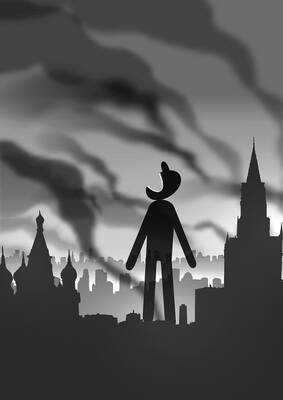
With Russia under pressure on multiple fronts, Russian President Vladimir Putin finds himself in a tighter spot than at any other moment of his quarter-century in power. Putin remains firmly in charge of the Kremlin, but there is a growing risk that he will try to escape his current predicament by escalating his conflict with the West. Putin’s first problem is that his war in Ukraine has no momentum. Recent territorial gains have come slowly and at the cost of enormous loss of life (450,000 killed, almost eight times the US body count in Vietnam) and economic damage. After four
Japan and China are not at war, but their relationship is moving toward a dangerous new stage. The immediate friction is visible in missiles, sanctions and detentions. The deeper driver is Taiwan. Three developments show how central Taiwan has become. First, Japan is preparing to host expanded US missile deployments in its southwestern islands near Taiwan, including the Typhon system. That deployment is meant to strengthen deterrence in the event of a Taiwan contingency, but it also makes Japan a more direct part of the strategic contest with China. Second, Beijing has responded with pressure of its own. China has
As science, apparently, has proven that a frog in water subjected to increasing heat will, in fact, jump, so then Taiwan, Japan, the Philippines, and the United States are not condemned to suffer occupation and defeat from the various incrementalist strategies of the Chinese Communist Party (CCP) and its People’s Liberation Army (PLA). CCP/PLA incrementalism in the South China Sea (SCS) has won a great victory, starting in January 1974, when PLA Maritime Militia forces killed 75 South Vietnamese troops to seize 7.75 square kilometers of land in the Paracel Islands (西沙群島) — and no one responded. Fifty-two years later, by moving


 RSS
RSS