


Prosecutors on Wednesday launched an investigation into Taiwan People’s Party (TPP) Chairman Huang Kuo-chang (黃國昌). Huang has found himself subject of a string of allegations in recent months, mostly accusations of behavior considered below the level of an elected representative, and definitely which a political party leader is expected to remain above.
These behaviors betray a troubling pattern, as do his responses to them: denial, obfuscation, distraction, blame-shifting and accusations of political persecution.
If proved, Wednesday’s allegations are very serious indeed. While the investigation continues, no conclusions can be drawn, but we can look at an emerging pattern of behavior.
Political commentator Chang Ming-yu (張銘祐) filed a complaint on Tuesday accusing Huang of contravening the National Security Act (國家安全法) and the Criminal Code.
The complaint refers to allegations that Huang had removed classified documents from a confidential meeting of the Legislative Yuan’s Foreign Affairs and National Defense Committee in which Minister of National Defense Wellington Koo (顧立雄) provided details of the NT$1.25 trillion (US$39.6 billion) special defense budget involving US arms procurement and Taiwan’s weapons development and production.
Huang does not deny removing the documents. According to his account, he had accidentally mixed them together with other documents and that, as soon as he realized his error, within 30 seconds of leaving, went back to the room to return them.
Huang’s account of events was later questioned after surveillance footage showed that Huang had been outside of the room in possession of the confidential documents for over a minute and that part of the time had been in an area not covered by the cameras.
Other accounts say that, rather than Huang returning on his own initiative, a military officer was sent after him to fetch the documents when the committee chair realized they were missing.
All of this could be put down to partisan accusations, bred by a lack of trust between the parties. The issue is that Huang has a history of pushing the boundaries of legality and acceptable behavior and of providing accounts that are easily refuted.
In June last year, the Taipei District Prosecutors’ Office launched an investigation into an incident in which Huang played a recording during a hearing of the Judiciary and Organic Laws and Statutes Committee, purporting to be of a prosecutor harshly interrogating a suspect. When accused of having played confidential material in public, Huang said that he had never said the recording was from an actual interrogation and that it was just meant to be an “illustrative example” of a “threatening tone and insulting language.”
In September of last year, Huang was questioned by Taipei City police after a rally he had organized resulted in injuries to eight police officers, during which he had been seen with his arm around the neck of police officer Chen Yu-chien (陳育健). Huang produced a photograph of Chen smiling at the time as evidence that harm was neither meant nor done. It was later revealed that the photograph had been manufactured using artificial intelligence.
In November last year, Huang was involved in allegations that he had orchestrated a “paparazzi network” to dig up dirt on political rivals following a report by Mirror Media. His response was to divert attention and accuse the prosecutors’ office of colluding with media affiliated with the pan-green camp.
Blame shifting is another arrow in Huang’s quiver when responding to allegations of questionable behavior. During a livestream on Wednesday, talking of his “careless” removal of the confidential documents, he said that the committee staff “should have retrieved all the documents in front of legislators when we left the room.”
It is possible that Huang had made a genuine mistake when he removed the documents. Unfortunately, his past form of forced errors and flimsy conceits make it difficult to take him at his word and his consistent modus operandi of shifting blame and shouting persecution does not encourage trust.
Beyond the allegations of removing confidential materials involving national defense, Huang is seeking election for New Taipei city mayor. This should set off alarm bells, as a stint as mayor is generally regarded as a stepping stone for a shot at the presidency.
If he is willing to resort to such underhanded tactics and obfuscations when called out as the leader of a minor opposition party, what would he be capable of with his hands on the state machinery?
KMT Chairwoman Cheng Li-wun’s (鄭麗文) recent visit to Beijing and her upcoming visit to Washington will serve as a high-level test of her diplomatic mettle. In Beijing, Cheng was received with symbolic gestures, a warm reception, and high-level access. In Washington, she will receive far less pomp and far sharper questions about the KMT’s vision for the future of Taiwan. Her challenge will be to persuade Washington that the KMT’s engagement with China can coexist with strong deterrence. Cheng’s April 7-12 visit to mainland China coincided with an intense period of conflict in Iran. Despite the strategic significance of Cheng’s trip,
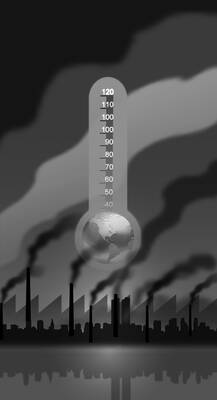
The closure of the Strait of Hormuz has sent the vast Asian chemicals industry into a tailspin. Deprived of the likes of Qatari natural gas and Saudi Arabian oil, the region’s fertilizer and plastics plants are slowing production or even shutting down. Everywhere except China, that is. In petrochemicals, China is unique. As well as a traditional industry that uses oil and gas as feedstock, it has parallel output that relies on its abundant domestic coal. Unsurprisingly, India and other regional powers want to copy and paste the Chinese method. This would not be easy — or climate friendly. The
Indonesian President Prabowo Subianto says he knows how to fix the problems facing Indonesia. Yet his economic mismanagement and authoritarian tendencies are steering the nation toward a familiar mix of currency instability and political chaos. The world’s fourth-most populous nation risks reversing the hard-won democratic and business reforms that came after the Asian Financial Crisis in 1997. At that time, the rupiah collapsed and the political upheaval that followed forced former president Haji Mohamed Suharto from power. Prabowo’s administration is ignoring similar warning signs. That disconnect was apparent in a national address on Wednesday, when Prabowo projected the swagger that has
“Of course you can choose not to be Taiwanese, just do not stay here,” chairwoman of Taipei 101 operator Taipei Financial Center Corp Janet Chia (賈永婕) said in an online interview with local entertainer Tai Chih-yuan (邰智源), triggering intense discussion on social media, with politicians across party lines weighing in. In the interview, which was aired on May 14, Chia and Tai’s discussion over a meal in Taipei 101 covered Chia’s career change from entertainer to chairwoman and US climber Alex Honnold’s free solo climb up the Taipei 101 building. During the interview, Chia said, “Being on this land, we


 RSS
RSS