


What comes to mind when you hear the words “lab leak theory”? Most of us would think “COVID-19,” the disease that has so disrupted our lives for two years now.
Many would then attach a modifier to it like “discredited” or “debunked.” But those who do would be far behind the curve. Other than the fact that it came from China, the origin of COVID-19 remains an open question — even among the scientific community.
At the outset, it is important to sort out exactly what is at issue here. The debate is not over whether the virus was created in China and purposely released to sow biological chaos. It is not over whether it was engineered at all. It may have been. The question is whether the virus developed and spread naturally from bats in a cave in southern China to humans a thousand miles away in a Wuhan market, or whether it accidentally leaked from research facilities in Wuhan renowned for studying similar viruses.
In Viral: The Search for the Origin of COVID-19, Dr. Alina Chan from the Broad Institute at the Massachusetts Institute of Technology and science writer Matt Ridley objectively lay out the cases for both theses. In making the case for natural origins, they reference the possible motivations for those promoting the lab theory. Among this crowd, they count “critics of the Chinese Communist Party… will(ing) to believe any theory that blames the Chinese state.”
As the old Hollywood line goes, “I resemble those remarks.” Given its generally terrible track record with the truth, the burden of proof must fall on the Chinese Communist Party (CCP), and anyone accepting its version of the facts.
Since the news of COVID-19 first became public at the end of 2019, the lies, coverups, deflection, stonewalling, and crackdowns on whistleblowers have made it impossible to believe China-friendly explanations for the outbreak. And I’m just talking about the natural origin thesis, not the more outlandish ones offered by the government, like those involving Fort Detrick or American involvement in the Military World Games. Even Anthony Fauci, the chief medical adviser to the President of the United States, acknowledged in May 2021 that he was “not convinced” of the virus’ natural origin — implying the possibility of a lab leak.
The CCP’s tenuous relationship with the truth matters, not just for its impact on global public health — which should now be obvious to everyone — but across the board.
Take its politics and military.
Last year’s “Chinese Transparency Report” from The Heritage Foundation evaluates official Chinese transparency and seeks to fill in the very wide gaps with publicly available data. On politics, there is some extraordinary privately-compiled data out there — like MacroPolo’s “The Committee” and UC San Diego’s “Data Lab: CCP Elite Portal” — that improves visibility into the Chinese decision-making apparatus.
But despite all the fine work of independent researchers, no one really knows with any confidence how national security decisions are made in Beijing. All we know for sure is that their government white papers, annual reports, statements of ministries and government work reports are mere shadows representing real policy.
The information China provides regarding the development and budget of the People’s Liberation Army is also woefully insufficient to give a clear picture.
Knee-jerk defenders of Beijing may say, “Well, the US does the same thing.” Actually, no, it doesn’t. Of course, the American military keeps many things secret, but debates over its budget and efficacy are carried out in public. This requires release of an enormous amount of supporting documentation.
These things matter to international peace and security, because China’s military looms so large over the Western Pacific region. Transparency builds confidence. If China’s intentions are benign, there is no need to hide its capabilities. In the absence of transparency, it is only prudent for the rest of the world to prepare for the worst.
In particular, the combination of obscurity around decision making and military development puts Taiwan at great risk. We can make educated guesses about what China may or may not do on Taiwan, and when. But that is all they are, even the most educated among them.
This uncertainty is deeply destabilizing.
In February 2020, US Sen. Tom Cotton, (R-Ark.) gained the opprobrium of experts and political opponents when he suggested that COVID-19 may have originated in a biolab in Wuhan. Now, it turns out, he was just ahead of the curve.
But Senator Cotton said something else that has application well beyond COVID-19. “Because of China’s duplicity and dishonesty from the beginning,” he said, “we need to at least ask the question to see what the evidence says, and China right now is not giving evidence.”
On COVID-19 and other matters on which the world’s well-being depends, transparency in China is not improving. And the international community is much worse off for it.
Walter Lohman is the director of The Heritage Foundation’s Asian Studies Center.

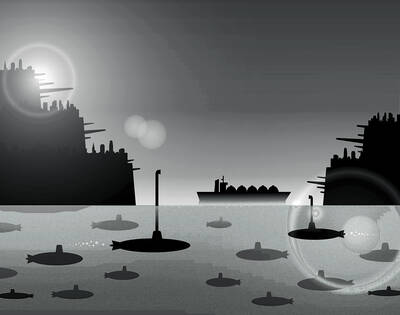
In the event of a war with China, Taiwan has some surprisingly tough defenses that could make it as difficult to tackle as a porcupine: A shoreline dotted with swamps, rocks and concrete barriers; conscription for all adult men; highways and airports that are built to double as hardened combat facilities. This porcupine has a soft underbelly, though, and the war in Iran is exposing it: energy. About 39,000 ships dock at Taiwan’s ports each year, more than the 30,000 that transit the Strait of Hormuz. About one-fifth of their inbound tonnage is coal, oil, refined fuels and liquefied natural gas (LNG),
On Monday, the day before Chinese Nationalist Party (KMT) Chairwoman Cheng Li-wun (鄭麗文) departed on her visit to China, the party released a promotional video titled “Only with peace can we ‘lie flat’” to highlight its desire to have peace across the Taiwan Strait. However, its use of the expression “lie flat” (tang ping, 躺平) drew sarcastic comments, with critics saying it sounded as if the party was “bowing down” to the Chinese Communist Party (CCP). Amid the controversy over the opposition parties blocking proposed defense budgets, Cheng departed for China after receiving an invitation from the CCP, with a meeting with
Chinese Nationalist Party (KMT) Chairwoman Cheng Li-wun (鄭麗文) is leading a delegation to China through Sunday. She is expected to meet with Chinese President Xi Jinping (習近平) in Beijing tomorrow. That date coincides with the anniversary of the signing of the Taiwan Relations Act (TRA), which marked a cornerstone of Taiwan-US relations. Staging their meeting on this date makes it clear that the Chinese Communist Party (CCP) intends to challenge the US and demonstrate its “authority” over Taiwan. Since the US severed official diplomatic relations with Taiwan in 1979, it has relied on the TRA as a legal basis for all
To counter the CCP’s escalating threats, Taiwan must build a national consensus and demonstrate the capability and the will to fight. The Chinese Communist Party (CCP) often leans on a seductive mantra to soften its threats, such as “Chinese do not kill Chinese.” The slogan is designed to frame territorial conquest (annexation) as a domestic family matter. A look at the historical ledger reveals a different truth. For the CCP, being labeled “family” has never been a guarantee of safety; it has been the primary prerequisite for state-sanctioned slaughter. From the forced starvation of 150,000 civilians at the Siege of Changchun


 RSS
RSS