


Sales of personal computers were hit by the global economic slowdown last year, showing their first yearly decline since 1985, but analysts said a fourth-quarter buying spurt is reason for optimism.
Gartner Dataquest reported Friday that worldwide PC shipments totaled 128 million units last year, a 4.6 percent decline from 2000. In the US, sales fell 11.1 percent to 44 million units, the research firm said.
"The PC industry has not experienced such a difficult year since 1985 when worldwide PC shipments declined 2.3 percent, and US PC shipments dropped 21.8 percent," Dataquest said in a statement.
The figures confirmed a survey from International Data Corp, which said fourth-quarter global PC sales were down 6.7 percent from the same period a year earlier, to 34.2 million.
But IDC said the fourth quarter showed improvement, up 16.9 percent, over a dreadful third quarter.
"Hard times persist in the PC market, but vendors are working diligently to stimulate growth and the outlook has started to improve in the United States and Europe," said IDC analyst Loren Loverde.
`Seeds of recovery are being sown'
"We don't expect a rapid turnaround, but the seeds of recovery are being sown. Depending on the economic environment, growth in the PC market may pick up more rapidly toward the end of the year."
Dell was the only major manufacturer to exhibit sales growth, with its worldwide shipments up 18.3 percent as it moved past Compaq to become the leading vendor, Dataquest said.
According to IDC, the only region of the world to show year-on-year growth in the fourth quarter was the Asia Pacific region excluding Japan.
But IDC said the sequential growth figure -- comparing the fourth quarter to the prior quarter -- provides a better indicator of the market's performance, with current sales "only slightly behind the average fourth-quarter sequential growth rate" of 19.8 percent from 1995 through 2000.
In the US, the fourth quarter was 10.1 percent lower than a year ago, but up 6.1 percent from the third quarter.
"US consumers finally pulled out some of the stops in the fourth quarter," said Roger Kay at IDC.
"After four quarters of subdued buying, consumers in the United States ended the year with a burst of activity, particularly in retail."
Dataquest analysts were more guarded in their outlook, expecting worldwide PC shipments to decline four percent in the first quarter of 2002 but to finish the year with a growth rate of 4 percent.
"While there is a mood of optimism in the industry, having made it through the bloodbath that was 2001, evidence for an immediate improvement in the first quarter of 2002 is far from clear," Charles Smulders said.
"On the positive side, it does not appear that the market is getting worse. We do not expect to see a significant upturn in growth until the fourth quarter of 2002. This based on an economic upturn in the second half of the year."
Separately, Dell issued an optimistic outlook for its own sales saying it expects shipments to show 50 percent sequential growth in the consumer market and revenue growth of about 40 percent for the quarter ending Feb. 1.

SECURITY: As China is ‘reshaping’ Hong Kong’s population, Taiwan must raise the eligibility threshold for applications from Hong Kongers, Chiu Chui-cheng said When Hong Kong and Macau citizens apply for residency in Taiwan, it would be under a new category that includes a “national security observation period,” Mainland Affairs Council (MAC) Minister Chiu Chui-cheng (邱垂正) said yesterday. President William Lai (賴清德) on March 13 announced 17 strategies to counter China’s aggression toward Taiwan, including incorporating national security considerations into the review process for residency applications from Hong Kong and Macau citizens. The situation in Hong Kong is constantly changing, Chiu said to media yesterday on the sidelines of the Taipei Technology Run hosted by the Taipei Neihu Technology Park Development Association. With

CARROT AND STICK: While unrelenting in its military threats, China attracted nearly 40,000 Taiwanese to over 400 business events last year Nearly 40,000 Taiwanese last year joined industry events in China, such as conferences and trade fairs, supported by the Chinese government, a study showed yesterday, as Beijing ramps up a charm offensive toward Taipei alongside military pressure. China has long taken a carrot-and-stick approach to Taiwan, threatening it with the prospect of military action while reaching out to those it believes are amenable to Beijing’s point of view. Taiwanese security officials are wary of what they see as Beijing’s influence campaigns to sway public opinion after Taipei and Beijing gradually resumed travel links halted by the COVID-19 pandemic, but the scale of
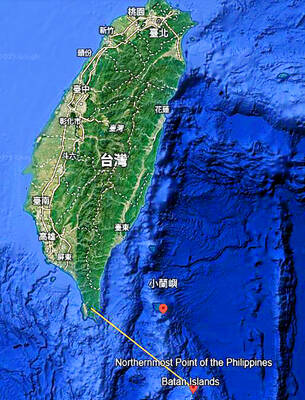
A US Marine Corps regiment equipped with Naval Strike Missiles (NSM) is set to participate in the upcoming Balikatan 25 exercise in the Luzon Strait, marking the system’s first-ever deployment in the Philippines. US and Philippine officials have separately confirmed that the Navy Marine Expeditionary Ship Interdiction System (NMESIS) — the mobile launch platform for the Naval Strike Missile — would take part in the joint exercise. The missiles are being deployed to “a strategic first island chain chokepoint” in the waters between Taiwan proper and the Philippines, US-based Naval News reported. “The Luzon Strait and Bashi Channel represent a critical access
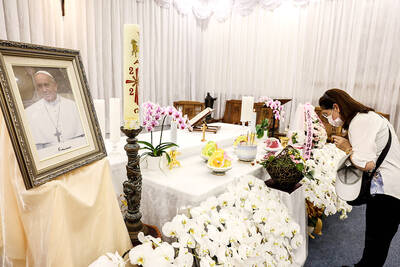
Pope Francis is be laid to rest on Saturday after lying in state for three days in St Peter’s Basilica, where the faithful are expected to flock to pay their respects to history’s first Latin American pontiff. The cardinals met yesterday in the Vatican’s synod hall to chart the next steps before a conclave begins to choose Francis’ successor, as condolences poured in from around the world. According to current norms, the conclave must begin between May 5 and 10. The cardinals set the funeral for Saturday at 10am in St Peter’s Square, to be celebrated by the dean of the College


 RSS
RSS