


Micron Technology Inc may pay as much as US$2.1 billion to buy Hynix Semiconductor Inc's memory-chip business, based on the price it agreed to pay for a Toshiba Corp plant in the US last month.
Micron, the No. 2 memory-chip maker, will pay US$300 million in cash and stock for Toshiba's plant, according to a filing with the Securities and Exchange Commission. Seven of Hynix's 13 plants make memory chips, the business Micron is seeking to buy.
"It's probably not that far off and within the range of about US$400 million per plant that we have said," said Hahn Soong-ho, a semiconductor analyst at HSBC Securities. "Hynix does have some facilities that are definitely more advanced than Toshiba and they [Micron] may have to give some kind of goodwill for getting a dominant market share."
In December, Micron said it would buy Toshiba's Dominion Semiconductor plant in Manassas, Virginia. The plant, which has 1,100 workers, produces 3.25 million units of 128-megabit DRAM chips. DRAMs are the main memory in personal computers and other kinds of consumer electronics.
Micron's filing with the SEC -- it said it planned to pay US$250 million in cash and the rest in stock -- was the first disclosure of the price it will pay for Toshiba's plant.
Boise, Idaho-based Micron will probably pay a fraction of the US$3.5 billion a DRAM plant using the most advanced technology costs to build from scratch, investors said.
"To expect them to pay market price -- say replacement value -- for the assets and to adopt debt is to believe in the fairy godmother," said Garry Mackenzie, director of Asian equities at Clerical Medical Investment Management in London.
Micron is among a handful of chipmakers worldwide retooling factories or building plants equipped to make chips from silicon wafers measuring 12-inches in diameter. Though the newer factories are more expensive, chipmakers such as Intel Corp hope eventually to reduce costs by yielding more chips from the raw material the finger-nail-sized devices are cut and packaged from.
Hynix has chip plants at two locations in South Korea and a memory-chip plant in Eugene, Oregon. It acquired some of its facilities when it purchased rival LG Semiconductor Co in 1999.
Micron and Hynix haven't revealed details of the financial terms being discussed. They also haven't said whether the negotiations involve an outright purchase of Hynix's chipmaking assets or a tie-up of a different form.
"Micron's evaluation of Hynix's assets is within the range that allows negotiations with creditors but that is a broad range," said Lee Duk-hoon, the president of Hanvit Bank, a Hynix creditor. "Talks between the two sides are proceeding smoothly."
Micron began talks with its South Korean rival last month as it continues to try to buy up the facilities of companies that have struggled to cope with the industry's 60 percent collapse in sales last year.
A Micron acquisition would yield it a 40 percent market share and more leverage to control price fluctuations that forced it into four consecutive quarters of losses.
Hynix reported losses of 3.7 trillion won (US$2.8 billion) in the first nine months of last year and owes banks and other lenders 8.6 trillion won, more than twice its market capital.
Some reports say Micron intends to buy other parts of Hynix's business. According to yesterday's Chosun Ilbo newspaper, Micron will offer US$3.2 billion for the seven plants and a fifth of the South Korean company's non-memory semiconductor business. The newspaper cited an unidentified official at the creditor-named Hynix restructuring committee.
Shin Kook-hwan, the head of the committee and the only official authorized to comment, was in a meeting and unavailable, his secretary said.
Hynix is being advised by Salomon Smith Barney Inc. Goldman Sachs Group Inc is working for Micron.
Salomon's Simon Parker, co-head of technology banking in Asia, wasn't available to comment. Sanjiv Misra, Salomon's head of investment banking in Asia, was also unavailable.
Separately, Yonhap News said creditors will make a counter-proposal to Micron after disagreeing with the US company's appraisal of Hynix's worth. The report didn't say what the offer was. Creditors considered Micron's offer and decided they can use part of it, Yonhap quoted an unidentified restructuring committee official as saying, without offering more details.

SECURITY: As China is ‘reshaping’ Hong Kong’s population, Taiwan must raise the eligibility threshold for applications from Hong Kongers, Chiu Chui-cheng said When Hong Kong and Macau citizens apply for residency in Taiwan, it would be under a new category that includes a “national security observation period,” Mainland Affairs Council (MAC) Minister Chiu Chui-cheng (邱垂正) said yesterday. President William Lai (賴清德) on March 13 announced 17 strategies to counter China’s aggression toward Taiwan, including incorporating national security considerations into the review process for residency applications from Hong Kong and Macau citizens. The situation in Hong Kong is constantly changing, Chiu said to media yesterday on the sidelines of the Taipei Technology Run hosted by the Taipei Neihu Technology Park Development Association. With

CARROT AND STICK: While unrelenting in its military threats, China attracted nearly 40,000 Taiwanese to over 400 business events last year Nearly 40,000 Taiwanese last year joined industry events in China, such as conferences and trade fairs, supported by the Chinese government, a study showed yesterday, as Beijing ramps up a charm offensive toward Taipei alongside military pressure. China has long taken a carrot-and-stick approach to Taiwan, threatening it with the prospect of military action while reaching out to those it believes are amenable to Beijing’s point of view. Taiwanese security officials are wary of what they see as Beijing’s influence campaigns to sway public opinion after Taipei and Beijing gradually resumed travel links halted by the COVID-19 pandemic, but the scale of
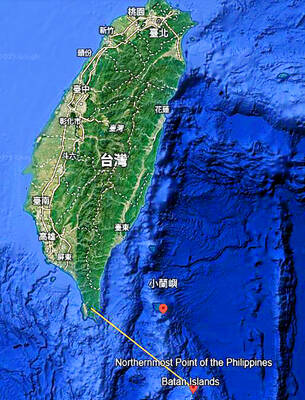
A US Marine Corps regiment equipped with Naval Strike Missiles (NSM) is set to participate in the upcoming Balikatan 25 exercise in the Luzon Strait, marking the system’s first-ever deployment in the Philippines. US and Philippine officials have separately confirmed that the Navy Marine Expeditionary Ship Interdiction System (NMESIS) — the mobile launch platform for the Naval Strike Missile — would take part in the joint exercise. The missiles are being deployed to “a strategic first island chain chokepoint” in the waters between Taiwan proper and the Philippines, US-based Naval News reported. “The Luzon Strait and Bashi Channel represent a critical access

Pope Francis is be laid to rest on Saturday after lying in state for three days in St Peter’s Basilica, where the faithful are expected to flock to pay their respects to history’s first Latin American pontiff. The cardinals met yesterday in the Vatican’s synod hall to chart the next steps before a conclave begins to choose Francis’ successor, as condolences poured in from around the world. According to current norms, the conclave must begin between May 5 and 10. The cardinals set the funeral for Saturday at 10am in St Peter’s Square, to be celebrated by the dean of the College


 RSS
RSS