


For makers of liquid crystal displays (LCDs) and people looking to buy them, 2001 is shaping up to be a very good year. Retail prices are bottoming out, the market is predicted to grow rapidly and IBM has just come up with a revolutionary manufacturing process that will likely shave millions off the cost of production.
"This year is the first year for LCD monitors," said David Pi (
"Last year only four to five percent of the market was taken up by LCDs," he said. "But that's changing very rapidly because the price structure has gone beyond what people could have imagined."
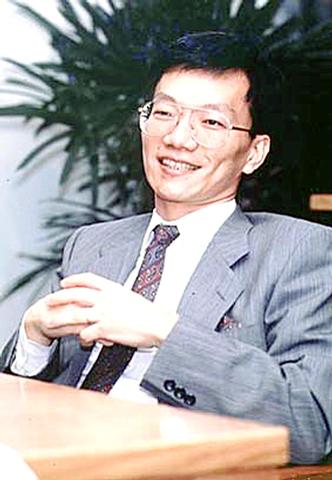
PHOTO: AG NEOVO
Indeed the price for traditionally costly LCD monitors has fallen steadily over the last six months on excess supply and, more recently, increasingly aggressive pricing by industry giants such as NEC-Mitsubishi, sparking talk of a looming price war.
Pi said prices will likely "hit bottom in the third quarter and stabilize for around three to six months."
According to California-based Stanford Resources, which is a market and technology research firm specializing in the electronic display industry, average prices for a 15-inch LCD monitor have dropped from US$2,600 in 1998 to US$750 this year.
Despite the falling prices, AG Neovo monitors have remained at the costlier end of the scale with their 15-inch monitor priced at around US$1,000.
"We are not so sensitive on pricing. Currently our selling price would be 10 or 20 percent higher compared with competitors," Pi said.
Keeping the price of their monitors high is part of the company's business model to cater to the top end of the market and establish itself as a quality brand.
If people think the product is like a Mercedes Benz they'll be prepared to pay higher prices for it, Pi said.
The strategy appears to be working.
"Seeing the M15 alongside other LCD monitors is like ogling a Ferrari in the parking lot," said high-tech news Web site PCWorld.com, which ranked the monitor third in the market for its tough glass screen and design.
Currently AIC produces four product lines with nine models of AG Neovo flat screen monitors. The majority have 15-inch screens, most of which are covered by a tough glass overlay that protects against scratching.
However, Pi and analysts predict that growth in demand and profit margins will be significant in the market for large screen monitors.
"Most panel suppliers can hardly make a profit now and so are expecting to make larger margins from larger screens," Pi said.
According to Rhoda Alexander, director of monitor research at Stanford Resources, "Market penetration in the large screen monitor categories will be more significant because of several factors, including space savings and production focus by major LCD suppliers."
In line with this trend AG Neovo will be showcasing at Computex 2001 two new larger monitors that measure 17 inches and 18 inches.
And while these two monitors will stay at the top end of the pricing scale, another new product to be shown at the Taipei event will be the 15-inch F15, which has been earmarked for volume sales.
The release of the product marks a departure from AIC's original plan to avoid volume products and instead focus initially on developing quality products, Pi said.
"For first two years [senior management] didn't press me too much on volume," Pi said. "Cost is also important to us but [we] put it second... [we] made a perfect product first and I think most customers appreciate that," he added.
While in the early days the company didn't care about volume, eventually they knew they would have to, Pi said. "You can't sell only two monitors in a month. Market share is always a concern ... Mecedes can never compete in volume with Toyota," he said. "The question is how to achieve a balance ... and when to make market share the top priority," he added.
Pi admits that AG Neovo was able to enjoy this early financial freedom due to its membership in the China-based OOCL Maritime Transportation Group, which is the world's fifth largest maritime transportation company.
Orient International Limited, OOCL's parent company, was previously headed by chief executive of Hong Kong Tung Chee-hwa (
Originally, AIC's core business in Taiwan was the manufacture of shipping containers, Pi said. But the company has now moved that production line to China.
The establishment of AIC's electronic business division -- and subsequently the AG Neovo brand -- in June 1999 marked the company's entry into the LCD market. Pi said that AG Neovo products accounted for around US$7 million out of AIC's US$50 million in total revenues for 2000.
However, with the company breaking even in May for the first time in its two year history, Pi is upbeat on the future and said he expects revenue figures to double or even triple this year with expected sales to hit 70,000 units.
The number is expected to grow to at least 200,000 in 2002; numbers Pi admits are small in comparison to the volume of other LCD makers, but that's the trade off for catering to the high end of the market.
Pi's optimism appears justified.
According to Stanford Re-sources' annual forecast, worldwide unit shipments of desktop and workstation flat panel monitors will grow at a compound annual rate of 40 percent from 2001 to 2007, reaching 91.2 million units, valued at US$24.4 billion, in 2007.
Additionally, the flat panel market is expected to account for 38.9 percent of the total monitor market by 2007, compared to the projected 9.4 percent in 2001, according to the forecast.
Pi predicts that LCDs will eventually replace traditional cathode-ray tube (CRT) monitors due to their small size and user-friendly features.
LCDs are generally acknowledged to posses significant advantages over CRTs due to their bright, non-flickering images and the fact that they don't pose a radiation hazard like conventional monitors. They also use much less energy.
Pi's philosophy on operating a business looks beyond cranking out bland variations on a basic theme.
"The challenge is just not the profit but what kind of business model you try to establish ... assuring people that this is not just a business but that it's also creating something for the future," Pi said.


RESILIENCE: Taiwan plays a key role in semiconductors, energy, information infrastructure and advanced manufacturing, AIT Director Raymond Greene said Taiwan’s continued investment in deterrence and resilience remains vital, especially in uncrewed systems and other emerging technologies, American Institute in Taiwan (AIT) Director Raymond Greene said yesterday. Greene made the remarks at the annual National Strategic Summit on Supply Chain Resilience held by the Research Institute for Democracy, Society and Emerging Technology (DSET), a government-backed think tank. As Taiwan last year became the US’ fourth-largest trading partner and supply chain security is becoming more important, cooperation in emerging technologies continues to deepen between the two countries, he said. The US is committed to accelerating innovation, building key infrastructure, strengthening cooperation

The National Chungshan Institute of Science and Technology yesterday showcased its locally developed variants of the Vision 60 robotic patrol dog, which it plans to deploy on the nation’s outlying territories in the South China Sea. The variants were produced under the Joint Lab project — created by the institute and domestic companies — and assembled with domestically produced motors, lenses and artificial intelligence (AI) systems alongside licensed tech from the US, Missile and Rocket Systems Research Division deputy director Jen Kuo-kang (任國光) told the media event at a military base in Taipei’s Dazhi (大直) area. Taiwan has built up its strengths

RIGHT DIRECTION: Taiwan’s efforts to prevent forced labor include a proposal to ‘fully prohibit’ employers from withholding workers’ documents, an official said Taiwan is to establish a mechanism to restrict imports of goods linked to forced labor, the Executive Yuan said yesterday, after the US proposed imposing additional tariffs on Taiwanese goods over labor concerns. “The Ministry of Labor and the Ministry of Economic Affairs are to establish an interministerial review procedure,” Executive Yuan spokesperson Michelle Lee (李慧芝) said at a news briefing in Taipei. “The government is to use the Foreign Trade Act [貿易法] as the legal basis to restrict imports of goods produced with forced labor” and bring its supply chain governance more in line with international standards on human rights, resilience

NOT IMMEDIATE: Taiwan has a chance to appeal the proposed 10 percent tariff before it starts, while other countries face a 12.5 percent tariff from the trade office Taiwan is among 60 economies determined by the US to have failed to impose or enforce a ban on the importation of goods produced with forced labor, according to a notice released on Tuesday by the Office of the US Trade Representative (USTR), which proposed imposing an additional 10 percent or more tariff on them. The USTR in a statement said that following an investigation, it had determined under Section 301 of the Trade Act of 1974 that the failure of the 60 economies to impose and effectively enforce a prohibition on the importation of goods produced with forced labor is


 RSS
RSS