

Taiwan’s securities firms are more vulnerable than banks and life insurers to a prolonged stock-market downturn, as tighter trading restrictions and falling collateral values could expose brokers to losses from margin lending, market-making and proprietary investments, Fitch Ratings said yesterday.
The biggest risk lies in a combination of falling share prices and deteriorating market liquidity, which could leave securities firms struggling to liquidate collateral or unwind trading positions without taking significant losses, the ratings agency said in a report.
The Financial Supervisory Commission’s (FSC) restrictions on short selling could help limit downward price pressure, but might also make markets less liquid and hedging more expensive, Fitch said.
Photo: Reuters
The FSC has barred short sales below the previous trading day’s closing price and tightened margin requirements as part of the government’s effort to shore up the local bourse.
While exemptions for qualifying hedging transactions and the use of exchange-traded funds offer alternatives, restrictions on securities borrowing and order limits could still make it harder for brokerages to hedge positions during volatile trading, Fitch said.
A wider bid-ask spread could also increase the costs of adjusting market-making positions, it said.
Margin financing is another potential source of credit losses, Fitch said.
The Taiwan Stock Exchange on Tuesday lowered the minimum collateral-maintenance ratio to 120 percent from 130 percent, easing immediate pressure on investors to meet margin calls and reducing the risk of forced selling.
However, the change allows investors to borrow more against their holdings, raising loan exposure to 83.3 percent of collateral value from 76.9 percent previously. If share prices fall sharply and trading liquidity dries up, brokers could struggle to sell pledged shares at prices sufficient to cover outstanding loans, the ratings agency said.
The risk could be particularly pronounced during a rapid market correction, when falling collateral values and limited market depth make it difficult for securities firms to reduce exposure before losses accumulate, it said.
Securities firms with larger proprietary trading positions also face the risk of valuation and trading losses in a sustained downturn, potentially eroding earnings and capital, while banks have limited direct exposure to equity-market swings, Fitch said.
Stock investments account for just 1 to 2 percent of total assets at most Taiwanese banks, with valuation changes largely reflected in equity rather than current earnings, it said.
In contrast, life insurers have greater exposure, with domestic equities accounting for about 9 percent of industry investment portfolios at the end of August, Fitch said.
However, Fitch said its stress tests suggest major insurers could withstand a 50 percent decline in domestic stock prices from end-June levels without jeopardizing their credit ratings.
Taiwan Semiconductor Manufacturing Co (TSMC, 台積電) said yesterday that its subsidiary TSMC Partners Ltd had acquired 6,024,096 shares in US artificial intelligence (AI) company Anthropic PBC for about US$500 million. TSMC Partners paid US$83 per share, the price of Anthropic’s initial public offering (IPO), giving TSMC a stake of about 0.03 percent, according to a regulatory filing by the world’s largest contract chipmaker. Anthropic, the developer of the Claude AI assistant, priced its IPO on Wednesday at a valuation of about US$1.5 trillion. Its shares were scheduled to begin trading on the NASDAQ yesterday under the ticker symbol "ANT." The purchase was primarily
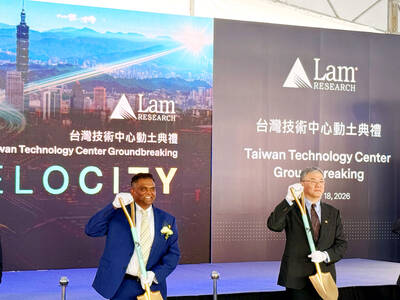
R&D EXPANSION: An executive told a ceremony that the lab, which is set to open in 2028, would increase its overall cleanroom capacity in Taiwan by over nine times US chipmaking equipment supplier Lam Research Corp yesterday broke ground on a technology center in Miaoli County’s Jhunan Township (竹南), a facility set to play a key role in the company’s five-year, US$3 billion global research and development (R&D) expansion. The investment — which would increase the firm’s cleanroom capacity in Taiwan more than ninefold — aims to improve the company’s R&D, testing and validation capabilities, enabling engineering teams to collaborate more closely with customers and accelerate the transition from technology development to fab adoption, Lam Research said. “When this lab opens in 2028, it will have more than 40,000 square meters
Taiwan Semiconductor Manufacturing Co (TSMC, 台積電) yesterday dismissed concerns about a deeper correction of the artificial intelligence (AI) market, saying that soaring global demand AI applications continues to outstrip its supply of advanced chips. The world’s largest contract chipmaker said in a statement that it continues to observe challenges facing the consumer and price-sensitive end-market segments posed by rising component prices and economic uncertainties, TSMC chairman and chief executive officer C.C. Wei’s (魏哲家) remarks during an earnings conference on Oct. 15. “Global demand for AI continues to grow, with its long-term outlook remaining upbeat,” TSMC said in the statement. “Demand
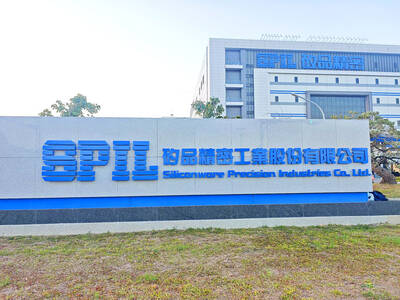
CAPACITY BOOST: The agreement ‘helps secure the advanced packaging capacity and turnkey production needed to meet demand,’ an Nvidia executive said Siliconware Precision Industries Co (SPIL, 矽品精密) yesterday unveiled a new multibillion-dollar deal with Nvidia Corp, aiming to scale up its advanced packaging capacity in Taiwan to support booming demand for artificial intelligence (AI) infrastructure. Under the deal, SPIL would execute a multiyear expansion to triple its advanced packaging capacity by the middle of 2029 and support Nvidia’s platforms, the subsidiary of ASE Technology Holding Co (日月光投控) said in a statement. The expansion includes new production lines for turnkey support from bumping, assembly and testing, as well as facility upgrades, interposer wafer fabrication and increased automation — steps designed to shorten lead


 RSS