

Apple Inc quickly sold out of its limited in-store inventory for the new iPhone Duo, underscoring the strong demand for a foldable device that starts at nearly US$2,000.
The phone went on sale on Friday, bringing back the once-familiar sight of people lining up overnight to get their hands on it first. Marking the company’s most radical reinvention in the iPhone’s nearly two-decade history, the Duo is a major bet that Apple can establish itself in a category that is remained a niche so far.
Apple’s latest gadget packed stores from New York to Beijing and Singapore. The early turnout featured customers collecting their preorders, some trying their luck to secure limited inventory for walk-in purchases, and resellers hoping to flip the devices for a higher price.
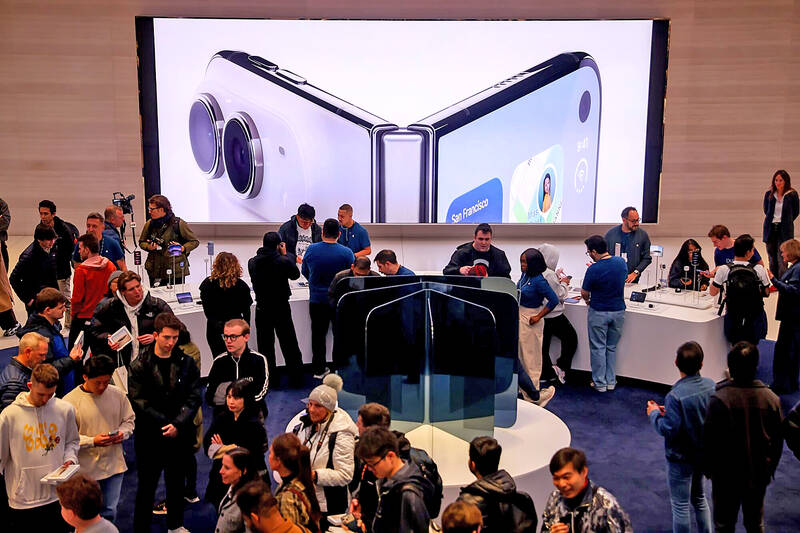
Photo: Bloomberg
In Singapore, a few hundred people stood in line early Friday, including a family of seven from Myanmar who had camped out overnight.
“This is the first true innovation Apple have had in years,” said Peter Ingram, a chief technology officer visiting from London, who plans to buy it upon his return to the UK. “It is expensive. But I tried it out, played with it in the store. It’s incredible how it’s got no crease.”
In the US, Apple stores received about 50 to 200-plus Duo units per location, and they went fast. A store in Los Angeles had no units left for people who arrived after about 6:30am. The 256-gigabyte star white model, priced at US$1,999, was popular with shoppers.
Large crowds on launch day have mostly dissipated in the past few years after Apple, retailers and wireless carriers began maintaining enough inventory to fulfill most orders through home delivery or appointment-based store pickups. However, the company’s first foldable device arrived in much more limited supply.
Consumers placing new orders for the Duo on Apple’s Web site are being offered delivery at the end of January, though some have seen their shipping estimates move up to as soon as next month or December. The delays mark some of the lengthiest for a new Apple product in the company’s modern era.
Shoppers at the Domain Northside Apple Store in Austin were greeted by new chief executive officer John Ternus, who took the helm last month. At the Fifth Avenue location in New York, the line was already stretching multiple blocks at about 5am, three hours before doors opened to iPhone Duo customers. The launch there was marked by Apple’s senior vice president of marketing Greg Joswiak, and vice president of retail stores Vanessa Trigub.
At the Apple Store in Lawrence Township, New Jersey, about 64km outside Philadelphia, the 256 and 512-gigabyte configurations sold out within the first half hour, leaving the pricier 1 and 2-terabyte (TB) models.
Victor Osorio, a shopper at that location, said even though foldables are not new, “Apple always does something different and adds extra spice to it. I’m not nervous about the form factor but I am about the hinge. I don’t want it to get in the way but it looks OK so far.” Osorio arrived early with his partner, Victoria, who also purchased the Duo and said she was intrigued by the device’s multitasking capabilities.
At the same location, Naveed Abubacker said he trades in his iPhone every year. “Foldable technology has been around for a while and Apple is late to the gate but I’m ready for it,” he said. “If it doesn’t work out for me, I’ll return it.”
In China, Shanghai and Beijing saw a moderate turnout, with most Duo buyers already loyal Apple customers who said they were excited to try out the new design. Many had to register in advance to secure their unit.
“It will take some getting used to,” Andy Shen said at Apple’s Sanlitun store in Beijing. “I chose the Duo mainly because it opens up to a bigger screen to enable better experience with videos, though its other functions are not measuring up to earlier generations, like the camera.”
As one of the most expensive mainstream smartphones ever sold, the Duo had raised questions about just how much demand there would be. Most of the shoppers in Beijing and Singapore looked past the high price and focused on the promise of a truly new Apple product after many years of iterative updates.
The iPhone lineup is Apple’s largest moneymaker, generating about half of the company’s revenue. And the Duo is the biggest single design change in the device’s nearly history. Although the company was not first to market with a foldable phone, it looks to gain an edge with a more polished product built for Apple fans.
Rather than a repeat of the lackluster debut of the Vision Pro headset nearly three years ago, the Duo’s launch is shaping up to be a throwback to the iPhone introductions of old — when demand far outstripped supply. That is the case even with device prices reaching as high as US$3,199 for models with 2TB of storage.
Although the Duo’s cost sets a record for a mass-market smartphone, Apple’s competitors such as Samsung Electronics Co, Xiaomi Corp and Oppo have been raising prices as well. Shortages of memory chips and other components have made consumer electronics more expensive across the board.
The new phones from Apple are difficult to produce because of their advanced hinge and new display technology. They are also only built in a limited number of facilities in China. Apple expanded production in the past few years for its traditional iPhones, including to India, which has helped with supply.
Apple reports its quarterly earnings results on Nov. 2, but those would not include sales of the Duo because the period concluded at the end of last month. It would reflect early sales of iPhone 18 Pro and Pro Max models, which debuted on Sept. 18.
Other new versions, such as the entry-level iPhone or the updated Air, would not go on sale until next year, Bloomberg News reported. That marks a change in the company’s usual release schedule, a move meant to help spread out revenue across the year.
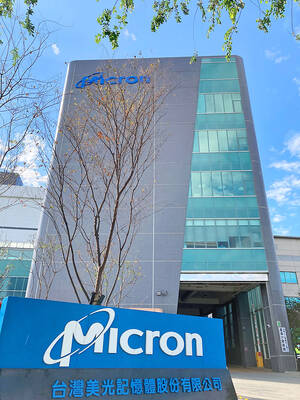
STOCK, CASH: Quarterly profit-sharing bonuses would supplement payments under the Incentive Pay Plan, offering ‘transparency’ and ‘predictability,’ an executive said Micron Memory Taiwan Co (台灣美光) yesterday unveiled a new profit-sharing program and structural wage hikes as part of its efforts to build a predictable and transparent compensation framework in response to feedback from unions. The memorychip maker, a subsidiary of US-based Micron Technology Inc, announced the major compensation structural overhaul during an online news conference following a milestone agreement with the union representing more than 10,000 workers at its Taichung facility. Under the new framework, quarterly profit-sharing bonuses would supplement payments under the Incentive Pay Plan (IPP), the company said. The IPP formula has also been substantially enhanced, it said. “Profit-sharing mechanisms are common

Micron Memory Taiwan and a union representing workers at its Taichung operations today said they had signed a labor-management agreement covering multiple issues, prompting both sides to withdraw from mediation scheduled for tomorrow. The joint statement did not disclose the terms of the agreement, saying the company and the union would separately communicate details to affected employees in the coming days. Idaho-based Micron, the world's third-largest memory chipmaker, employs about 15,000 people in Taiwan, a key manufacturing base where it produces DRAM and high-bandwidth memory chips used in artificial intelligence (AI) servers. Any disruption to Micron's Taiwan operations could affect already strained global
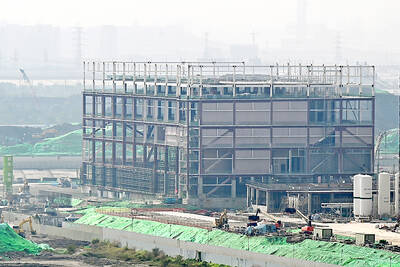
Taiwan Semiconductor Manufacturing Co (TSMC, 台積電) is suspending some construction work after an accident at one of its building sites in southern Taiwan led to the deaths of four workers. The incident took place on Tuesday during steel structure construction at TSMC’s Fab 22 in Kaohsiung, the company said. Workers fell from a height while performing steel structure hoisting and installation, a report from the Central News Agency said. A cause might be aged bolts, it said, citing a preliminary assessment by the Southern Taiwan Science Park Bureau. The bureau said that work would only resume after Shang Hao Machinery Co (上昊機械),
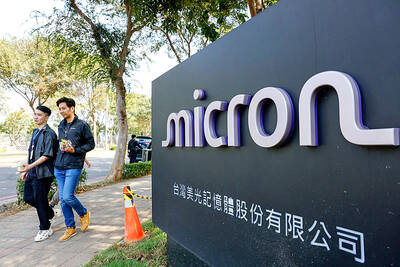
AGREEMENT REACHED: The joint statement did not disclose the details of the deal, which comes a day before the Taoyuan union is to hold a strike Micron Memory Taiwan Co (台灣美光) and a union representing workers at its Taichung operations yesterday said that they had signed a labor-management agreement covering multiple issues, prompting both sides to withdraw from mediation scheduled for today. The joint statement did not disclose the terms of the agreement, saying the company and the union would separately communicate details to affected employees in the coming days. Idaho-based Micron, the world’s third-largest memory maker, employs about 15,000 people in Taiwan, a key manufacturing base where it produces DRAM and high-bandwidth memory chips used in artificial intelligence (AI) servers. Any disruption to Micron’s Taiwan operations could affect


 RSS