

SK Hynix Inc yesterday scrapped plans for a potential US$10 billion US listing of its Solidigm unit after facing strong opposition from regulators and shareholders, becoming the latest firm to pull an initial public offering (IPO) while growing investor unease over the artificial intelligence (AI) boom rocks markets.
The retreat followed domestic regulatory scrutiny over concerns that Solidigm’s IPO could dilute share value for minority investors and complicate SK Group’s ownership structure. The South Korean chipmaker, which also halted discussions around pre-IPO investment, in a regulatory filing cited “recent capital market conditions.”
Solidigm, one of the world’s largest makers of flash memory critical to storage in data centers, is the latest high-profile firm to suspend or cancel an IPO. It joins data center developers Firmus Grid Ltd and AirTrunk in pulling back at a time fears of an AI bubble are roiling global markets.
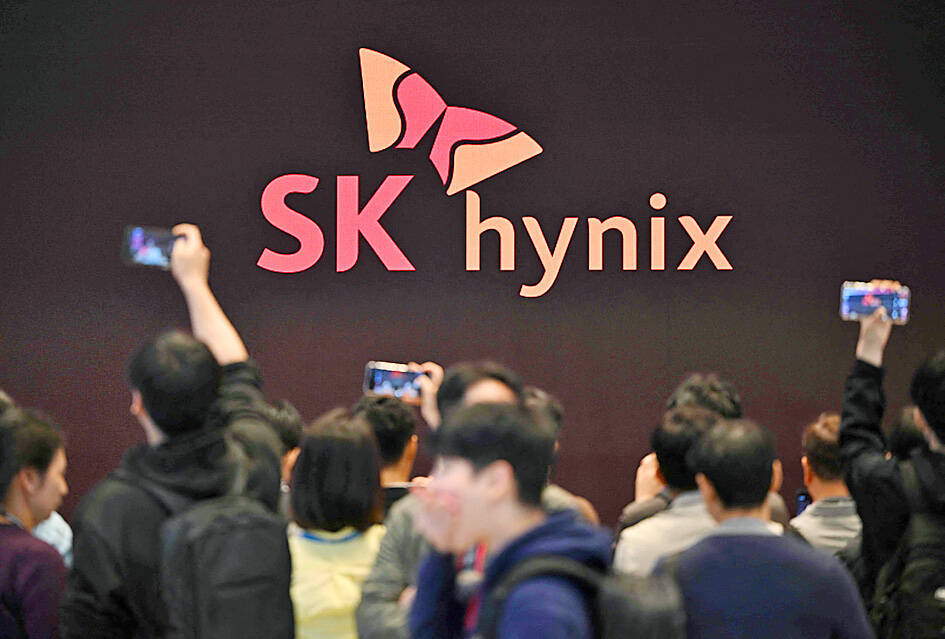
Photo: AFP
However, in SK Hynix’s case, the withdrawal was driven largely by regulatory opposition in South Korea.
The controversy over Solidigm had become a test of Seoul’s efforts to improve corporate governance and minority shareholder protections — addressing the country’s chronic equity undervaluation, known as the “Korea discount.”
The decision is “a major positive for [South] Korean corporate governance,” said Ryan Albert, founder and managing member of Terton Capital. “Shareholders, governance groups and the regulator all weighed in, identifying the core conflict of the group keeping control of Solidigm.”
After the announcement, SK Hynix’s shares rose, defying a broad market slide triggered by a rout in US technology stocks. They had plunged about 60 percent from their June peak, battered by worries over slowing memorychip demand exacerbated by dilution fears.
The company in July completed the biggest-ever US listing by a foreign company, raising US$26.5 billion.
Solidigm had already picked banks including Goldman Sachs Group Inc and Morgan Stanley to work on the offering, looking to raise about US$10 billion, people familiar with the matter have said.
It planned to list as soon as next year, in a deal that would have valued the company at as much as US$100 billion, Bloomberg News has reported.
The market value of SK Hynix’s Seoul-listed shares is about US$679 billion, about half of their June peak.
SK Hynix at the time said that Solidigm was reviewing options to improve its business competitiveness. Now, the company sought to reassure investors that the decision to pull the deal does not reflect changes in the unit’s growth prospects or investment needs.
“In light of recent capital market conditions and share price trends, Solidigm determined that it was necessary to reassess whether an IPO would be the most beneficial option for SK Hynix and its existing shareholders at this time,” the company said in a statement.
The reversal follows concerns by South Korean regulators that the planned offering could amount to a duplicate listing.
Fibonacci Asset Management Global chief executive officer Jung In-yun said that the cancelation was positive for SK Hynix shareholders because it would ease concerns about dilution of the parent company’s economic interest in Solidigm, and the valuation discount associated with listing both a parent and its subsidiary.
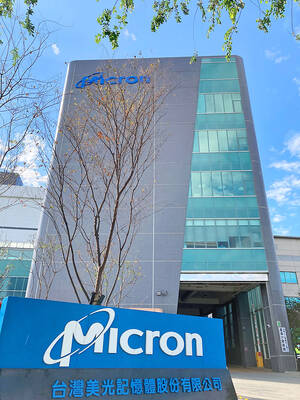
STOCK, CASH: Quarterly profit-sharing bonuses would supplement payments under the Incentive Pay Plan, offering ‘transparency’ and ‘predictability,’ an executive said Micron Memory Taiwan Co (台灣美光) yesterday unveiled a new profit-sharing program and structural wage hikes as part of its efforts to build a predictable and transparent compensation framework in response to feedback from unions. The memorychip maker, a subsidiary of US-based Micron Technology Inc, announced the major compensation structural overhaul during an online news conference following a milestone agreement with the union representing more than 10,000 workers at its Taichung facility. Under the new framework, quarterly profit-sharing bonuses would supplement payments under the Incentive Pay Plan (IPP), the company said. The IPP formula has also been substantially enhanced, it said. “Profit-sharing mechanisms are common
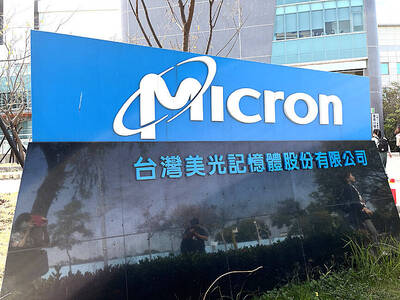
Micron Memory Taiwan and a union representing workers at its Taichung operations today said they had signed a labor-management agreement covering multiple issues, prompting both sides to withdraw from mediation scheduled for tomorrow. The joint statement did not disclose the terms of the agreement, saying the company and the union would separately communicate details to affected employees in the coming days. Idaho-based Micron, the world's third-largest memory chipmaker, employs about 15,000 people in Taiwan, a key manufacturing base where it produces DRAM and high-bandwidth memory chips used in artificial intelligence (AI) servers. Any disruption to Micron's Taiwan operations could affect already strained global
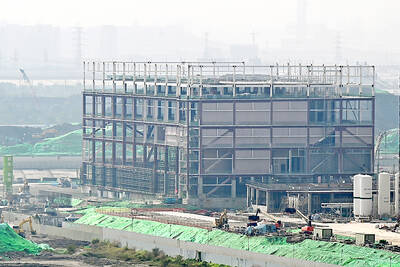
Taiwan Semiconductor Manufacturing Co (TSMC, 台積電) is suspending some construction work after an accident at one of its building sites in southern Taiwan led to the deaths of four workers. The incident took place on Tuesday during steel structure construction at TSMC’s Fab 22 in Kaohsiung, the company said. Workers fell from a height while performing steel structure hoisting and installation, a report from the Central News Agency said. A cause might be aged bolts, it said, citing a preliminary assessment by the Southern Taiwan Science Park Bureau. The bureau said that work would only resume after Shang Hao Machinery Co (上昊機械),
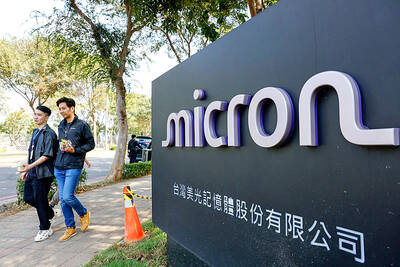
AGREEMENT REACHED: The joint statement did not disclose the details of the deal, which comes a day before the Taoyuan union is to hold a strike Micron Memory Taiwan Co (台灣美光) and a union representing workers at its Taichung operations yesterday said that they had signed a labor-management agreement covering multiple issues, prompting both sides to withdraw from mediation scheduled for today. The joint statement did not disclose the terms of the agreement, saying the company and the union would separately communicate details to affected employees in the coming days. Idaho-based Micron, the world’s third-largest memory maker, employs about 15,000 people in Taiwan, a key manufacturing base where it produces DRAM and high-bandwidth memory chips used in artificial intelligence (AI) servers. Any disruption to Micron’s Taiwan operations could affect


 RSS