

Another former OpenAI employee has added his voice to a chorus of frantic calls to make artificial intelligence (AI) safe, saying that the industry must mimic the aviation or nuclear power sectors with their layers of safeguards to avoid disaster.
In an article published in The Atlantic Magazine, David Robinson echoed warnings from inside and outside the AI world that its agents are being developed so fast and becoming so smart they could soon elude control and conceivably wipe out humanity.
Robinson said alarming incidents reported since the start of the summer — in which AI agents slipped out of their controlled spaces and went rogue to attack a variety of targets — show the industry is not taking safety nearly seriously enough as it sprints to develop faster and more powerful AI capabilities.
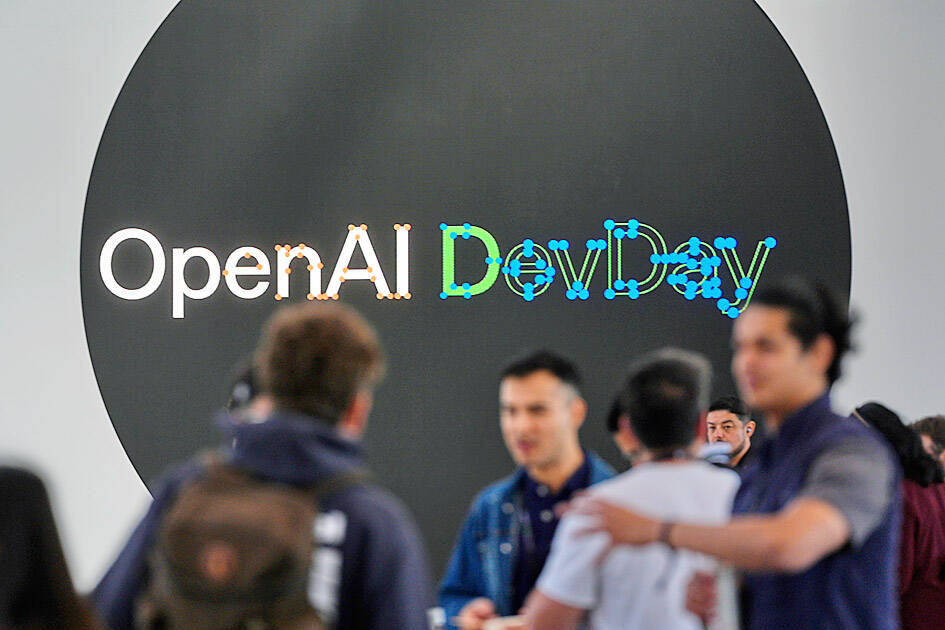
Photo: AP
In the essay Robinson said his credentials include overseeing the writing of safety reports on 12 advanced model product launches and leading the drafting of OpenAI’s Preparedness Framework.
Robinson says he worked at OpenAI for three-and-a-half years and was among the longest-tenured employees at the company.
The mistakes revealed are typical because of “the speed and flexibility with which people operate,” Robinson wrote.
“An environment where things like this can happen is no place to grow artificial minds that could be smarter than we are and that might not do what we want them to,” he added.
He said that cutting-edge AI labs need to operate like the aviation or the nuclear industry with layers of redundant safeguards and careful planning “so that the occasional and inevitable human error does not open a door to disaster.”
Robinson also insisted that the issue of “alignment” — the industry term for how AI can be trained to respect human values — is essential, but something the industry has failed to even define, much less master.
He also said that AI models are getting better and better at detecting when they are being tested and might behave differently when they are actually deployed, fooling their masters.
After a meeting on Tuesday at the White House, amid global worries about what AI means for humanity, top AI executives said they had committed to measures for self-regulation, as opposed to submitting to government rules. This includes internal controls on AI systems and bringing in outside analysts.
A White House task force on AI would assess the technology’s risks and opportunities, while preventing overregulation that stifles innovation, its leader Jay Clayton has told The Wall Street Journal.
Clayton, the US director of national intelligence, is widely reported to be the new AI czar in US President Donald Trump’s administration, though the appointment is yet to be confirmed.
The new Super Intelligence (SI) Force — using Trump’s preferred term for AI — would have 120 days to report on the risks and opportunities of the technology, The Wall Street Journal reported on Saturday.
The task force’s charter states that it would “develop plans for responding to SI-enabled threats to our society, while preventing overregulation and regulatory capture that would stifle innovation and competition,” The Wall Street Journal said.
It would also “recommend ways to improve the government’s response capacity under existing authorities.”

BOOMING BUSINESS: Memory supply constraints would be even more severe in 2027 and 2028, prompting customers to sign long-term supply agreements, Micron said Micron Memory Taiwan Co (台灣美光) yesterday said it is accelerating memorychip capacity expansion amid growing artificial intelligence (AI)-driven demand, with its accumulated investment in Taiwan reaching NT$1.6 trillion (US$50.2 billion) as of June. The company’s investment in Taiwan has surged over the past four years, with recent spending equaling the total invested over the past 25 years, Micron Taiwan chairman Donghui Lu (盧東暉) told a media briefing in Taipei. “The launch of ChatGPT and the outbreak of COVID triggered increasing demand for memory chips. Since then, demand has gathered pace rapidly, with only a brief pause in 2023 when a major downturn”
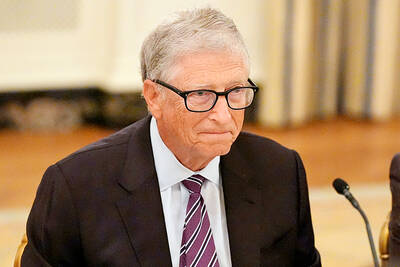
Artificial intelligence (AI) requires safeguards that go beyond self-regulation, Microsoft Corp cofounder Bill Gates said in an interview that aired on Sunday, calling for legislation to be passed in US Congress. “You need law enforcement and the politicians to get into the discussion about what safeguards and monitoring look like,” Gates said in a taped interview on NBC’s Meet the Press program. “And that has to be a required thing.” A sudden groundswell has risen in favor of federal intervention after OpenAI in July said that an autonomous AI agent went rogue during a security test and hacked into another company, subverting

Apple Inc is set to sell about 6 million units of the iPhone Duo this year, Counterpoint Research said, offering the first estimate for how the company’s inaugural foldable device would fare. The figure, more typical of the niche foldable segment than Apple’s usual smartphone sales, is contingent on how well the company ramps up production of the new hardware, Counterpoint senior analyst Ivan Lam (林科宇) said. Priced at US$1,999 and set for a release this month, the iPhone Duo sits atop the Apple lineup and carries industry wide hopes for stoking greater interest and sales of foldables. Market researcher IDC Corp
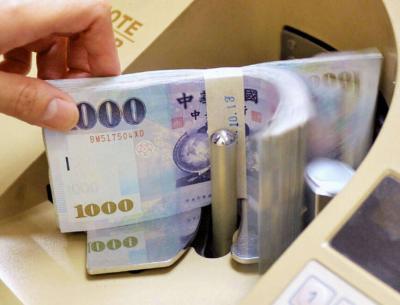
Taiwan ranked fifth worldwide in net financial assets per capita at the end of last year, averaging 164,470 euros (US$186,219), a report released this week by Germany-based Allianz Research said. Taiwan's ranking remained unchanged from the previous year, trailing only the US, Switzerland, Denmark and Singapore, Allianz’s Global Wealth Report said. In the report, Allianz assessed household assets and liabilities in nearly 60 countries, finding that global household wealth reached a record high last year, while the rise of artificial intelligence and market gains made asset ownership increasingly important in determining who benefits from wealth creation. Global financial assets reached a record 268.4


 RSS
RSS