

Exports hit a record last month as artificial intelligence (AI) demand continued to spread across semiconductors, servers and other high-tech products, the Ministry of Finance said yesterday.
Exports rose 41 percent from a year earlier to US$82.4 billion, the highest monthly level on record, the ministry said.
The gain marked the 34th consecutive month of year-on-year growth and exceeded the ministry’s expectations of growth of 31 to 35 percent on better-than-expected AI demand.
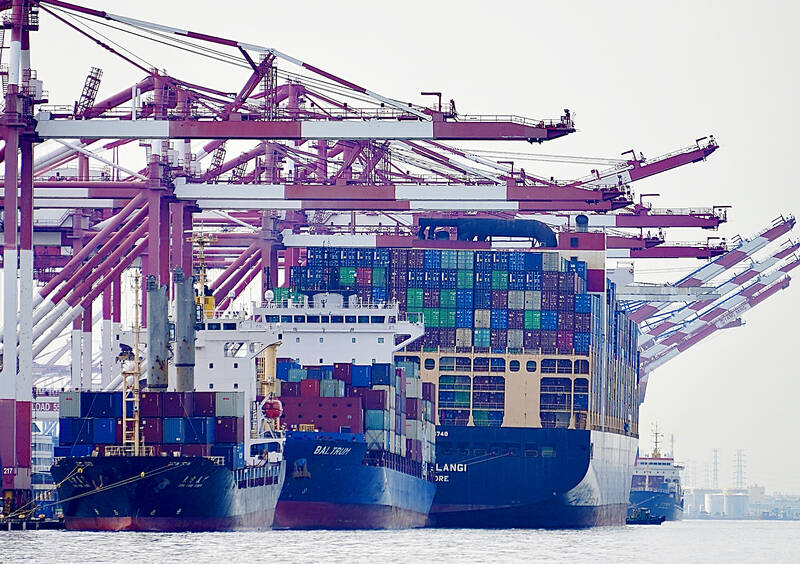
Photo: CNA
“We underestimated the strength of AI, which is spreading rapidly into more technology sectors,” Department of Statistics Director-General Beatrice Tsai (蔡美娜) said.
The momentum is likely to continue into the final months of the year, with the ministry expecting exports to grow by more than 40 percent this month as the peak season for high-tech products begins.
Monthly exports in the fourth quarter could average as high as US$83 billion, Tsai said, a level Taiwan has never reached.
The increasingly broad adoption of AI is helping to support global economic activity and cushion the effects of short-term disruptions such as tariff uncertainty, Tsai said.
Information, communications and audiovisual products, as well as electronic components remained the main engines of growth, with the categories together accounting for 78.7 percent of total exports last month, the ministry said.
The concentration highlights Taiwan’s pivotal role in the global AI supply chain, while also underscoring the economy’s increasing dependence on technology-related demand.
“AI has created a wave that keeps strengthening demand,” Tsai said, adding that Taiwanese companies occupy key positions in global semiconductor and server supply chains.
The upcoming launch of new mobile devices also provided an additional boost as international brands began building inventories, Tsai said.
However, supply constraints across parts of the electronics industry have yet to be fully resolved, supporting prices and increasing the value of shipments, she said.
The release of Apple Inc’s latest iPhone lineup, including an expected foldable model, is likely to provide support for Taiwan’s electronics suppliers as buyers and manufacturers prepare for the new devices, the ministry said.
Mineral products were another major contributor to Taiwan’s exports growth, with outbound shipments jumping about 70 percent last month as higher oil prices increased the value of petroleum-related goods, it said.
Last month, imports rose even faster, climbing 44.3 percent to US$60.1 billion, it said.
The increase reflected the increasingly international division of labor in AI supply chains, as Taiwanese manufacturers sourced more components and materials from overseas, including memory chips from South Korea, the ministry said.
Capital goods imports jumped 41.6 percent to US$13.06 billion, pointing to continued investment by local technology companies as they expand production capacity to meet customer demand, it said.
The export performance pushed the trade surplus to a record US$22.3 billion that month, up 32.9 percent from a year earlier, the ministry said.
For the first eight months of this year, exports jumped 44.2 percent to US$574.34 billion from the same period last year, while imports rose 40.4 percent to US$437.4 billion over the period, it said.
The ministry expects export momentum to remain strong through the end of the year, Tsai said.
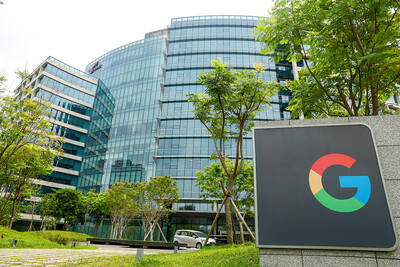
READJUSTMENT? Despite the rumors, a senior Google official said that the company plans to expand its AI research center in Taipei’s Shilin District Google Taiwan is reducing its workforce as the company continues to adjust operations to improve efficiency and focus resources on core goals, the Chinese-language Liberty Times (sister paper of the Taipei Times) reported yesterday. The Alphabet Inc unit said the organizational adjustments have begun and would continue, even though it did not put a figure on the number of potential job cuts or specify the affected departments in its Taiwan operations. The company’s response came after rumors circulated on social media about major job cuts at Google Taiwan. Some posts said the downsizing would target the company’s consumer electronics-related departments
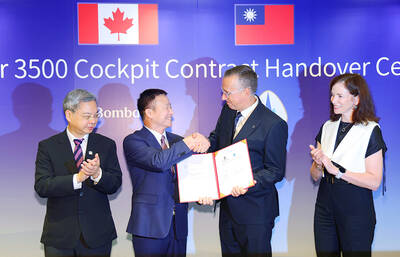
Taiwanese aircraft maker Aerospace Industrial Development Corp (AIDC, 漢翔航空) yesterday announced that it has secured a 20-year partnership agreement with Canada-based Bombardier Inc. The two companies held a ceremony in Taipei yesterday to exchange signed copies of the agreement, launching the 20-year partnership under which AIDC would supply cockpit and forward fuselage structural components for Bombardier’s super-midsize Challenger 3500 business jets, the Taiwanese company said. The agreement represents a new milestone in cooperation between the two companies, which dates back to 1999, with the Taiwanese supplier having provided rear fuselage structural components for more than 1,000 Challenger 3500 aircraft, it
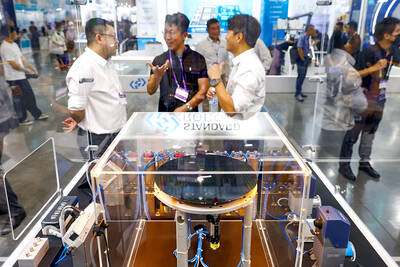
Taiwan should avoid becoming overly dependent on semiconductors and preserve resources for other industries while expanding chip production with trusted overseas partners, a US academic said yesterday. Glenn D. Tiffert, distinguished research fellow and cochair of the Program on the US, China and the World at Stanford University’s Hoover Institution, made the remarks during a panel discussion on trusted supply chains at a forum hosted by the Research Institute for Democracy, Society and Emerging Technology (DSET) and SEMI in Taipei. “The semiconductor industry has been fabulous for Taiwan, but there is the danger that Taiwan devotes too much to being the one-trick
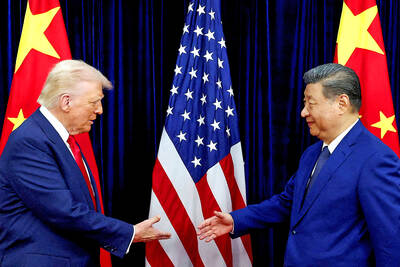
UNUSUAL INCLUSION: While Trump brought a herd of executives to the meeting in Beijing several month ago, Xinping has shown less inclination to bring CEOs along Chinese President Xi Jinping (習近平) is preparing a large business delegation to accompany him on his visit to Washington, two sources said, an unusual move given US skepticism toward Chinese investment and Beijing’s strained ties with private enterprise. Xi rarely travels abroad with corporate executives, many of whom fell from of favor after Beijing’s regulatory crackdowns on the technology, education and property sectors that began in 2020. “The White House is not tracking a Chinese CEO delegation,” an US official said. They did not explain what they meant by tracking. The business delegation for the Sept. 24 summit has not been reported before.


 RSS
RSS