


Singapore police yesterday said that they had seized a luxury bungalow worth more than US$40 million as part of fraud investigations linked to the alleged transfer of artificial intelligence (AI) chips in breach of US export controls.
The probe centers on two Singaporeans, Aaron Woon and Alan Wei, and a Chinese national, Li Ming, who were last year charged with fraud for allegedly concealing the actual end-user of servers supplied by US firms Dell Technologies Inc and Super Micro Computer Inc.
Investigators yesterday filed additional fraud charges against Woon and Li as well as Jenny Lim, the chief financial officer of a firm embroiled in the case.
Photo: Reuters
Police expect to file further charges next week against Wei, including money laundering.
As part of the probe, police have issued a prohibition of disposal order on the luxury property owned by Wei and valued at 55 million Singapore dollars (US$42.4 million), police said in a statement, adding that they had also seized funds from bank accounts under scrutiny.
Four companies are also facing fraud-related charges in the case.
Last year, authorities said that the servers in question might have contained advanced Nvidia AI chips.
They were shipped from Singapore to Malaysia, though their ultimate destination remained unclear, Singaporean Minister for Home Affairs K. Shanmugam has said.
Some media reports have suggested the equipment might have been intended for China.
US restrictions aimed at maintaining a technological edge limit the export of advanced semiconductors to China.
Bloomberg News last year reported that US officials were probing whether Chinese firm DeepSeek (深度求索) had obtained advanced Nvidia chips via intermediaries in Singapore to circumvent those curbs.
Last week, Malaysian authorities said they had foiled an attempt to smuggle advanced AI chips through the country’s main airport, seizing 72 servers worth nearly US$13 million.

The US Federal Communications Commission (FCC) on Friday said it would ban the import of more equipment from a group of Chinese manufacturers, the latest move by Washington to crack down on Chinese-made electronic gear. The move expands an FCC ban imposed in 2022 on new models of telecommunications and video surveillance equipment made by Huawei Technologies Co (華為), ZTE Corp (中興通訊), Hytera Communications Corp (海能達通信), Hikvision Digital Technology Co (海康威視) and Dahua Technology Co (大華科技), citing national security risks. The expanded ban includes old models, not just those designed starting in late 2022, of equipment used for “public safety, security of

IBM Corp yesterday unveiled new semiconductor technology that the company said could deliver computer chips with 50 percent better performance while dramatically lowering power consumption. The technology developed by IBM is not yet ready for industrial use, but the Armonk, New York-based company said it “sees a path to production in as early as the next five years.” The breakthrough could mean a major leap forward as the industry races to cram more computing power into smaller devices, but as worries grow over the tech industry’s huge energy needs. Taiwan Semiconductor Manufacturing Co (TSMC, 台積電), the world’s leading chip manufacturer, has begun mass-producing
UNSURPRISING LEADER: TSMC led in both net profit and revenue this year, followed by other big names in the Taiwanese sphere of tech as well as finance Taiwan’s 5,000 largest companies posted a record high in aggregate net profit last year, up more than 11 percent from a year earlier, with contract chipmaker Taiwan Semiconductor Manufacturing Co (TSMC, 台積電) holding on as the country’s most profitable company amid the artificial intelligence (AI) boom, credit information agency CRIF Taiwan (中華徵信所) said on Wednesday. Strong global demand for AI applications continued to benefit Taiwan’s top 5,000 enterprises last year, CRIF said in a report. Their combined net profit totaled NT$5.77 trillion (US$181.1 billion), up 11.01 percent from a year earlier, while aggregate revenue hit a record high of NT$48.50 trillion,
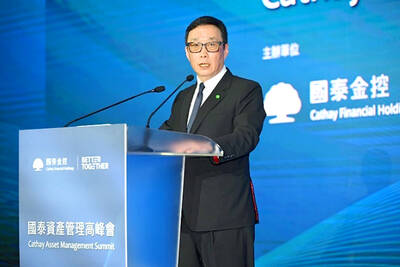
Cathay United Bank Co (國泰世華銀行) chairman Kuo Ming-jian (郭明鑑) has resigned following a regulatory breach at the lender’s asset management affiliate linked to his outside positions, an incident that culminated in a physical altercation with a member of Taiwan’s billionaire Tsai family. “Mr. Kuo voluntarily decided to resign in light of the differing public opinions arising in recent days regarding his outside appointments to avoid creating negative public perceptions and to safeguard the company’s reputation,” Cathay Financial Holding Co (國泰金控), parent of Cathay United Bank, said in a statement yesterday. The resignation followed discussions between Kuo and Cathay Financial chairman Tsai Hong-tu


 RSS
RSS