


Chugai Pharma Taiwan (CPT) has once again achieved a landmark milestone in sustainability, earning recognition at one of Asia’s most prestigious sustainability honors — the Asia Responsible Enterprise Awards (AREA). This year’s awards ceremony was held on June 26, 2026, in Kuala Lumpur, where CPT claimed two prestigious honors — the Green Leadership Award and the Health Promotion Award. The double win marks CPT’s fifth consecutive year of recognition at AREA and its first-ever win in the Health Promotion category, underscoring the company’s outstanding achievements in both environmental sustainability and health promotion.
FIVE YEARS OF DEDICATION, CONTINUING TO SHINE ON THE INTERNATIONAL STAGE
The AREA ceremony is organized by the Enterprise Asia, a non-governmental organization. This year’s competition attracted over 340 entries from across Asia, with 115 projects receiving awards — representing an acceptance rate of roughly 34% — making the competition exceptionally fierce. CPT’s ability to stand on this international sustainability stage for five consecutive years is a powerful testament to its long-term commitment across all three ESG pillars — Environmental (E), Social (S), and Governance (G) — earning high recognition not only across Asia but on the global stage.
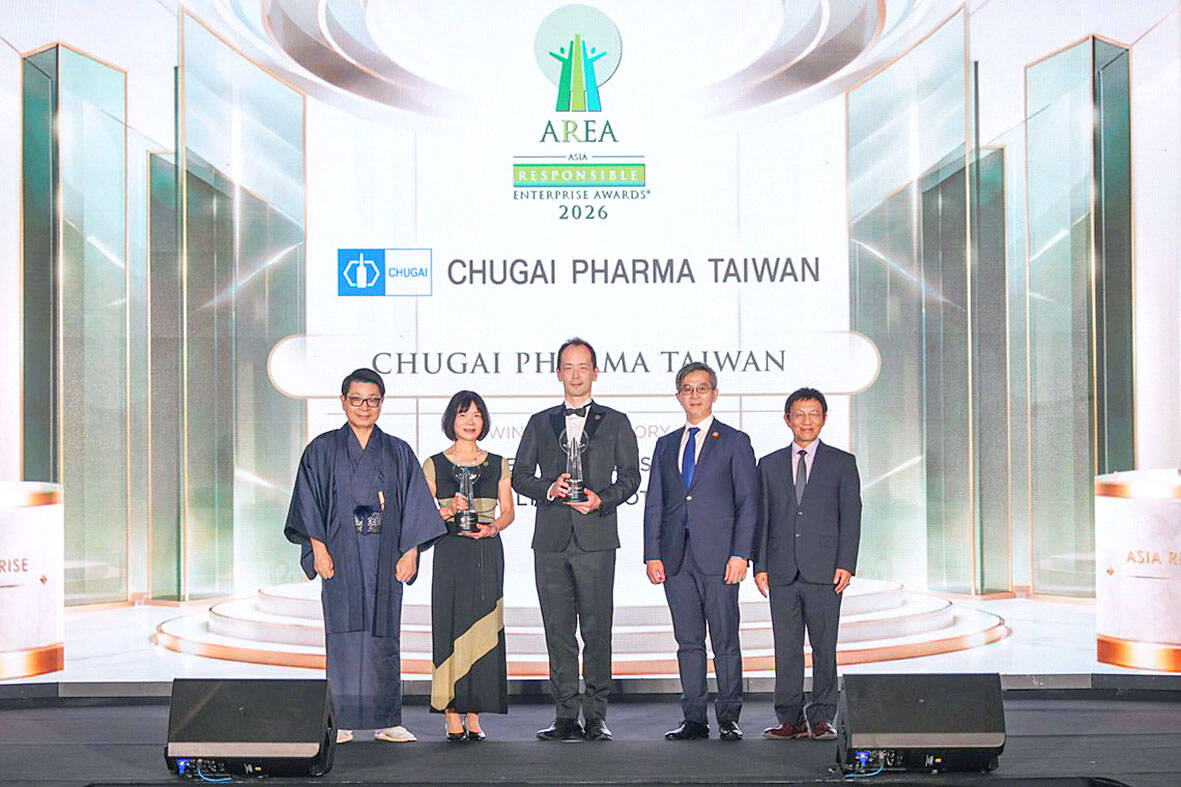
Of particular note is this year’s first-ever Health Promotion Award, which reflects CPT’s broader and deeper interpretation of “health” — extending beyond protecting patients’ well-being to encompass the sustainable health of the land and ecosystem. This represents a pharmaceutical company’s all-encompassing dedication to the guardianship of life.
ANNUAL HIGHLIGHT: ADOPTING LOW-CARBON RICE CULTIVATION, PROTECTING HEALTH FROM THE SOURCE
This year, CPT took an innovative step forward in its sustainability journey. In February 2026, President of CPT, Mr. Yuji Habara led the team to Zhiben, Taitung, where it partnered with P.K. EverCovenant Biotech to hold the “Low-Carbon Rice Adoption Ceremony”, officially launching its core annual sustainability initiative.
At the heart of this collaboration is the proprietary technology introduced by P.K. EverCovenant Biotech — the Low-Carbon Farming Method (System of Probiotic and Rice Intensification) — which has breathed new life into farmland that had lain fallow for decades. This innovative agricultural approach delivers multiple breakthrough benefits:
● Exceptional Carbon Reduction: By leveraging probiotic farming techniques to enhance plant immunity, the method reduces carbon emissions by 62% compared to conventional farming practices.
● Energy and Water Efficiency: Through unique patented irrigation technology, irrigation water usage is reduced by 30%, while simultaneously boosting probiotic proliferation.
● Zero Chemical Contamination: The entire process is free of pesticides, chemical fertilizers, and herbicides. Probiotic microorganisms are used to activate the soil microbiome, preserving the purity of the land.
● Ecological Harmony: Biodiversity in the farmland has been significantly restored, with the return of species including the Peacock Pansy butterfly, the Ring-necked Pheasant (endemic subspecies), and the Grey Heron.
At the ceremony, CPT’s leadership team personally planted rice seedlings and shared: “What we are adopting is not merely a rice paddy — it is a tangible investment in a low-carbon future. By supporting innovative and sustainable farming technologies, we hope to contribute to Taiwan’s low-carbon agriculture, starting from the very source of what we put on our tables.”
EXTENDING THE PHARMACEUTICAL MISSION: PROTECTING PATIENTS AND THE LAND
A key reason this initiative earned international recognition through the Health Promotion Award lies in the profound health-centered values embedded in the program. The “ShenMei Rice” developed by P.K. EverCovenant Biotech is a low-protein rice specially formulated for patients with kidney disease. Its protein content is 38.7% lower than that of regular white rice, effectively reducing the burden on the kidneys. This allows patients with kidney disease to enjoy delicious rice and maintain adequate caloric intake while adhering to strict protein restrictions — significantly improving their quality of life.
This innovative connection exemplifies CPT’s interpretation of “health” — spanning from pharmaceutical development to dietary origins, and from patient care to land ecology. By applying the expertise of a pharmaceutical company to pioneer new pathways for health promotion, this initiative stood out among hundreds of competing entries to claim the Health Promotion Award for the very first time.
ADVANCING TOP I 2030: DEEPENING THE ESG SUSTAINABILITY BLUEPRINT
CPT noted that the Low-Carbon Rice Adoption Program represents not only an active commitment to local agriculture and green industries, but also a concrete action in fulfilling the Chugai Group’s TOP I 2030 environmental sustainability goals. The initiative simultaneously creates more diverse employment opportunities for local farmers, realizing a triple-win outcome for the environment, society, and the economy.
Five consecutive years of AREA recognition stand as the finest testament to CPT’s enduring commitment to ESG principles. Looking ahead, CPT will continue to uphold its core commitment to “improving patients’ quality of life and helping them lead brighter lives” — by delivering innovative medicines, addressing unmet medical needs, and deepening its ESG strategy to generate greater positive impact for society and the environment, advancing toward a more sustainable future.

The US Federal Communications Commission (FCC) on Friday said it would ban the import of more equipment from a group of Chinese manufacturers, the latest move by Washington to crack down on Chinese-made electronic gear. The move expands an FCC ban imposed in 2022 on new models of telecommunications and video surveillance equipment made by Huawei Technologies Co (華為), ZTE Corp (中興通訊), Hytera Communications Corp (海能達通信), Hikvision Digital Technology Co (海康威視) and Dahua Technology Co (大華科技), citing national security risks. The expanded ban includes old models, not just those designed starting in late 2022, of equipment used for “public safety, security of

Bosch, a leading supplier of technology and services, expects another year of growth in Taiwan this year, betting that continued investment in artificial intelligence (AI), advanced manufacturing and sustainability would help offset geopolitical uncertainties and trade tensions. The company remains cautiously optimistic about Taiwan’s economic and industrial outlook, supported by the nation’s expanding role in global AI supply chains and strong demand for technology-driven solutions, Bosch Taiwan chairman and managing director Andreas Schmidt said. “The structural momentum behind Taiwan’s technology and AI ecosystems provides clear reasons for optimism,” Schmidt said. “Bosch Taiwan remains deeply committed to the local market and confident in
Cathay Financial Holding Co (國泰金控), Taiwan’s biggest financial holding group, is dealing with fallout after a member of the conglomerate’s founding Tsai family allegedly attacked the chairman of its banking unit. Tsai Chen-yu (蔡鎮宇), who’s in his 70s, allegedly attacked Cathay United Bank Co (國泰世華銀行) chairman Kuo Ming-jian (郭明鑑) at its Taipei headquarters on Tuesday, according to a statement from the bank yesterday. The incident escalated to the point that local police dispatched officers to the scene, local media reported. Cathay United Bank castigated Tsai in the statement, characterizing the attack as an inappropriate reaction to a “misunderstanding” over Kuo’s external business

IBM Corp yesterday unveiled new semiconductor technology that the company said could deliver computer chips with 50 percent better performance while dramatically lowering power consumption. The technology developed by IBM is not yet ready for industrial use, but the Armonk, New York-based company said it “sees a path to production in as early as the next five years.” The breakthrough could mean a major leap forward as the industry races to cram more computing power into smaller devices, but as worries grow over the tech industry’s huge energy needs. Taiwan Semiconductor Manufacturing Co (TSMC, 台積電), the world’s leading chip manufacturer, has begun mass-producing


 RSS
RSS