


Natural gas bills for Taiwan Power Co (Taipower, 台電) are set to drop this month after CPC Corp, Taiwan (CPC, 台灣中油) yesterday cut prices of gas for power generation, as a result of the easing tensions between the US and Iran and the reopening of the Strait of Hormuz.
CPC is cutting liquefied natural gas (LNG) prices for power generators by 4.72 percent this month to NT$19.5246 (US$0.61) per cubic meter, the state-run company said in a statement.
Last month, CPC held LNG prices for power generators unchanged after raising prices by 50.92 percent in April and May as conflicts in the Middle East escalated.
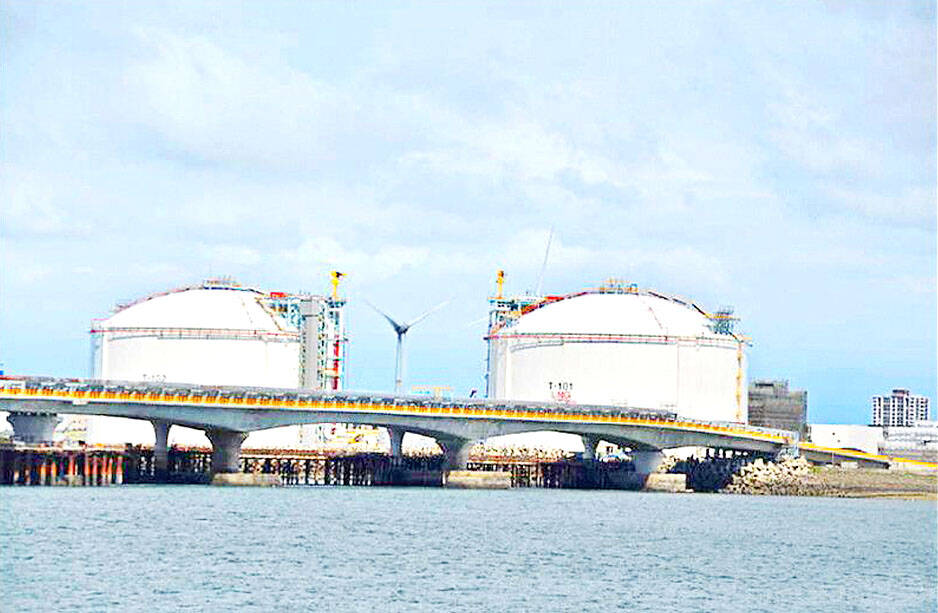
Photo: Taipei Times file photo
CPC yesterday kept natural gas prices for households, the service sector and industrial users unchanged this month to help stabilize overall consumer prices and ease pressure on families and small businesses, it said.
“The tensions in the Middle East have eased, and international oil and gas prices have fallen. However, progress in US-Iran negotiations remains to be seen,” the company said in the statement.
The price cuts should be welcome for Taipower, which reported a pretax loss of NT$14.4 billion for the first five months of this year yesterday due to high fuel costs, even though its electricity sales increased compared to the same period last year.
The state utility’s accumulated losses stood at NT$351.1 billion at the end of last year and widened to NT$367.2 billion by the end of May, it said.
Taipower charges higher electricity rates for residential and commercial users from June 1 to Sept. 30, which is expected to improve the company’s financial conditions over the three months.
If fuel prices stabilize and CPC cuts natural gas prices again in the months ahead, pressure on Taipower’s electricity rate hikes would likely ease further.
A government-convened electricity price review committee is to meet at the end of September to decide on electricity rates for the period between October and March next year.


The US Federal Communications Commission (FCC) on Friday said it would ban the import of more equipment from a group of Chinese manufacturers, the latest move by Washington to crack down on Chinese-made electronic gear. The move expands an FCC ban imposed in 2022 on new models of telecommunications and video surveillance equipment made by Huawei Technologies Co (華為), ZTE Corp (中興通訊), Hytera Communications Corp (海能達通信), Hikvision Digital Technology Co (海康威視) and Dahua Technology Co (大華科技), citing national security risks. The expanded ban includes old models, not just those designed starting in late 2022, of equipment used for “public safety, security of

Bosch, a leading supplier of technology and services, expects another year of growth in Taiwan this year, betting that continued investment in artificial intelligence (AI), advanced manufacturing and sustainability would help offset geopolitical uncertainties and trade tensions. The company remains cautiously optimistic about Taiwan’s economic and industrial outlook, supported by the nation’s expanding role in global AI supply chains and strong demand for technology-driven solutions, Bosch Taiwan chairman and managing director Andreas Schmidt said. “The structural momentum behind Taiwan’s technology and AI ecosystems provides clear reasons for optimism,” Schmidt said. “Bosch Taiwan remains deeply committed to the local market and confident in
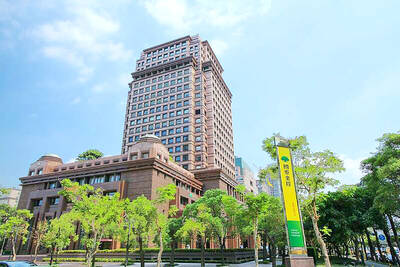
Cathay Financial Holding Co (國泰金控), Taiwan’s biggest financial holding group, is dealing with fallout after a member of the conglomerate’s founding Tsai family allegedly attacked the chairman of its banking unit. Tsai Chen-yu (蔡鎮宇), who’s in his 70s, allegedly attacked Cathay United Bank Co (國泰世華銀行) chairman Kuo Ming-jian (郭明鑑) at its Taipei headquarters on Tuesday, according to a statement from the bank yesterday. The incident escalated to the point that local police dispatched officers to the scene, local media reported. Cathay United Bank castigated Tsai in the statement, characterizing the attack as an inappropriate reaction to a “misunderstanding” over Kuo’s external business

IBM Corp yesterday unveiled new semiconductor technology that the company said could deliver computer chips with 50 percent better performance while dramatically lowering power consumption. The technology developed by IBM is not yet ready for industrial use, but the Armonk, New York-based company said it “sees a path to production in as early as the next five years.” The breakthrough could mean a major leap forward as the industry races to cram more computing power into smaller devices, but as worries grow over the tech industry’s huge energy needs. Taiwan Semiconductor Manufacturing Co (TSMC, 台積電), the world’s leading chip manufacturer, has begun mass-producing


 RSS
RSS