


The Taiwan Stock Exchange (TWSE) is working on improving a key trading system popular among retail investors and planning longer trading hours to attract more demand, the bourse’s chairman said yesterday in Taipei.
The exchange is studying ways to optimize the so-called odd-lot transactions mechanism, which caters to trades involving less than one standard unit of shares and is heavily used by individual investors, TWSE chairman Sherman Lin (林修銘) said in an interview.
Reforms under consideration include moving the start time of such trades 10 minutes earlier to 9am to match the market’s regular trading hours, Lin said, adding that the exchange is considering shortening the current five-second order matching cycle.
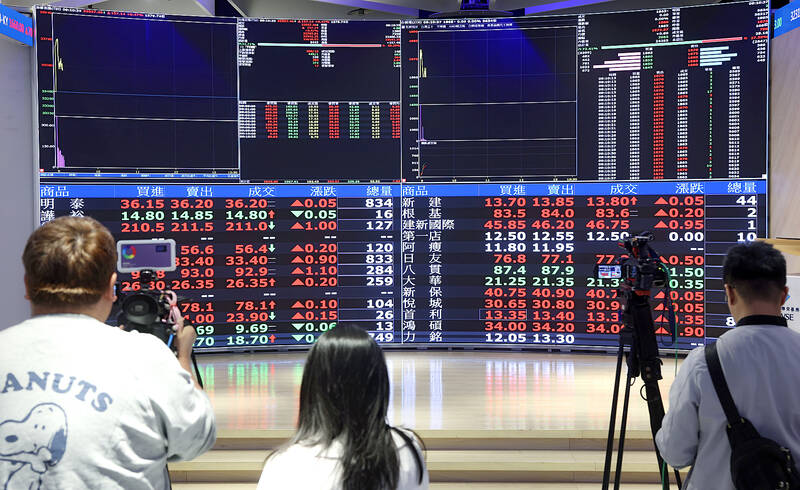
Photo: CNA
“Our goal is to complete odd-lot trading reforms by year-end through actively working with securities firms,” Lin said. “Retail investors play such a big role in Taiwan’s market. We must safeguard their interests.”
Having risen about 50 percent this year, Taiwan’s stock market has emerged as one of the world’s top performers, fueled by demand for artificial intelligence trade and a surge of buying by retail investors.
Already at a record high, the local bourse recorded another milestone by surpassing India’s stock market this month to become the world’s fifth largest.
The exchange is also discussing with brokerages extending the market’s regular trading hours of 9am to 1:30pm, he said, without offering a specific timeline.
“Extending trading hours may take more time to implement, as the process is relatively complex,” he added.
Equities bourses around the world have embarked on a trend to lengthen trading hours to better capture investor flows. For example, South Korea’s main stock exchange plans to extend its business hours to 12 a day this year from the current six-and-a-half hours.
Despite the strong rally, Taiwan’s tech-heavy stock market remains undervalued compared with its global peers, Lin said.
The TAIEX trades at about 20 times forward earnings, versus the NASDAQ 100’s 25 times.
Lin highlighted Taiwan’s unique strength in hosting the entire semiconductor supply chain.
“We are not selling one single company, we are selling the whole supply chain,” he said.
Foreign investors should recognize a “supply chain premium,” as more firms demonstrate management depths and strategic value, he said.
The exchange is urging listed companies to step up investor communications and lay out their medium and long-term strategies to help unlock value, Lin said.
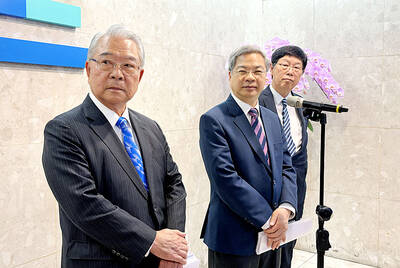
PATENT PROBE: US lawmakers called for a ban on imports of chips made by TSMC if they are found to infringe on US patents, with a preliminary ruling expected soon Minister of Economic Affairs Kung Ming-hsin (龔明鑫) yesterday expressed confidence in Taiwan Semiconductor Manufacturing Co’s (TSMC, 台積電) compliance with patent regulations after reports linked the company to a patent infringement lawsuit in the US. US Representative Ryan Zinke, and US senators Tim Sheehy, Roger Marshall and Bernie Moreno urged the US International Trade Commission in a May 22 letter to ban imports of chips made by TSMC if they are found to infringe on US patents, Axios reported on Wednesday. An administrative law judge is expected to issue a preliminary ruling this month, with the commission potentially making a final decision in

Infineon Technologies AG is preparing to open its largest single investment, a 5 billion euro (US$5.8 billion) semiconductor factory built with the help of EU subsidies, as the bloc seeks to boost chip production. The power chip fab, which is an extension of the German company’s Dresden campus, is scheduled to open on July 2, Infineon chief operating officer Alexander Gorski said this week at the site. The project is a major recipient of EU Chips Act funds, receiving about 1 billion euros in subsidies. The new plant represents a rare success for the bloc’s flagship semiconductor law, which was drawn up during

Taiwan remained the sixth-largest net creditor nation in the world last year, despite a fall of more than 10 percent in its net international investment position (NIIP) over the year, the central bank said yesterday. The NIIP is the difference between a country’s external financial assets and its external financial liabilities. Taiwan’s external financial assets hit US$3.27 trillion at the end of last year, up US$275.75 billion or 9.2 percent from a year earlier, the central bank said in its annual NIIP report. The growth largely reflected an increase in holdings of overseas marketable securities by residents in Taiwan, as well as a
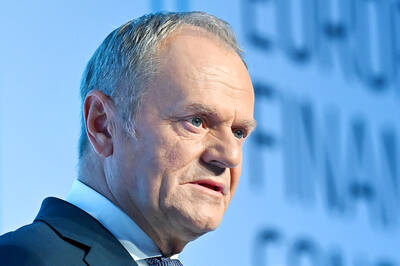
Poland is betting on a flood of investments and technology transfers from Taiwanese companies to reengineer its US$1 trillion economy. Polish Prime Minister Donald Tusk said yesterday that Poland will no longer be “just an assembly hub” as it pursues further investments from the likes of Foxconn Technology Group (富士康). The firm, whose full name is Hon Hai Precision Industry Co (鴻海精密), last month agreed to build electric vehicles (EVs) in the European Union nation and now could be a partner in a semiconductor venture, he said. The government’s aim is to boost manufacturing and the country’s high-tech chops in an era


 RSS
RSS