


Taiwan’s economic outlook has improved this year despite persistent geopolitical risks in the Middle East, supported by robust demand for artificial intelligence (AI) technologies, the Chung-Hua Institution for Economic Research (CIER, 中經院) said yesterday.
CIER raised its full-year GDP growth forecast to 7.22 percent, up 0.3 percentage points from its January estimate, citing stronger-than-expected export performance in the first quarter.
“First-quarter exports proved much stronger than we had projected earlier, warranting an upward revision to the growth forecast,” CIER president Lien Hsien-ming (連賢明) said.
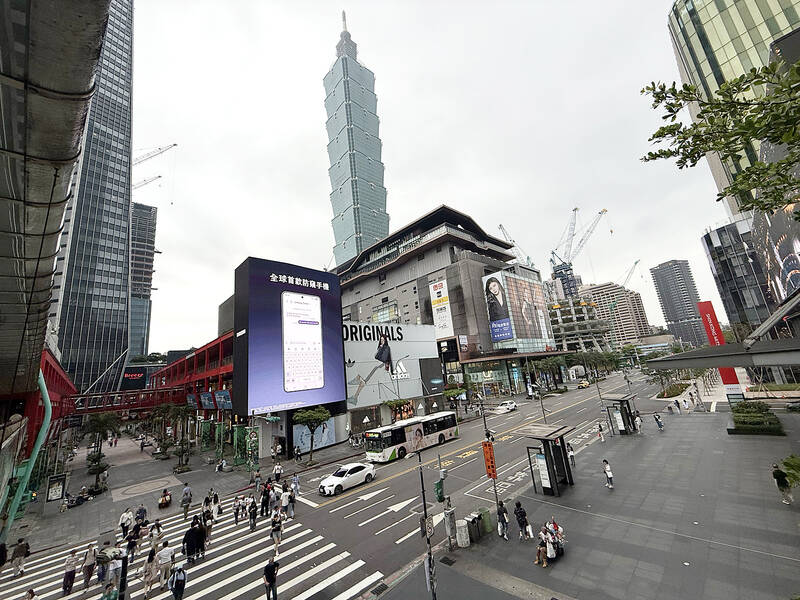
Photo: CNA
Solid external demand more than offset uncertainties from Middle East tensions and inflationary pressures linked to higher energy costs, he added.
CIER estimated that Taiwan’s economy likely expanded 13.19 percent in the January-to-March period, with growth expected to moderate to 8.3 percent in the second quarter, 6.05 percent in the third and 2.3 percent in the fourth.
The Directorate-General of Budget, Accounting and Statistics would release its growth update next month.
Exports are projected to surge 25.85 percent this year, while imports are forecast to rise 23.03 percent, underscoring the strength of Taiwan’s trade-led expansion.
Momentum remains heavily concentrated in the information and electronics sector, which continues to benefit from global AI demand, CIER said.
Taiwan is home to the world’s largest AI chipmaker and leading AI server manufacturers, all of which reported strong first-quarter earnings and remain upbeat about demand prospects.
Several international institutions have also upgraded their outlook for Taiwan, CIER researcher Peng Su-ling (彭素玲) said.
The Asian Development Bank recently projected 7.6 percent growth, while JPMorgan Chase & Co estimated expansion could reach 8.6 percent.
CIER said it expects the consumer price index (CPI) to rise about 1.98 percent this year, staying just below the central bank’s 2 percent inflation threshold.
Government measures, including fuel subsidies and frozen electricity tariffs, have helped contain inflation despite elevated global energy costs, Peng said.
International crude prices are hovering at about US$95 per barrel, easing from peaks higher than US$120, as a temporary US-Iran ceasefire has helped calm supply fears.
However, CIER warned that fuel prices remain a key uncertainty, with lingering geopolitical tensions posing risks such as supply disruptions and renewed oil price volatility.
Attention is also focused on the US Federal Reserve’s policy trajectory, which could influence Taiwan’s central bank decisions, Lien said.
The outlook remains closely tied to the duration of the Middle East conflict, he said, adding that US inflation has approached 3 percent ahead of leadership changes at the Fed, adding to policy uncertainty.
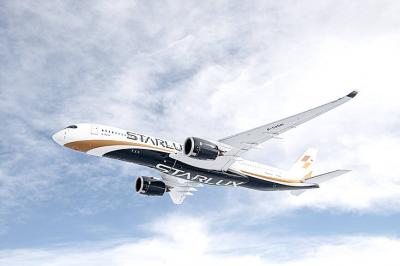
Starlux Airlines Co (星宇航空) today unveiled a long-haul network expansion plan at a shareholders’ meeting in Taipei, including direct flights to Barcelona, Spain, and Zurich, Switzerland, as well as a service connecting Taipei, Sydney and New Zealand. Starlux is to become the first Taiwanese carrier to offer non-stop services to the two European cities, while the inaugural oceanic route is expected to expand transit opportunities within the Australia-New Zealand market, Starlux said. Flight services to Chicago, Dallas, Washington and New York are under evaluation, the airline added. Prior to the shareholders’ meeting, the airline earlier this year announced that it would be
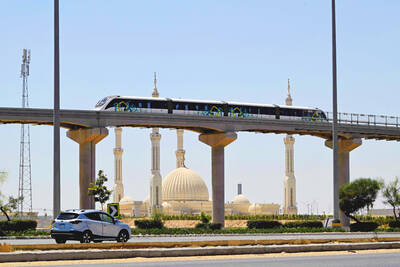
Cairo’s new monorail slices across the city skyline, running above the familiar chaos of blaring horns and aging buses’ exhaust fumes that mark rush hour below. The US$4.5 billion monorail, opened this month, is among Egypt’s most prominent new transport projects, part of a debt-funded infrastructure drive criticized for sapping state finances while bringing limited benefits to most of the country’s 109 million people. “It feels like you’re in a different country,” said Ramy Sayed, a restaurant manager, aboard a driverless Innovia 300 train. “No noise, no traffic, we’re not used to this.” The eastern line runs 56km from the bustling middle-class
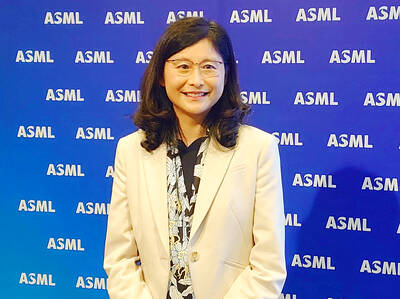
Netherlands-based semiconductor equipment supplier ASML Holding NV yesterday said that it is planning to hire an additional 1,000 people in Taiwan this year in response to growing demand from clients. ASML had previously planned to recruit 600 people this year, but that the plan has been adjusted upward, ASML vice president and ASML Taiwan general manager Grace Wang (汪佳慧) told reporters. ASML has a workforce of more than 4,500 in Taiwan, accounting for about 10 percent of its global total, Wang said. This year’s recruitment campaign would focus on adding people in the customer support, manufacturing and supply chain domains to assist ASML
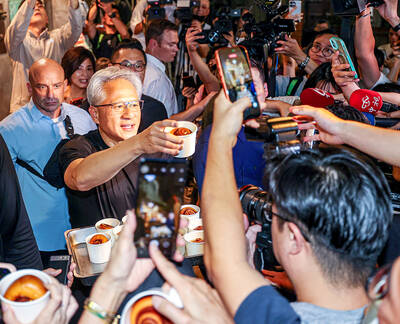
Nvidia Corp yesterday announced that CEO Jensen Huang (黃仁勳) would attend an employee meeting in Taipei tomorrow to celebrate the launch of the company’s Taiwan headquarters project. Huang would attend a gathering at the site of Nvidia’s planned headquarters in Beitou Shilin Technology Park (北投士林科技園區), the company said in a statement. After arriving in Taiwan on Saturday last week, Huang told reporters that he plans to meet with Quanta Computer Inc (廣達) chairman Barry Lam (林百里) and Taiwan Semiconductor Manufacturing Co (TSMC, 台積電) chairman C.C. Wei (魏哲家), and would attend the groundbreaking ceremony for Nvidia’s Taiwan headquarters tomorrow. Nvidia has not yet applied


 RSS
RSS