


Semiconductor Manufacturing International Corp (中芯, SMIC), China’s largest chipmaker, has sent chipmaking tools to Iran’s military, two senior US officials said on Thursday, raising questions about Beijing’s stance in the month-old US-Israeli conflict with Iran.
SMIC, which has been heavily sanctioned by the US government over alleged ties to the Chinese military, began sending the tools to Iran about a year ago and “we have no reason to believe that any of this has stopped,” an official said.
The official added that the collaboration “almost certainly included technical training on SMIC’s semiconductor technology.”
Photo: Reuters
The officials spoke on condition of anonymity to discuss previously undisclosed US government information. They did not specify whether the tools were of US origin, which would likely make shipment to Iran a violation of US sanctions.
The Chinese government maintains that it carries out normal commercial trade with Iran. SMIC, which was added to a trade blacklist in 2020 that restricts its access to US exports, has denied allegations that it has ties to the Chinese military-industrial complex.
China has not publicly taken a side in the Middle East conflict. Chinese Foreign Minister Wang Yi (王毅) this week called on the parties to seize all opportunities to start peace talks as soon as possible.
The allegations threaten to heighten tensions between Washington and Beijing as the US wages war against Tehran and as it has sought to choke off China’s advanced chip industry.
It was reported last month that Iran was close to a deal with China on the purchase of anti-ship cruise missiles, just as the US deployed a vast naval force near the Iranian coast ahead of strikes on the Islamic Republic.
It was not immediately clear what, if any, role the chipmaking tools have played in Iran’s response to the war, which was launched by the US and Israel on Feb. 28 and has roiled financial markets, triggered a surge in oil prices and fueled global inflation fears.
One of the officials said the tools have been provided to Iran’s “military industrial complex” and could be used for any electronics that require chips.
Washington has sought to curtail China’s ability to make advanced semiconductors through sanctions on SMIC and other Chinese chipmakers, aiming to limit their access to advanced chipmaking equipment from top US suppliers such as Lam Research, KLA and Applied Materials. The administration under former US president Joe Biden tightened restrictions on SMIC in 2024, cutting off its most advanced factory from more US imports after it produced a sophisticated chip for Huawei’s (華為) Mate 60 Pro phone.
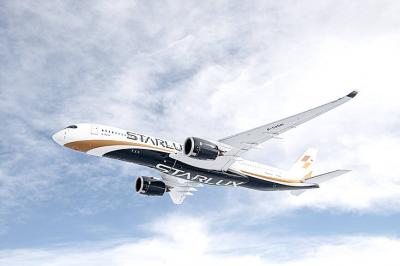
Starlux Airlines Co (星宇航空) today unveiled a long-haul network expansion plan at a shareholders’ meeting in Taipei, including direct flights to Barcelona, Spain, and Zurich, Switzerland, as well as a service connecting Taipei, Sydney and New Zealand. Starlux is to become the first Taiwanese carrier to offer non-stop services to the two European cities, while the inaugural oceanic route is expected to expand transit opportunities within the Australia-New Zealand market, Starlux said. Flight services to Chicago, Dallas, Washington and New York are under evaluation, the airline added. Prior to the shareholders’ meeting, the airline earlier this year announced that it would be

Cairo’s new monorail slices across the city skyline, running above the familiar chaos of blaring horns and aging buses’ exhaust fumes that mark rush hour below. The US$4.5 billion monorail, opened this month, is among Egypt’s most prominent new transport projects, part of a debt-funded infrastructure drive criticized for sapping state finances while bringing limited benefits to most of the country’s 109 million people. “It feels like you’re in a different country,” said Ramy Sayed, a restaurant manager, aboard a driverless Innovia 300 train. “No noise, no traffic, we’re not used to this.” The eastern line runs 56km from the bustling middle-class
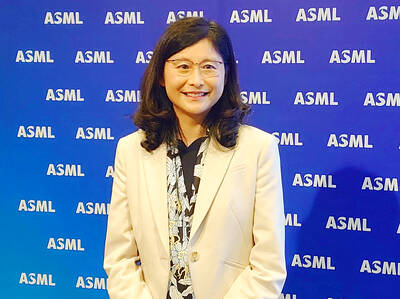
Netherlands-based semiconductor equipment supplier ASML Holding NV yesterday said that it is planning to hire an additional 1,000 people in Taiwan this year in response to growing demand from clients. ASML had previously planned to recruit 600 people this year, but that the plan has been adjusted upward, ASML vice president and ASML Taiwan general manager Grace Wang (汪佳慧) told reporters. ASML has a workforce of more than 4,500 in Taiwan, accounting for about 10 percent of its global total, Wang said. This year’s recruitment campaign would focus on adding people in the customer support, manufacturing and supply chain domains to assist ASML

Nvidia Corp yesterday announced that CEO Jensen Huang (黃仁勳) would attend an employee meeting in Taipei tomorrow to celebrate the launch of the company’s Taiwan headquarters project. Huang would attend a gathering at the site of Nvidia’s planned headquarters in Beitou Shilin Technology Park (北投士林科技園區), the company said in a statement. After arriving in Taiwan on Saturday last week, Huang told reporters that he plans to meet with Quanta Computer Inc (廣達) chairman Barry Lam (林百里) and Taiwan Semiconductor Manufacturing Co (TSMC, 台積電) chairman C.C. Wei (魏哲家), and would attend the groundbreaking ceremony for Nvidia’s Taiwan headquarters tomorrow. Nvidia has not yet applied


 RSS
RSS