


Soaring housing prices in Taiwan are pushing developers to prioritize smaller two-bedroom units that better fit buyers’ budgets, even as larger three-bedroom apartments remain the preferred, but increasingly unattainable choice, Evertrust Rehouse Co said yesterday.
The median price for a three-bedroom apartment in Taipei has surged to NT$36.52 million (US$1.19 million), about NT$20 million in Hsinchu County, and slightly above NT$10 million in Taoyuan, Taichung, Tainan and Kaohsiung, the broker said.
Citing Bureau of Labor Insurance data, Evertrust said mortgage burdens for three-bedroom apartments across the six special municipalities place households under heavy financial pressure, with monthly payments often far exceeding average wages.
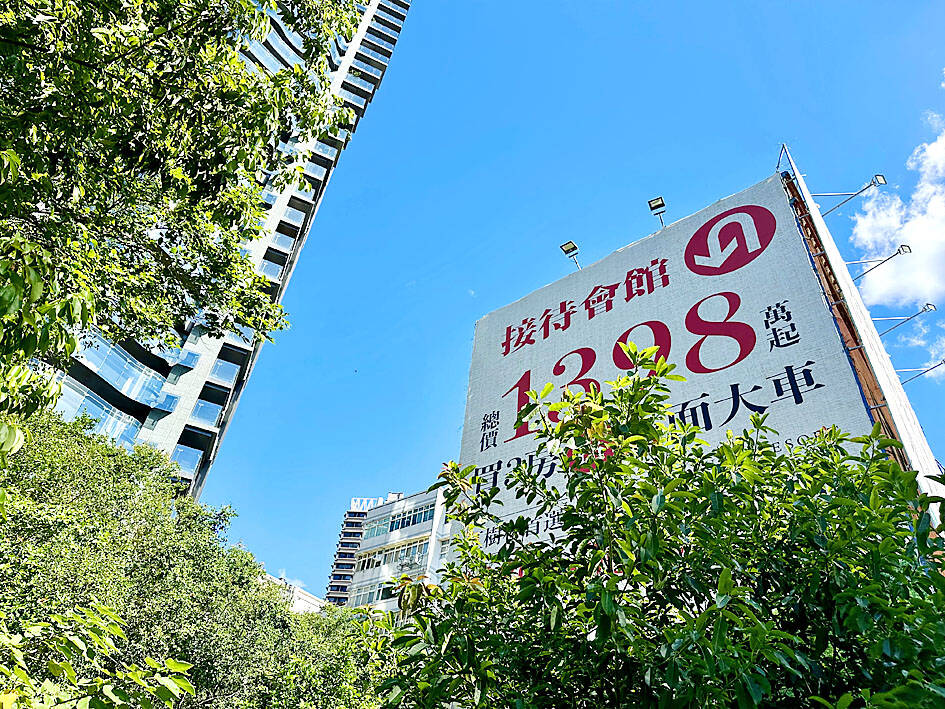
Photo: Hsu Yi-ping, Taipei Times
For example, in Taipei, the mortgage-to-income ratio stands at 181 percent, meaning monthly repayments are nearly 1.8 times the city’s average salary. This assumes a 70 percent loan-to-value ratio, a 30-year repayment term and an interest rate of 2.303 percent, Evertrust said.
New Taipei ranks second with a mortgage-to-income ratio of 112.1 percent, followed by Hsinchu County at 108.9 percent.
“Taipei, as Taiwan’s political and economic center, attracts a large inflow of workers from other regions, fueling strong housing demand and driving prices to the highest nationwide,” Evertrust deputy researcher head Chen Chin-ping (陳金萍) said.
Being priced out of larger apartments has fueled both the construction of smaller units and the so-called “move out of Taipei” trend in the past few years, Chen said.
Hsinchu has also become a hotspot, driven by demand from high-earning tech workers at the Hsinchu Science Park, with limited housing supply accelerating price growth, she said.
The burden varies significantly between Hsinchu County and Hsinchu City, Evertrust said.
While the county’s mortgage-to-income ratio reaches 108.9 percent, the city’s ratio is only 63.4 percent, reflecting higher average salaries, Chen said.
In southern Taiwan, Tainan and Kaohsiung remain the most affordable among the seven major metropolitan areas, with median home prices of NT$10.88 million and NT$11.67 million.
Monthly mortgage payments average about NT$30,000 in both cities, equal to 72.2 percent and 75.6 percent of local residents’ wages respectively, Evertrust said.
Still, both cities have experienced rapid price gains over the past few years, powered by the expansion of the Southern Taiwan Science Park and new facilities opened by Taiwan Semiconductor Manufacturing Co (台積電), the world’s largest supplier of advanced chips.
Chen urged prospective buyers to assess their financial position carefully before committing to a purchase.
“If the mortgage-to-income ratio is too high, most of the monthly salary will go to housing loans, inevitably squeezing living quality and undermining long-term financial planning,” she said.
Buyers should avoid excessive leverage and set aside emergency funds to guard against risks such as interest rate hikes, she added.

Elon Musk’s lieutenants have reached out to chip industry suppliers, including Applied Materials Inc, Tokyo Electron Ltd and Lam Research Corp, for his envisioned Terafab, early steps in an audacious and likely arduous attempt to break into the production of cutting-edge chips. Staff working for the joint venture between Tesla Inc and Space Exploration Technologies Corp (SpaceX) have sought price quotes and delivery times for an array of chipmaking gear, people familiar with the matter said. In past weeks, they’ve contacted makers of photomasks, substrates, etchers, depositors, cleaning devices, testers and other tools, according to the people, who asked not to
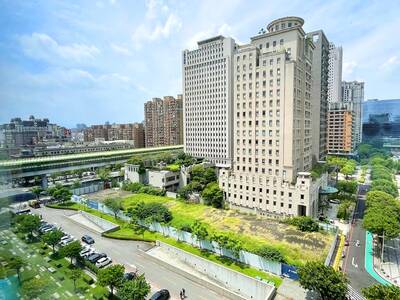
Taichung reported the steepest fall in completed home prices among the six special municipalities in the first quarter of this year, data compiled by Taiwan Realty Co (台灣房屋) showed yesterday. From January through last month, the average transaction price for completed homes in Taichung fell 8 percent from a year earlier to NT$299,000 (US$9,483) per ping (3.3m²), said Taiwan Realty, which compiled the data based on the government’s price registration platform. The decline could be attributed to many home buyers choosing relatively affordable used homes to live in themselves, instead of newly built homes in the city’s prime property market, Taiwan Realty
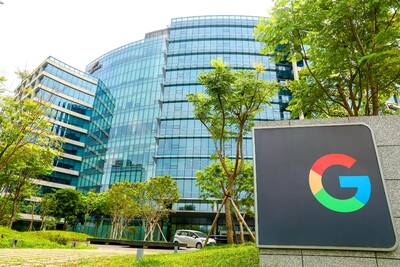
The government yesterday approved applications by Alphabet Inc’s Google to invest NT$27.08 billion (US$859.98 million) in Taiwan, the Ministry of Economic Affairs said in a statement. The Department of Investment Review approved two investments proposed by Google, with much of the funds to be used for data processing and electronic information supply services, as well as inventory procurement businesses in the semiconductor field, the ministry said. It marks the second consecutive year that Google has applied to increase its investment in Taiwan. Google plans to infuse NT$25.34 billion into Charter Investments Ltd (特許投資顧問) through its Singapore-based subsidiary Fructan Holdings Singapore Pte Ltd, and

JET JUICE: The war on Iran’s secondary effects have seen fuel prices skyrocket, knocking flight schedules down to earth in return as airlines struggle with costs Airline passengers should brace for more irritation in the next few months as carriers worldwide cancel flights and ground planes to cope with stratospheric increases in jet-fuel prices. Dutch flag carrier KLM is the latest company to cut its schedule, saying on Thursday that it would scrap 80 return flights at Amsterdam’s Schiphol Airport in the coming month. That puts it in the same league as United Airlines Holdings Inc, Deutsche Lufthansa AG and Cathay Pacific Airways Ltd, which have all pruned itineraries to mitigate costs. Global capacity for next month has been reduced by about 3 percentage points, with all


 RSS
RSS