


The China Development Foundation under KGI Financial Holdings has long been committed to supporting the education of underprivileged children. Each year, through the “Legacy 100 x Tutoring 100 Program” (hereafter referred to as Legacy 100), the foundation provides scholarships to university students who serve as tutoring volunteers in elementary and junior high schools. Now in its 19th year, the program has engaged thousands of university volunteers, accompanying children in their learning and growth through the action of “big hands holding little hands.”
The foundation recently held a Legacy 100 briefing session, where KGI Bank President Kate Lin witnessed university students completing their tutoring missions and encouraged volunteers to pass on the spirit of companionship, forming a positive cycle that lights up the future of disadvantaged children.
In Taiwan, there are children who face significant challenges in their learning journey due to financial hardship or lack of resources. China Development Foundation Chairman Angelo J.Y. Koo upholds the belief that “education is the best investment” and has long promoted Legacy 100, with its core values of mutual companionship and building learning confidence. By supporting university students to become tutoring volunteers, the program provides a strong backing for children’s education. The act of “big hands holding little hands” is transformed into concrete action, making education not only a transmission of knowledge but also a connection of emotions and an inspiration of life.
勉勵薪傳100志工,透過陪伴精神的傳遞,為弱勢孩子成就更美好的未來。 (1).jpg)
Photo courtesy of KGI Financial Holdings
At this year’s Legacy 100 briefing, KGI Bank President Kate Lin interacted with youth volunteers, not only recognizing their contributions but also encouraging them to understand that tutoring is not just about teaching — it’s about bringing warmth into children’s hearts. This power will take root in their minds and become the courage and hope they need to face the future.
Lien, a student at National Yang Ming Chiao Tung University, has received the Legacy Scholarship for four consecutive years due to outstanding academic performance. He shared that on the first day of school, the children eagerly asked when tutoring would begin. At that moment, he felt the value of being needed and realized that his efforts were being seen. Lin, a student at Tamkang University, said that being a big sister to children in moments of confusion and helplessness is a rare kind of happiness. Through the process of companionship and interaction, she has learned to reflect and grow.
In addition to tutoring services, the foundation also emphasizes financial literacy for youth volunteers. This year, Nelson Chien, Assistant Vice President of the Wealth Management Division at KGI Bank, was invited to share financial management concepts with university students. He encouraged young people to start with regular savings and make good use of time and compound interest to build their own long-term financial strategies.
KGI Financial Holdings continues to fulfill its corporate social responsibility through concrete actions. Through Legacy 100, the group not only supports young students in pursuing their dreams but also ignites hope for disadvantaged children, extending the influence of the financial industry to every corner of society.
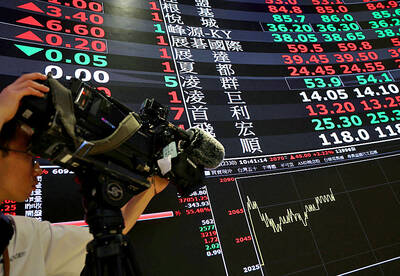
After several years flying high as Asia’s best Nvidia Corp proxy, Taiwan Semiconductor Manufacturing Co (TSMC, 台積電) is increasingly vying with other artificial intelligence (AI) stocks for investor attention. Stock traders are chasing a wider array of beneficiaries as mainstream usage of AI creates demand for hardware beyond the most-advanced chips TSMC makes for Nvidia. Subthemes from the deepening memory crunch to advances in robotics are also luring bids. At the same time, investment caps on single stocks are pushing funds to diversify, while retail investors long familiar with TSMC through its US depositary receipts are being offered a broader set of

Netherlands-based semiconductor equipment supplier ASML Holding NV yesterday said that it is planning to hire an additional 1,000 people in Taiwan this year in response to growing demand from clients. ASML had previously planned to recruit 600 people this year, but that the plan has been adjusted upward, ASML vice president and ASML Taiwan general manager Grace Wang (汪佳慧) told reporters. ASML has a workforce of more than 4,500 in Taiwan, accounting for about 10 percent of its global total, Wang said. This year’s recruitment campaign would focus on adding people in the customer support, manufacturing and supply chain domains to assist ASML
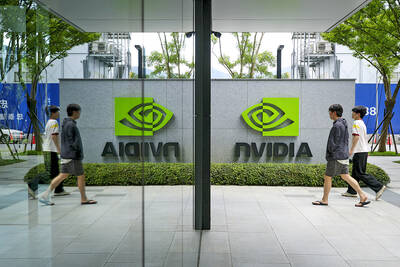
UNDER MICROSCOPE: Taiwan detained three people who allegedly conspired to buy servers in Taiwan and export them using fraudulent documentation, prosecutors said Nvidia Corp chief executive officer Jensen Huang (黃仁勳) on Saturday urged Super Micro Computer Inc to tighten up on compliance after Taiwan detained three people this week for allegedly making fraudulent declarations about artificial intelligence (AI) servers made by its US partner. The development marked the nation’s first crackdown on semiconductor smuggling, which grew after the US slapped restrictions on exports of high-end chips such as Nvidia AI accelerators to China. Nvidia is “rigorous” in explaining regulations to all of its partners, Huang told reporters after arriving in Taipei. “Ultimately Super Micro has to run their own company,” he said in response to

Nvidia Corp yesterday announced that CEO Jensen Huang (黃仁勳) would attend an employee meeting in Taipei tomorrow to celebrate the launch of the company’s Taiwan headquarters project. Huang would attend a gathering at the site of Nvidia’s planned headquarters in Beitou Shilin Technology Park (北投士林科技園區), the company said in a statement. After arriving in Taiwan on Saturday last week, Huang told reporters that he plans to meet with Quanta Computer Inc (廣達) chairman Barry Lam (林百里) and Taiwan Semiconductor Manufacturing Co (TSMC, 台積電) chairman C.C. Wei (魏哲家), and would attend the groundbreaking ceremony for Nvidia’s Taiwan headquarters tomorrow. Nvidia has not yet applied


 RSS
RSS