


Aten International Co Ltd (宏正自動科技), a provider of information technology (IT) infrastructure solutions such as videoconferencing services, yesterday said it is eyeing potential large-scale Kernel-based virtual machine (KVM) switch orders from Asian clients to help the company navigate macroeconomic headwinds in the second half of this year.
A KVM switch is a hardware device that allows a user to control multiple computers with one keyboard, monitor and mouse.
The company provides IT solutions for small offices, home offices, and small and medium-sized businesses. Its products also include video products, server racks, USB peripherals and wiring harnesses.
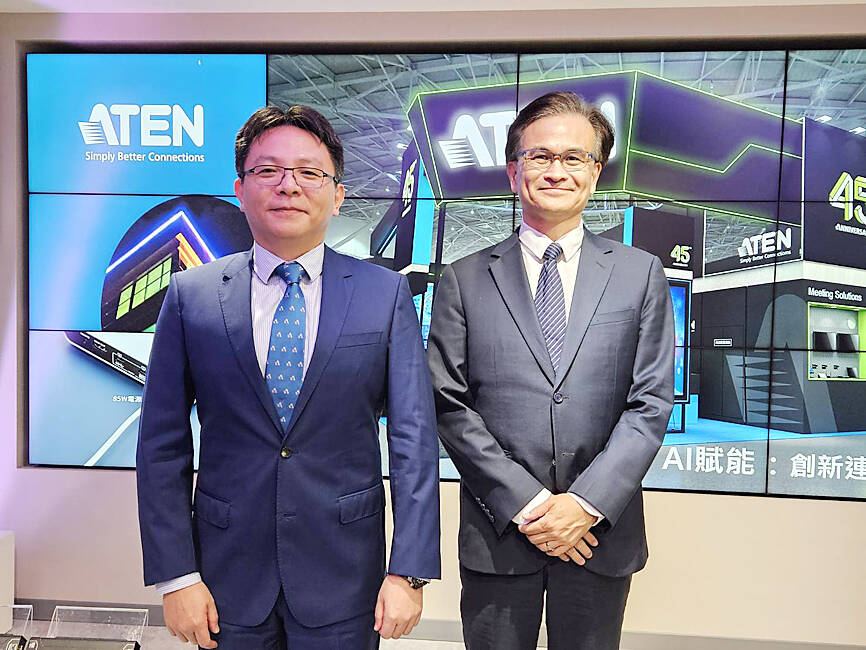
Photo: Wang Yi-hung, Taipei Times
Aten reported revenue of NT$2.34 billion (US$76.5 million) in the first seven months of this year, down 2 percent year-on-year.
Asia accounted for 61 percent of the company’s sales during the period, while the Americas and Europe contributed 18 percent each, and the remaining regions accounted for 3 percent.
Asia was the only region that posted year-on-year growth this year, and the company is positive about the region in the second half, with demand rebounding in Taiwan, South Korea and India, Aten chief financial officer Wayne Tyan (田慶威) told an online earnings conference.
Aten remains cautious about Europe amid the prolonged Russia-Ukraine war, but has seen US demand rebound after tariff-related concerns subsided, Tyan said.
For KVM, Aten expects Asian revenue this year to rise from last year, supported by orders from Japan and India, and a gradual rebound in demand in Taiwan, Aten senior manager of the enterprise product center Yiwun Lu (呂以文) said.
Revenue from the US market is expected to gain support by recovering demand since last month and increased shipments of secure KVM switches, Lu said.
Secure KVM switches emphasize security and certification to better meet government and military information assurance standards than regular KVMs.
The KVM outlook in Europe remains uncertain due to seasonal factors, with half of the orders in northern European nations yet to be shipped, she said.
Aten’s net profit in the second quarter tumbled 39.32 percent to NT$65.19 million from NT$107.44 million in the same period last year, weighed by the sharp appreciation of the New Taiwan dollar, Tyan said.
On a quarterly basis, net profit declined 41.57 percent from NT$111.59 million.
Every 1 percent appreciation of the NT dollar against the US dollar resulted in foreign exchange losses of NT$4 million to NT$5 million, she said.
Earnings per share fell to NT$0.53 from NT$0.88 a year earlier and NT$0.91 the prior quarter.
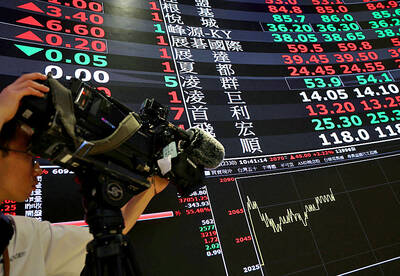
After several years flying high as Asia’s best Nvidia Corp proxy, Taiwan Semiconductor Manufacturing Co (TSMC, 台積電) is increasingly vying with other artificial intelligence (AI) stocks for investor attention. Stock traders are chasing a wider array of beneficiaries as mainstream usage of AI creates demand for hardware beyond the most-advanced chips TSMC makes for Nvidia. Subthemes from the deepening memory crunch to advances in robotics are also luring bids. At the same time, investment caps on single stocks are pushing funds to diversify, while retail investors long familiar with TSMC through its US depositary receipts are being offered a broader set of

UNDER MICROSCOPE: Taiwan detained three people who allegedly conspired to buy servers in Taiwan and export them using fraudulent documentation, prosecutors said Nvidia Corp chief executive officer Jensen Huang (黃仁勳) on Saturday urged Super Micro Computer Inc to tighten up on compliance after Taiwan detained three people this week for allegedly making fraudulent declarations about artificial intelligence (AI) servers made by its US partner. The development marked the nation’s first crackdown on semiconductor smuggling, which grew after the US slapped restrictions on exports of high-end chips such as Nvidia AI accelerators to China. Nvidia is “rigorous” in explaining regulations to all of its partners, Huang told reporters after arriving in Taipei. “Ultimately Super Micro has to run their own company,” he said in response to
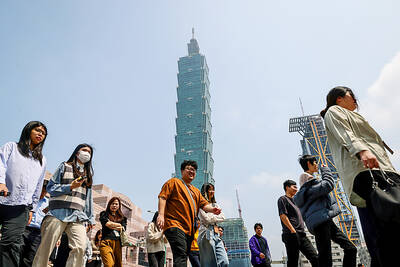
TECH RELIANCE: Growth is increasingly reflecting an unequal K-shaped distribution, where technology sectors outperform and other industries struggle, an expert said Standard Chartered Bank has significantly raised its forecast for Taiwan’s economic growth to 9.5 percent this year, up from 7.6 percent previously, citing surging artificial intelligence (AI) demand driving exports, semiconductor production and investment. The upgrade reflects a sustained AI supercycle that continues to fuel demand for advanced chips and technology infrastructure, which form the backbone of Taiwan’s exports, the bank said in a report this week. “We raise our 2026 growth forecast to reflect a much stronger-than-expected first-quarter GDP figure,” Standard Chartered senior economist for greater China and Asia Tommy Wu (胡東安) said in the report. Driven largely by a 35.3 percent
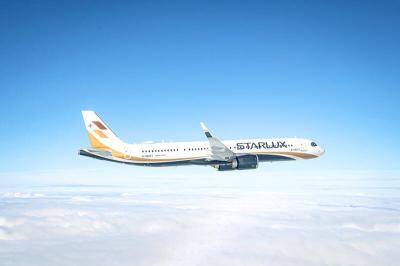
Two of Taiwan’s international carriers, Starlux Airlines Co (星宇航空) and EVA Airways Corp (長榮航空), have retained the five-star airline rating awarded by international airline review organization Skytrax. Starlux was awarded the distinction for a second consecutive year, while EVA Air received it for the 11th straight year, Skytrax said in statements released yesterday and on Thursday last week, respectively. The five-star rating is considered one of the airline industry's highest honors and is awarded following professional audits of airline product and frontline service standards, Skytrax said. The ratings are based on in-depth assessments using unified global quality standards rather than customer review scores


 RSS
RSS