


Citibank Taiwan Ltd has been recognized as one of the “Best Companies to Work for in Asia” by HR Asia, a leading human resources publication in the region.
“Talent is Citi’s most valued asset,” said Christie Chang (張聖心), Citi CEO for Taiwan and chairman of Citibank Taiwan Ltd. “To support holistic employee well-being, Citi offers a range of benefits that go beyond the requirements of labor law and advocates the importance of physical and mental health. Citi’s core values and spirit of mutual respect are embedded in the way colleagues engage with one another.”
Citibank Taiwan Ltd works with counseling providers to offer consultation services in addition to wellbeing-related activities and seminars, offering colleagues resources to support their overall well-being.
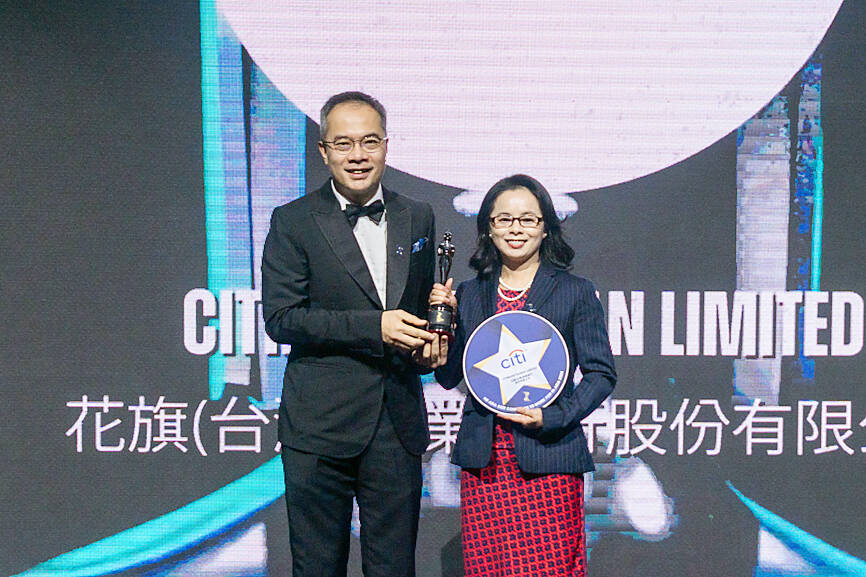
Photo courtesy of Citibank Taiwan Ltd
Pamela Tsai (蔡慧芬), head of Human Resources of Citibank Taiwan Ltd said, “We are proud of Citi’s long track record of being a meritocracy, and are dedicated to fostering a work environment where all colleagues are empowered to participate fully and reach their potential.”
Widely recognized for nurturing talent in the financial sector, Citi’s Full-time Analyst Program (formerly known as Management Associate Program) was first introduced in Taiwan in 1977. Since then, Citi has remained committed to nurturing local talent and enhancing training and development programs.
In addition to being recognized as the “Best Companies to Work for in Asia” by HR Asia, Citibank Taiwan Ltd has also received numerous accolades over the years, including the “Best Staff Retention” award from 104 Job Bank. These recognitions reflect Citi’s ongoing commitment to talent development and to building a workplace where all can thrive.
Companies in Taiwan are navigating critical challenges in talent retention, multigenerational workforce integration, and shifting employee expectations. According to the National Development Council, Taiwan is expected to face a shortfall of 480,000 workers by 2030, with 71 percent of Taiwanese employers reporting difficulty in filling critical positions, and nearly half (49 percent) find it challenging to fill mid-to-senior level positions.
The award ceremony was held on August 8, with Pamela Tsai, head of Human Resources at Citibank Taiwan Ltd, accepting the award on behalf of the company.
After several years flying high as Asia’s best Nvidia Corp proxy, Taiwan Semiconductor Manufacturing Co (TSMC, 台積電) is increasingly vying with other artificial intelligence (AI) stocks for investor attention. Stock traders are chasing a wider array of beneficiaries as mainstream usage of AI creates demand for hardware beyond the most-advanced chips TSMC makes for Nvidia. Subthemes from the deepening memory crunch to advances in robotics are also luring bids. At the same time, investment caps on single stocks are pushing funds to diversify, while retail investors long familiar with TSMC through its US depositary receipts are being offered a broader set of

Netherlands-based semiconductor equipment supplier ASML Holding NV yesterday said that it is planning to hire an additional 1,000 people in Taiwan this year in response to growing demand from clients. ASML had previously planned to recruit 600 people this year, but that the plan has been adjusted upward, ASML vice president and ASML Taiwan general manager Grace Wang (汪佳慧) told reporters. ASML has a workforce of more than 4,500 in Taiwan, accounting for about 10 percent of its global total, Wang said. This year’s recruitment campaign would focus on adding people in the customer support, manufacturing and supply chain domains to assist ASML

UNDER MICROSCOPE: Taiwan detained three people who allegedly conspired to buy servers in Taiwan and export them using fraudulent documentation, prosecutors said Nvidia Corp chief executive officer Jensen Huang (黃仁勳) on Saturday urged Super Micro Computer Inc to tighten up on compliance after Taiwan detained three people this week for allegedly making fraudulent declarations about artificial intelligence (AI) servers made by its US partner. The development marked the nation’s first crackdown on semiconductor smuggling, which grew after the US slapped restrictions on exports of high-end chips such as Nvidia AI accelerators to China. Nvidia is “rigorous” in explaining regulations to all of its partners, Huang told reporters after arriving in Taipei. “Ultimately Super Micro has to run their own company,” he said in response to
Nvidia Corp yesterday announced that CEO Jensen Huang (黃仁勳) would attend an employee meeting in Taipei tomorrow to celebrate the launch of the company’s Taiwan headquarters project. Huang would attend a gathering at the site of Nvidia’s planned headquarters in Beitou Shilin Technology Park (北投士林科技園區), the company said in a statement. After arriving in Taiwan on Saturday last week, Huang told reporters that he plans to meet with Quanta Computer Inc (廣達) chairman Barry Lam (林百里) and Taiwan Semiconductor Manufacturing Co (TSMC, 台積電) chairman C.C. Wei (魏哲家), and would attend the groundbreaking ceremony for Nvidia’s Taiwan headquarters tomorrow. Nvidia has not yet applied


 RSS
RSS