


Yageo Corp (國巨), the world’s No. 3 multilayer ceramic capacitor (MLCC) supplier, yesterday again extended the deadline of its tender offer for Japan’s Shibaura Electronics Co to Aug. 1 as it has yet to obtain approval from Japanese authorities.
The fifth-time deadline extension came as a review of the deal has not been completed under Japan’s Foreign Exchange and Foreign Trade Act, Yageo said in a statement.
The company said it hoped to obtain the necessary approval for the potentially ¥94.55 billion (US$639.2 million) deal before the expiration of the new deadline.
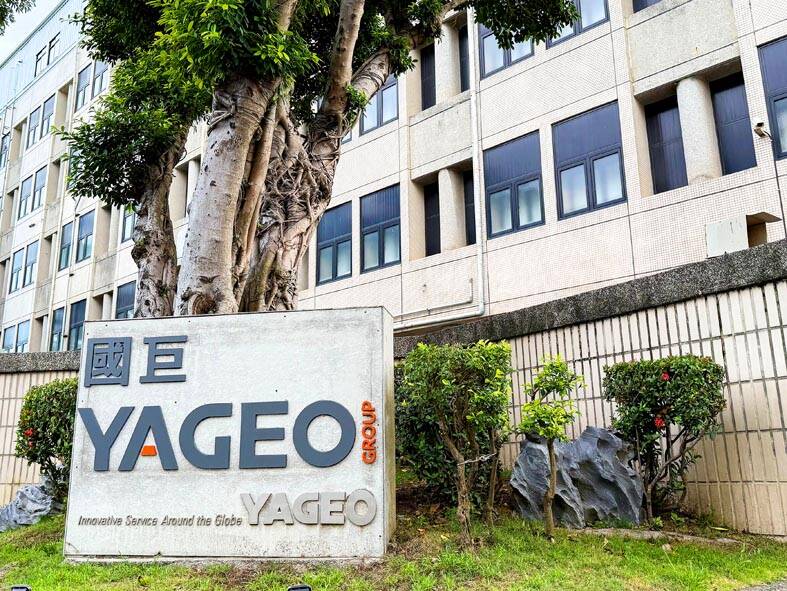
Photo: Wen-Yee Lee, Reuters
Yageo expects to wrap up the deal in the third quarter as planned previously, the company said in a filing with the Taiwan Stock Exchange.
“We have no plans on withdrawing the tender offer as of now,” Yageo said in a seperate statement responding to the questions from Shibaura Electronics regarding the tender offer.
Yageo expects the acquisition of Shibaura Electronics, the world’s largest supplier of thermistors, to further bolster its sensor business by expanding its product portfolio. The deal would help Shibaura Electronics to expand its global reach to the US and Europe and to penetrate to more market segments beyond automotive and consumer sectors, it said.
Yageo and Shibaura Electronics are set to hold a third meeting on Thursday and Friday in Taipei to explore Shibaura and YAGEO’s synergy effects and to share future business strategies.
Yageo on May 9 launched the tender offer through its Japanese subsidiary Yageo Electronics Japan LLC. It aims to acquire all 15.25 million Shibaura shares in cash with an offering price of ¥6,200 per share.
The deal would succeed if Yageo acquires 7.62 million Shibaura Electronics shares, or a 50 percent stake in the Japanese firm, the company said in a regulatory filing in May.
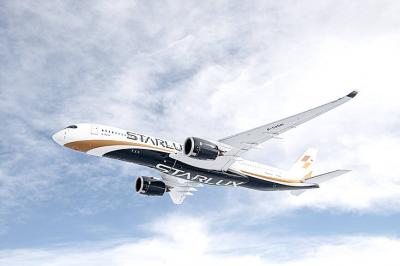
Starlux Airlines Co (星宇航空) today unveiled a long-haul network expansion plan at a shareholders’ meeting in Taipei, including direct flights to Barcelona, Spain, and Zurich, Switzerland, as well as a service connecting Taipei, Sydney and New Zealand. Starlux is to become the first Taiwanese carrier to offer non-stop services to the two European cities, while the inaugural oceanic route is expected to expand transit opportunities within the Australia-New Zealand market, Starlux said. Flight services to Chicago, Dallas, Washington and New York are under evaluation, the airline added. Prior to the shareholders’ meeting, the airline earlier this year announced that it would be

Cairo’s new monorail slices across the city skyline, running above the familiar chaos of blaring horns and aging buses’ exhaust fumes that mark rush hour below. The US$4.5 billion monorail, opened this month, is among Egypt’s most prominent new transport projects, part of a debt-funded infrastructure drive criticized for sapping state finances while bringing limited benefits to most of the country’s 109 million people. “It feels like you’re in a different country,” said Ramy Sayed, a restaurant manager, aboard a driverless Innovia 300 train. “No noise, no traffic, we’re not used to this.” The eastern line runs 56km from the bustling middle-class
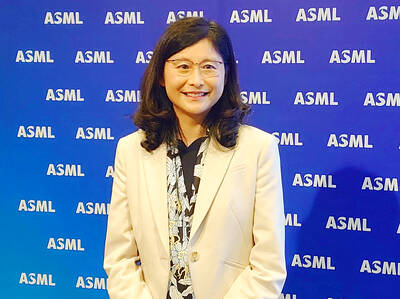
Netherlands-based semiconductor equipment supplier ASML Holding NV yesterday said that it is planning to hire an additional 1,000 people in Taiwan this year in response to growing demand from clients. ASML had previously planned to recruit 600 people this year, but that the plan has been adjusted upward, ASML vice president and ASML Taiwan general manager Grace Wang (汪佳慧) told reporters. ASML has a workforce of more than 4,500 in Taiwan, accounting for about 10 percent of its global total, Wang said. This year’s recruitment campaign would focus on adding people in the customer support, manufacturing and supply chain domains to assist ASML
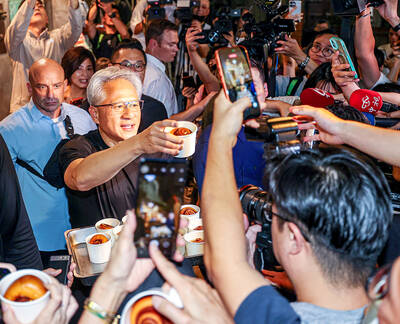
Nvidia Corp yesterday announced that CEO Jensen Huang (黃仁勳) would attend an employee meeting in Taipei tomorrow to celebrate the launch of the company’s Taiwan headquarters project. Huang would attend a gathering at the site of Nvidia’s planned headquarters in Beitou Shilin Technology Park (北投士林科技園區), the company said in a statement. After arriving in Taiwan on Saturday last week, Huang told reporters that he plans to meet with Quanta Computer Inc (廣達) chairman Barry Lam (林百里) and Taiwan Semiconductor Manufacturing Co (TSMC, 台積電) chairman C.C. Wei (魏哲家), and would attend the groundbreaking ceremony for Nvidia’s Taiwan headquarters tomorrow. Nvidia has not yet applied


 RSS
RSS