


The crash of a Boeing 787 passenger jet in India minutes after takeoff on Thursday is putting the spotlight back on a beleaguered manufacturer, although it was not immediately clear why the plane crashed.
The Air India 787 went down in the northwestern city of Ahmedabad, India, with more than 240 people aboard shortly after takeoff, authorities said.
It was the first fatal crash since the plane, also known as the Dreamliner, went into service in 2011, according to the Aviation Safety Network database.
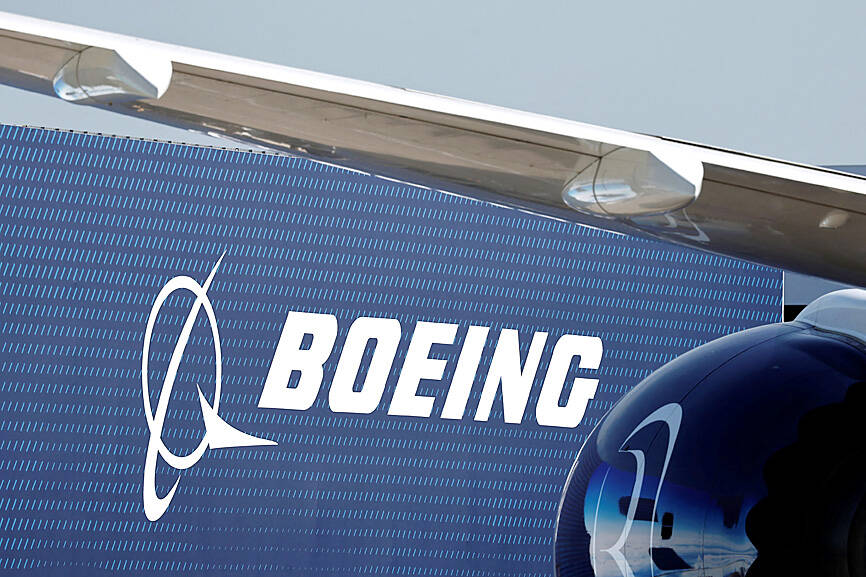
Photo: REUTERS
The Boeing Co shares fell more than 4 percent in afternoon trading.
The 787 was the first airliner to make extensive use of lithium ion batteries, which are lighter, recharge faster and hold more energy than other types of batteries. In 2013 the 787 fleet was temporarily grounded because of overheating of its lithium-ion batteries, which in some cases sparked fires.
The Max version of Boeing’s best-selling 737 airplane has been the source of persistent troubles for Boeing after two of the jets crashed. The crashes, one in Indonesia in 2018 and another in Ethiopia in 2019, killed 346 altogether.
The problem stemmed from a sensor providing faulty readings that pushed the nose down, leaving pilots unable to regain control. After the second crash, Max jets were grounded worldwide until the company redesigned the system.
Last month, the US Department of Justice reached a deal to allow Boeing to avoid criminal prosecution for allegedly misleading US regulators about the Max before the two crashes.
Worries about the plane flared up again after a door plug blew off a Max operated by Alaska Airlines, leading regulators to cap Boeing’s production at 38 jets per month.
Boeing posted a loss of US$11.8 billion last year, bringing its total losses since 2019 to more than US$35 billion.
The company’s financial problems were compounded by a strike by machinists who assemble the airplanes plane at its factories in Renton and Everett, Washington, which halted production at those facilities and hampered Boeing’s delivery capability.
For the first three months of this year, Boeing reported a narrower loss of US$31 million compared with the previous year. Boeing CEO Kelly Ortberg said Boeing made progress on stabilizing operations during the quarter.
The extra scrutiny and the workers’ strike resulted in Boeing’s aircraft deliveries sliding last year.
Boeing said it supplied 348 jetliners last year, which was one-third fewer than the 528 that it reported for the previous year.
The company delivered less than half the number of commercial aircraft to customers than its main rival Airbus SE, which reported delivering 766 commercial jets in 2023.
Still, Boeing’s troubles have not turned off airline customers from buying its jets. Last month, the firm secured big orders from two Middle Eastern customers. The deals included a US$96 billion order for 787 and 777X jets from Qatar Airways Co, which it said was the biggest order for 787s and wide body jets in the company’s history.
The government yesterday approved applications by Alphabet Inc’s Google to invest NT$27.08 billion (US$859.98 million) in Taiwan, the Ministry of Economic Affairs said in a statement. The Department of Investment Review approved two investments proposed by Google, with much of the funds to be used for data processing and electronic information supply services, as well as inventory procurement businesses in the semiconductor field, the ministry said. It marks the second consecutive year that Google has applied to increase its investment in Taiwan. Google plans to infuse NT$25.34 billion into Charter Investments Ltd (特許投資顧問) through its Singapore-based subsidiary Fructan Holdings Singapore Pte Ltd, and

SECOND-RATE: Models distilled from US products do not perform the same as the original and undo measures that ensure the systems are neutral, the US’ cable said The US Department of State has ordered a global push to bring attention to what it said are widespread efforts by Chinese companies, including artificial intelligence (AI) start-up DeepSeek (深度求索), to steal intellectual property from US AI labs, according to a diplomatic cable. The cable, dated Friday and sent to diplomatic and consular posts around the world, instructs diplomatic staff to speak to their foreign counterparts about “concerns over adversaries’ extraction and distillation of US AI models.” Distillation is the process of training smaller AI models using output from larger, more expensive ones to lower the costs of training a powerful new

Micron Technology Inc is a driving force pushing the US Congress to pass legislation that would put new export restrictions on equipment its Chinese competitors use to make their chips, according to people familiar with the matter. A US House of Representatives panel yesterday was to vote on the “MATCH Act,” a bill designed to close gaps in restrictions on chipmaking equipment. It would also pressure foreign companies that sell equipment to Chinese chipmaking facilities to align with export curbs on US companies like Lam Research Corp and Applied Materials Inc. The bill targets facilities operated by China’s ChangXin Memory Technologies Inc

Singapore-based ride-hailing and delivery giant Grab Holdings’ planned acquisition of Foodpanda’s Taiwan operations has yet to enter the formal review stage, as regulators await supplementary documents, the Fair Trade Commission (FTC) said yesterday. Acting FTC Chairman Chen Chih-min (陳志民) told the legislature’s Economics Committee that although Grab submitted its application on March 27, the case has not been officially accepted because required materials remain incomplete. Once the filing is finalized, the FTC would launch a formal probe into the deal, focusing on issues such as cross-shareholding and potential restrictions on market competition, Chen told lawmakers. Grab last month announced that it would acquire


 RSS
RSS