


Nintendo Co sold 3.5 million-plus units of the Switch 2 in just four days, a record-breaking start for the company’s first new console in eight years.
The Japanese company has already sold more of the device than the roughly 2.7 million the original Switch sold during its first month in 2017. The numbers, released by the company yesterday, bode well for its target to sell 15 million units by March next year. They also reinforce analysts’ projections that Nintendo might be able to sell far more if it could pump up supply.
Gamers from Tokyo to San Francisco lined up for hours last week to get their hands on one of the most highly anticipated gadgets of the year. The long-awaited Switch 2 succeeds a global hit in the original, which pioneered a hybrid design that allows play both at home on a TV and on the move.
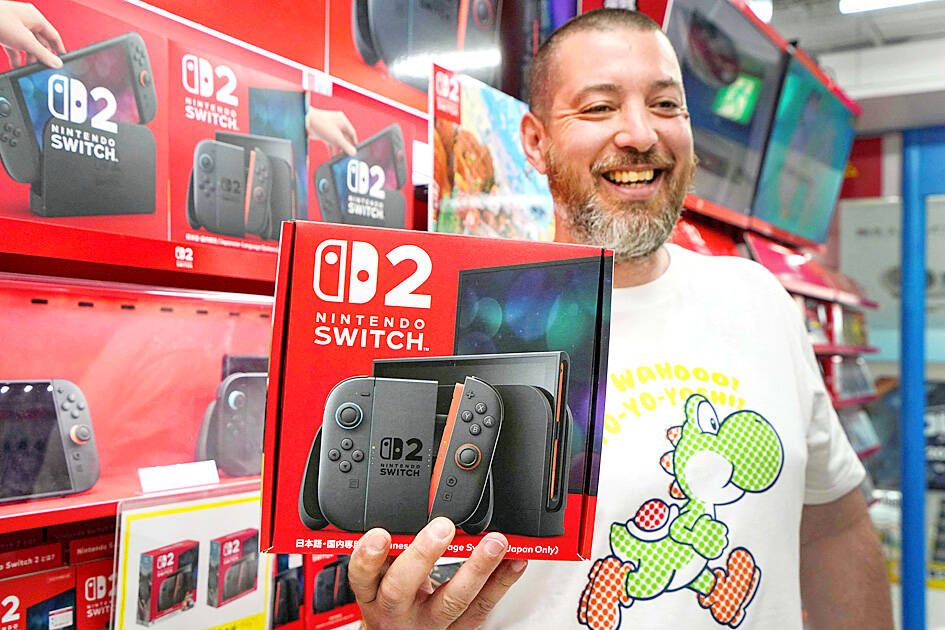
Photo: AFP
The release of the new Switch was regarded as a watershed moment for the industry, steering business decisions by partners and competitors for years to come. At a time of thinning margins and exploding development budgets, a popular new console might galvanize the sector and provide a counterbalance to the increasing dominance of a handful of marquee, live-service games.
Catching up with runaway demand is the first major challenge Nintendo faces.
Nintendo president Shuntaro Furukawa has apologized after customers came away from lotteries for the Switch 2 empty-handed. The Kyoto-based company has asked its partners to speed up production of the console. It has also secured agreements from Japanese online marketplace operators such as Rakuten Group Inc, Mercari Inc and LY Corp to discourage resellers from taking advantage of the hardware’s scarcity.
The console is manufactured mainly in China by partners including Foxconn Technology Group (富士康科技集團).
“The pace is good,” Toyo Securities Co analyst Hideki Yasuda said. “The key will be to maintain assembly capacity and increase production going forward.”
A chronic shortage might spur consumers to turn elsewhere and flatten momentum.
Nintendo’s priority is to sustain launch momentum for as long as possible, Furukawa told analysts at an earnings briefing last month.
That is more difficult due to the Switch 2’s higher retail price compared with its predecessor and growing weakness in the global economy.
Furukawa has also warned that the company might consider raising the console’s price, depending on US President Donald Trump’s tariff measures.

Real estate agent and property developer JSL Construction & Development Co (愛山林) led the average compensation rankings among companies listed on the Taiwan Stock Exchange (TWSE) last year, while contract chipmaker Taiwan Semiconductor Manufacturing Co (TSMC, 台積電) finished 14th. JSL Construction paid its employees total average compensation of NT$4.78 million (US$159,701), down 13.5 percent from a year earlier, but still ahead of the most profitable listed tech giants, including TSMC, TWSE data showed. Last year, the average compensation (which includes salary, overtime, bonuses and allowances) paid by TSMC rose 21.6 percent to reach about NT$3.33 million, lifting its ranking by 10 notches
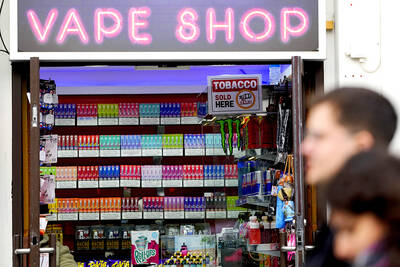
Popular vape brands such as Geek Bar might get more expensive in the US — if you can find them at all. Shipments of vapes from China to the US ground to a near halt last month from a year ago, official data showed, hit by US President Donald Trump’s tariffs and a crackdown on unauthorized e-cigarettes in the world’s biggest market for smoking alternatives. That includes Geek Bar, a brand of flavored vapes that is not authorized to sell in the US, but which had been widely available due to porous import controls. One retailer, who asked not to be named, because
SEASONAL WEAKNESS: The combined revenue of the top 10 foundries fell 5.4%, but rush orders and China’s subsidies partially offset slowing demand Taiwan Semiconductor Manufacturing Co (TSMC, 台積電) further solidified its dominance in the global wafer foundry business in the first quarter of this year, remaining far ahead of its closest rival, Samsung Electronics Co, TrendForce Corp (集邦科技) said yesterday. TSMC posted US$25.52 billion in sales in the January-to-March period, down 5 percent from the previous quarter, but its market share rose from 67.1 percent the previous quarter to 67.6 percent, TrendForce said in a report. While smartphone-related wafer shipments declined in the first quarter due to seasonal factors, solid demand for artificial intelligence (AI) and high-performance computing (HPC) devices and urgent TV-related orders
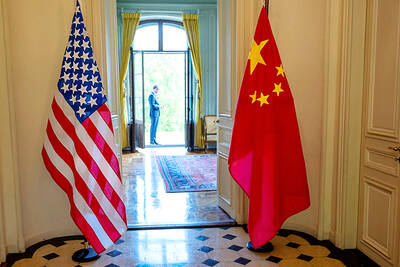
MINERAL DIPLOMACY: The Chinese commerce ministry said it approved applications for the export of rare earths in a move that could help ease US-China trade tensions Chinese Vice Premier He Lifeng (何立峰) is today to meet a US delegation for talks in the UK, Beijing announced on Saturday amid a fragile truce in the trade dispute between the two powers. He is to visit the UK from yesterday to Friday at the invitation of the British government, the Chinese Ministry of Foreign Affairs said in a statement. He and US representatives are to cochair the first meeting of the US-China economic and trade consultation mechanism, it said. US President Donald Trump on Friday announced that a new round of trade talks with China would start in London beginning today,


 RSS
RSS