


German Chancellor Olaf Scholz called on car manufacturer Volkswagen AG not to shut down factories, Funke media group reported, even as the leader acknowledged it was up to the company’s owners and labor representatives to discuss the matter.
Closing locations “would not be the right way” because poor management decisions contributed to the difficult situation, he told Funke media group in an interview published on Saturday.
Scholz, of the Social Democratic Party, said that while it was the owners who negotiated the specific decisions together with the social partners, it is “always right to remind companies of their responsibility.”
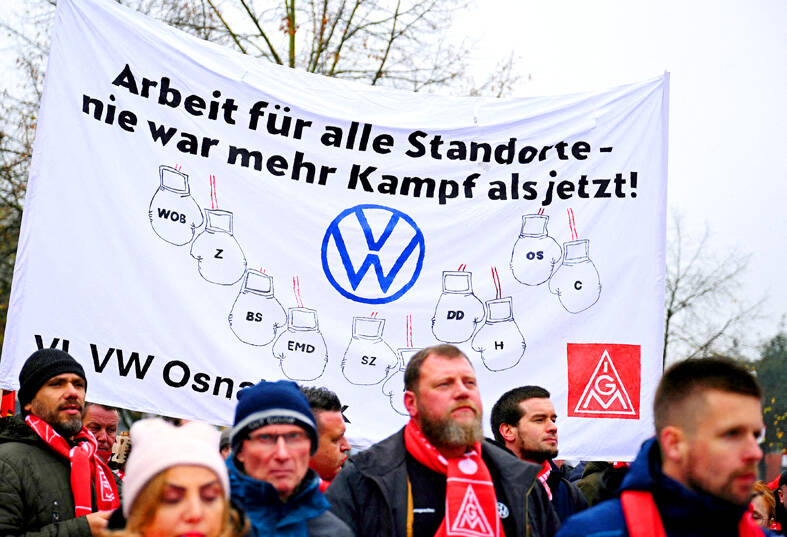
Photo: REUTERS
His comments come ahead of a second wave of so-called warning strikes of Volkswagen workers across German plants planned for today. They are designed to pressure executives during deadlocked negotiations over how to slash costs.
Volkswagen is pushing for unprecedented factory closures, thousands of layoffs and 10 percent wage cuts at its flagship marque, which is struggling with poor demand in Europe and waning relevance in China, the world’s largest auto market.
The industry “faces an almost perfect storm,” UBS Group AG analysts led by Patrick Hummel said in a note to clients.
“Pricing pressure, market-share losses in China, tighter CO2 regulation, tariff risk and continued lackluster demand will likely drive sector earnings down further, despite intensifying restructuring efforts,” they added.
A key employer across Europe, the automotive industry has been the worst-performing sector so far this year. Even with company valuations some 30 percent below historical averages, investors are cautious as the timing for a broader and sustained market rebound remains uncertain.
“For as long as the end of the downgrade cycle isn’t visible, any potential bounce from current lows will likely be short-lived,” UBS said.
Volkswagen would reconvene today for another round of negotiations with its powerful labor union IG Metall about cuts to its beleaguered namesake brand. Management has said it needs to close factories in Germany to address a drop in electric vehicle demand, rising operational costs and intensifying competition. Executives last week rejected labor’s counter-proposal — a 1.5 billion euro (US$1.6 billion) package of additional cuts that included lower dividend payouts, reduced bonuses and a fund to pay for possible layoffs and shift reductions.
With the two sides still far apart, more walkouts and protests could follow in coming weeks in the run-up to the Christmas season. Daniela Cavallo, Volkswagen’s top labor representative, said the meeting today “is likely to determine the way forward: compromise or escalation.”

Intel Corp chief executive officer Lip-Bu Tan (陳立武) is expected to meet with Taiwanese suppliers next month in conjunction with the opening of the Computex Taipei trade show, supply chain sources said on Monday. The visit, the first for Tan to Taiwan since assuming his new post last month, would be aimed at enhancing Intel’s ties with suppliers in Taiwan as he attempts to help turn around the struggling US chipmaker, the sources said. Tan is to hold a banquet to celebrate Intel’s 40-year presence in Taiwan before Computex opens on May 20 and invite dozens of Taiwanese suppliers to exchange views

Application-specific integrated circuit designer Faraday Technology Corp (智原) yesterday said that although revenue this quarter would decline 30 percent from last quarter, it retained its full-year forecast of revenue growth of 100 percent. The company attributed the quarterly drop to a slowdown in customers’ production of chips using Faraday’s advanced packaging technology. The company is still confident about its revenue growth this year, given its strong “design-win” — or the projects it won to help customers design their chips, Faraday president Steve Wang (王國雍) told an online earnings conference. “The design-win this year is better than we expected. We believe we will win

Chizuko Kimura has become the first female sushi chef in the world to win a Michelin star, fulfilling a promise she made to her dying husband to continue his legacy. The 54-year-old Japanese chef regained the Michelin star her late husband, Shunei Kimura, won three years ago for their Sushi Shunei restaurant in Paris. For Shunei Kimura, the star was a dream come true. However, the joy was short-lived. He died from cancer just three months later in June 2022. He was 65. The following year, the restaurant in the heart of Montmartre lost its star rating. Chizuko Kimura insisted that the new star is still down
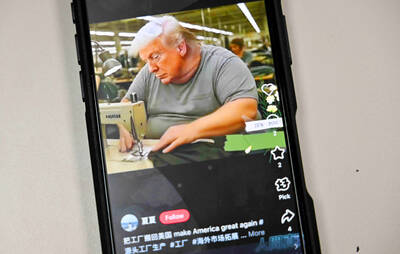
While China’s leaders use their economic and political might to fight US President Donald Trump’s trade war “to the end,” its army of social media soldiers are embarking on a more humorous campaign online. Trump’s tariff blitz has seen Washington and Beijing impose eye-watering duties on imports from the other, fanning a standoff between the economic superpowers that has sparked global recession fears and sent markets into a tailspin. Trump says his policy is a response to years of being “ripped off” by other countries and aims to bring manufacturing to the US, forcing companies to employ US workers. However, China’s online warriors


 RSS
RSS