


Taipei would help Taiwanese firms relocate their China-based production plants if US president-elect Donald Trump carries out his threat to impose a 60 percent tariff on Chinese-made goods, the Ministry of Economic Affairs said yesterday.
Trump’s victory in the US presidential election has left world leaders, business owners and stock markets grappling with the potential impact of his return to the White House.
During the election campaign, Trump vowed to get tougher on China, promising to slap 60 percent tariffs on all Chinese goods entering the US.
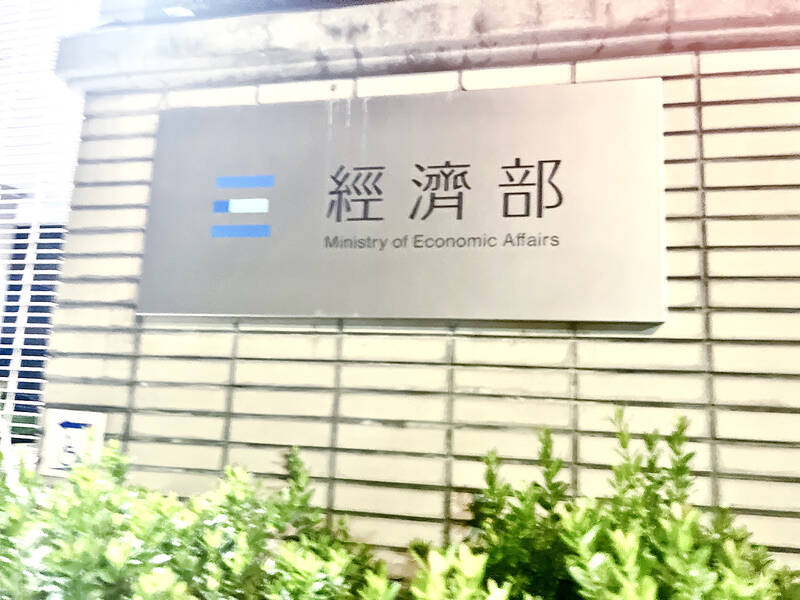
Photo: Liao Chia-ning, Taipei Times
“We will come up with some assistance very soon to our Taiwanese business people on how to transfer their production bases so they would not be subjected to a 60 percent tariff,” Minister of Economic Affairs J.W. Kuo (郭智輝) said at a meeting of the legislature’s Economics Committee in Taipei.
Kuo did not provide further details on the measures.
Many Taiwanese companies have set up factories in China during the country’s economic opening over the last four decades, but investment has fallen sharply in recent years owing to regional tech disputes.
From 2019 to 2021, as a trade war raged between Beijing and Washington, Taipei offered Taiwanese businesses in China incentives to return to Taiwan. They included two years free rent in the economic ministry’s industrial zones, labor subsidies and cheaper loans.
Trump has described “tariff” as the most beautiful word in the dictionary and his second presidential term promises sweeping measures on all US$3 trillion worth of US imported goods. He has promised at least a 10 percent tariff on all imports, and a higher level of 60 percent or more on Chinese goods.
Kuo said Trump’s suggested 10 percent tariff on all US imports would have a limited effect on Taiwan. However, Trump’s proposed 60 percent levy on Chinese-made products would have a greater impact on Taiwanese firms operating in China, the minister said.
Regarding trade talks between Taiwan and the US, Yen Huai-shing (顏慧欣), an official at the Executive Yuan’s Office of Trade Negotiations, said at the meeting that Taiwan has long had a good trade relationship with the US and that the office would keep in contact with the US president-elect’s team and confirm trade negotiation strategies.
International Trade Administration Director-General Cynthia Kiang (江文若) said that Taiwan and the US have already signed the first agreement in the “US-Taiwan Initiative on 21st-Century Trade.”
However, the agreement, which still requires the approval of the US Congress, would not come into effect for some time, Kiang said.
After Trump assumes office, the Ministry of Economic Affairs would emphasize Taiwan-US trade discussions, she said.
Additional reporting by CNA
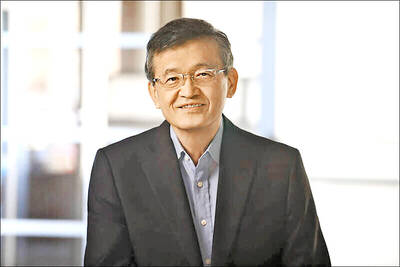
Intel Corp chief executive officer Lip-Bu Tan (陳立武) is expected to meet with Taiwanese suppliers next month in conjunction with the opening of the Computex Taipei trade show, supply chain sources said on Monday. The visit, the first for Tan to Taiwan since assuming his new post last month, would be aimed at enhancing Intel’s ties with suppliers in Taiwan as he attempts to help turn around the struggling US chipmaker, the sources said. Tan is to hold a banquet to celebrate Intel’s 40-year presence in Taiwan before Computex opens on May 20 and invite dozens of Taiwanese suppliers to exchange views

Application-specific integrated circuit designer Faraday Technology Corp (智原) yesterday said that although revenue this quarter would decline 30 percent from last quarter, it retained its full-year forecast of revenue growth of 100 percent. The company attributed the quarterly drop to a slowdown in customers’ production of chips using Faraday’s advanced packaging technology. The company is still confident about its revenue growth this year, given its strong “design-win” — or the projects it won to help customers design their chips, Faraday president Steve Wang (王國雍) told an online earnings conference. “The design-win this year is better than we expected. We believe we will win
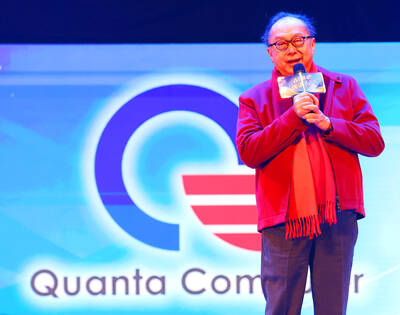
Quanta Computer Inc (廣達) chairman Barry Lam (林百里) is expected to share his views about the artificial intelligence (AI) industry’s prospects during his speech at the company’s 37th anniversary ceremony, as AI servers have become a new growth engine for the equipment manufacturing service provider. Lam’s speech is much anticipated, as Quanta has risen as one of the world’s major AI server suppliers. The company reported a 30 percent year-on-year growth in consolidated revenue to NT$1.41 trillion (US$43.35 billion) last year, thanks to fast-growing demand for servers, especially those with AI capabilities. The company told investors in November last year that

Power supply and electronic components maker Delta Electronics Inc (台達電) yesterday said it plans to ship its new 1 megawatt charging systems for electric trucks and buses in the first half of next year at the earliest. The new charging piles, which deliver up to 1 megawatt of charging power, are designed for heavy-duty electric vehicles, and support a maximum current of 1,500 amperes and output of 1,250 volts, Delta said in a news release. “If everything goes smoothly, we could begin shipping those new charging systems as early as in the first half of next year,” a company official said. The new


 RSS
RSS