


Unionized workers at Samsung Electronics Co yesterday declared an indefinite strike to pressure South Korea’s biggest company to accept their calls for higher pay and other benefits.
‘Thousands of members of the National Samsung Electronics Union launched a temporary, three-day strike on Monday, but the union yesterday announced an indefinite strike, saying that the management was unwilling to negotiate.
Samsung Electronics says there have been no disruptions to production.
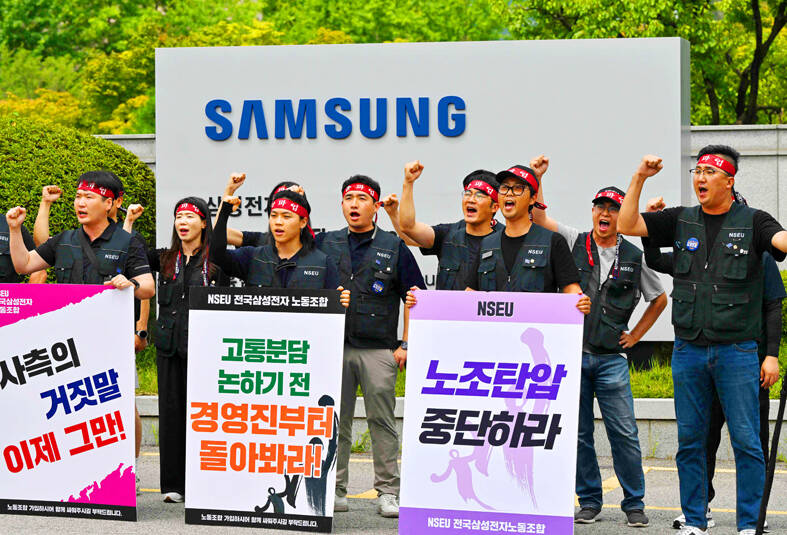
Photo: AFP
“Samsung Electronics will ensure no disruptions occur in the production lines,” a Samsung statement said. “The company remains committed to engaging in good faith negotiations with the union.”
However, in a statement posted on its Web site, the union said it has engaged in unspecified disruptions on the company’s production lines to get management to eventually come to the negotiating table if the strikes continue.
The union would first target a smaller 8-inch production facility that relies more on human workers, before it targets high-bandwidth memory (HBM) production in Pyeongtaek.
“We are confident of our victory,” the union statement said.
It did not say how many of its members would join the extended strike.
The union earlier said that 6,540 of its members had said they would participate in the earlier, three-day strike.
That would represent only a fraction of Samsung Electronics’ total workforce, estimated at about 267,860 globally. About 120,000 of them are in South Korea.
Earlier this year, union members and management held rounds of talks on the union’s demand for higher wages and better working conditions, but they failed to reach agreement. Last month, some union members collectively used their annual leaves in a one-day walkout that observers said was the first labor strike at Samsung.
About 30,000 Samsung workers are reportedly affiliated with the National Samsung Electronics Union, the largest at the company, and some belong to other, smaller unions.
Investors remain largely unfazed, analysts said.
The market is focused on how quickly Samsung is able to win approval from Nvidia Corp to supply HBM, and has “little interest in the strike,” Eugene Investment & Securities Co’s research head Lee Seung-woo said.
It is also difficult to assess what the impact would be on earnings, as a potential production disruption might drive up chip prices, he said.
Additional reporting by Bloomberg
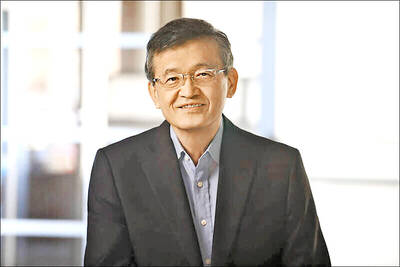
Intel Corp chief executive officer Lip-Bu Tan (陳立武) is expected to meet with Taiwanese suppliers next month in conjunction with the opening of the Computex Taipei trade show, supply chain sources said on Monday. The visit, the first for Tan to Taiwan since assuming his new post last month, would be aimed at enhancing Intel’s ties with suppliers in Taiwan as he attempts to help turn around the struggling US chipmaker, the sources said. Tan is to hold a banquet to celebrate Intel’s 40-year presence in Taiwan before Computex opens on May 20 and invite dozens of Taiwanese suppliers to exchange views

Application-specific integrated circuit designer Faraday Technology Corp (智原) yesterday said that although revenue this quarter would decline 30 percent from last quarter, it retained its full-year forecast of revenue growth of 100 percent. The company attributed the quarterly drop to a slowdown in customers’ production of chips using Faraday’s advanced packaging technology. The company is still confident about its revenue growth this year, given its strong “design-win” — or the projects it won to help customers design their chips, Faraday president Steve Wang (王國雍) told an online earnings conference. “The design-win this year is better than we expected. We believe we will win
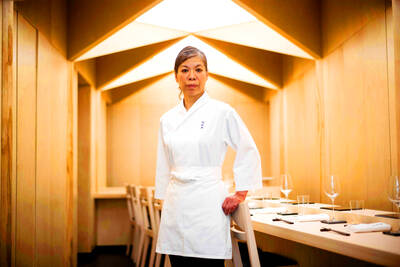
Chizuko Kimura has become the first female sushi chef in the world to win a Michelin star, fulfilling a promise she made to her dying husband to continue his legacy. The 54-year-old Japanese chef regained the Michelin star her late husband, Shunei Kimura, won three years ago for their Sushi Shunei restaurant in Paris. For Shunei Kimura, the star was a dream come true. However, the joy was short-lived. He died from cancer just three months later in June 2022. He was 65. The following year, the restaurant in the heart of Montmartre lost its star rating. Chizuko Kimura insisted that the new star is still down
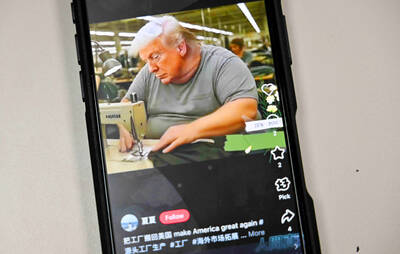
While China’s leaders use their economic and political might to fight US President Donald Trump’s trade war “to the end,” its army of social media soldiers are embarking on a more humorous campaign online. Trump’s tariff blitz has seen Washington and Beijing impose eye-watering duties on imports from the other, fanning a standoff between the economic superpowers that has sparked global recession fears and sent markets into a tailspin. Trump says his policy is a response to years of being “ripped off” by other countries and aims to bring manufacturing to the US, forcing companies to employ US workers. However, China’s online warriors


 RSS
RSS