


Palme d’Or-winning director Hirokazu Koreeda is supporting a fundraising effort aimed at making radical reforms in working conditions in Japan’s film industry, as part of his attempts to push the country to better compete with countries like South Korea globally.
K2 Pictures Inc, a Tokyo-based start-up led by veteran producer Muneyuki Kii as well as a group of film and animation creators including Koreeda, is seeking to raise ¥10 billion (US$62.44 million) from domestic and foreign investors by the end of this year, the company said.
The fund hopes to improve incentives for industry workers by boosting financial rewards and ensuring diversity, the director said.
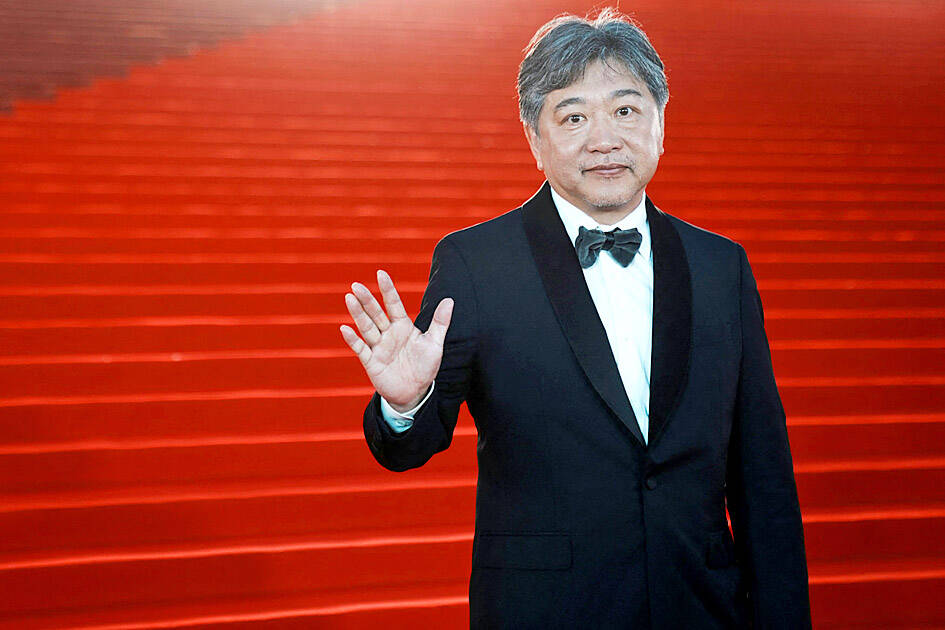
Photo: Reuters
Although Japanese films are enjoying a period of global success, with Godzilla Minus One and The Boy and the Heron winning Oscars this year, production companies are not reaping the benefits and continue to work under tight budget constraints placed by major film distributors.
“I think there’s a Japan culture boom happening now and it’s on the upswing,” said Koreeda, who plans to direct a film through the fund. “It is equally important to create an environment where workers make enough to feed themselves and make a living.”
Koreeda, who won the top award at Cannes in 2018 with Shoplifters and more recently made last year’s hit Monster, has been vocal in fighting exploitation in the industry.
There is a “sense of crisis” in the industry as young people are no longer choosing film as a career due to poor conditions like long hours and low wages, he said.
The K2 fund plans to use the money raised to invest in making films, and if the production is a success at the box office, creators and staff members are entitled to receive a rate of profit of up to 30 percent divided among them.
It also aims to make films without using the production committee system, a complicated structure comprising different stakeholders that screens movies and often ends up constraining resources.
The fund would instead raise money and reduce risks for filmmaking by having a diverse collection of titles in its portfolio. It would also make sure that the working environment at the film sets are in line with international standards.
Director Koji Fukada, who is working with Koreeda on improving industry conditions, said that when he was a junior staff member he was paid about ¥300 an hour.
“People are tested not on talent or hard work, but whether they can withstand poverty,” he said at a rally on labor rights earlier this month.
Koreeda, who worked with South Korea’s CJ ENM Co for his 2022 film Broker, said the experience showed him how the country had managed to improve working conditions in its film industry, thanks to government regulations as well as financial support from the public and private sectors.
The government-backed Korean Film Council Equity Fund for Film Production raised 430 billion won (US$309.5 million) between 2019 and last year, and invested in 280 films, the council said.
Studios receiving investment from the fund must follow strict guidelines on working hours and wages.
Japanese creators are negotiating with four major companies to allocate 1 percent of box office revenue from the local market to a newly established film organization to cover the potential rise in the production costs, Koreeda said.
A 30 to 50 percent increase in production cost is necessary to apply stricter labor standards, he added.
“This will have the merit of increasing the overall pie by bringing in money from outside, and the merit of showing a different way of making films,” he said. “And it will be more business-oriented.”
The Japanese government has said it would conduct a survey in the industry next year to investigate cases of exploitation. It also plans to help form a committee specializing in films under its umbrella.
“I don’t think this will lead to some sort of ideal state, but I think it will be the beginning of something new,” Koreeda said.
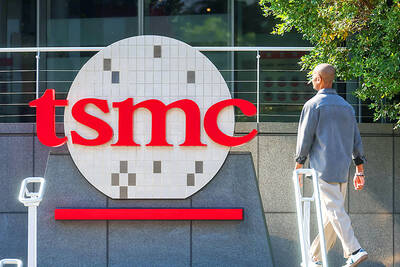
Shares of contract chipmaker Taiwan Semiconductor Manufacturing Co (TSMC, 台積電) came under pressure yesterday after a report that Apple Inc is looking to shift some orders from the Taiwanese company to Intel Corp. TSMC shares fell NT$55, or 2.4 percent, to close at NT$2,235 on the local main board, Taiwan Stock Exchange data showed. Despite the losses, TSMC is expected to continue to benefit from sound fundamentals, as it maintains a lead over its peers in high-end process development, analysts said. “The selling was a knee-jerk reaction to an Intel-Apple report over the weekend,” Mega International Investment Services Corp (兆豐國際投顧) analyst Alex Huang
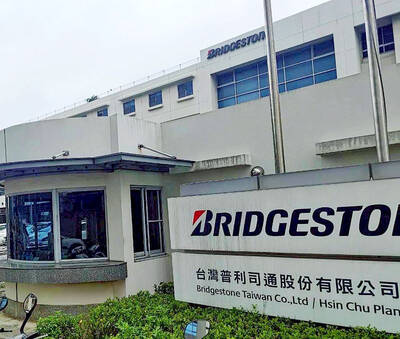
TRANSITION: With the closure, the company would reorganize its Taiwanese unit to a sales and service-focused model, Bridgestone said Bridgestone Corp yesterday announced it would cease manufacturing operations at its tire plant in Hsinchu County’s Hukou Township (湖口), affecting more than 500 workers. Bridgestone Taiwan Co (台灣普利司通) said in a statement that the decision was based on the Tokyo-based tire maker’s adjustments to its global operational strategy and long-term market development considerations. The Taiwanese unit would be reorganized as part of the closure, effective yesterday, and all related production activities would be concluded, the statement said. Under the plan, Bridgestone would continue to deepen its presence in the Taiwanese market, while transitioning to a sales and service-focused business model, it added. The Hsinchu
Taiwan Semiconductor Manufacturing Co (TSMC, 台積電) has approved a capital budget of US$31.28 billion for production expansion to meet long-term development needs during the artificial intelligence (AI) boom. The company’s board meeting yesterday approved the capital appropriation plan for purposes such as the installation of advanced technology capacity and fab construction, the world’s largest contract chipmaker said in a statement. At an earnings conference last month, TSMC forecast that its capital expenditure for this year would be at the higher end of the US$52 billion to US$56 billion range it forecast in January in response to robust demand for 5G, AI and
Taiwan Semiconductor Manufacturing Co’s (TSMC, 台積電) investment project in Arizona has progressed better than expected, but it still faces challenges such as water and labor shortages, National Development Council (NDC) Minister Yeh Chun-hsien (葉俊顯) said yesterday. Speaking with reporters after visiting TSMC’s Arizona hub and attending the SelectUSA Investment Summit in Maryland last week, Yeh said TSMC’s Arizona site turned a profit of NT$16.14 billion (US$514 million) last year in its first full year of mass production. “TSMC told me it was surprised by the smooth trial run of the first fab, which has left the company optimistic about the project’s outlook,”


 RSS
RSS