


Online bank O-Bank Co (王道商業銀行) is seeking to deepen customer relations rather than gain market share this year, in a bid to grow into a boutique lender and set itself apart from its peers, the lender said at an event in Taipei yesterday to mark its 25th anniversary.
“We are aiming to better utilize our resources by turning into a boutique bank that places more emphasis on our relationship with customers rather than wooing new ones indiscriminately,” O-Bank chairwoman Tina Lo (駱怡君) said.
To that end, the bank would work with customers in the pursuit of sustainability and fulfill its social responsibility, Lo said, adding that O-Bank is not in an advantageous position to compete with its peers with larger capitalizations in terms of expanding its assets or economic scale.
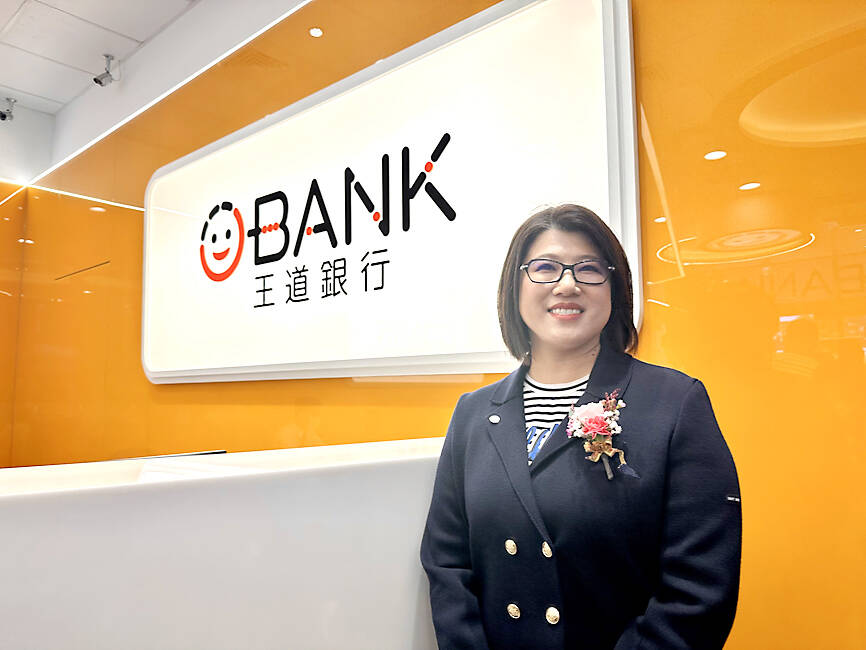
Photo: CNA
The lender would adopt a light-asset business model and adjust its portfolio dynamically to boost profits and advance digital transformation, O-Bank president Elton Lee (李芳遠) said.
RECORD EARNINGS
The lender reported that net income last year fell 41 percent year-on-year to NT$2.49 billion (US$77.8 million) as the acquisition of a capital leasing firm in 2022 steeply raised the comparison base for the year. Earnings per share were NT$0.87, it said.
Stripping out the merger, the bank achieved record-high earnings last year, thanks to higher fee income and trading gains in its corporate and retail banking businesses, Lo said.
Like its peers, O-Bank last year took advantage of the difference between Taiwan’s interest rates and those in the US by trading sizeable foreign exchange swaps, head of business strategy Joy Siew (蕭至佑) said.
Swap revenue would remain strong this year until the US Federal Reserve lowers interest rates, Siew said, adding that lower interest rates in the US would boost the value of the bank’s US dollar-denominated assets.
OVERSEAS EXPANSION
O-Bank is also on the lookout for expansion opportunities abroad, after its Hong Kong branch generated impressive profits last year and in the first two months of this year, Lee said.
The lender plans to set up a representative office in Sydney, open a venture capital unit in Singapore and create a leasing affiliate in Thailand, he said.
Overseas expansions would allow the lender to better serve its customers’ global wealth management needs, he added.

Taichung reported the steepest fall in completed home prices among the six special municipalities in the first quarter of this year, data compiled by Taiwan Realty Co (台灣房屋) showed yesterday. From January through last month, the average transaction price for completed homes in Taichung fell 8 percent from a year earlier to NT$299,000 (US$9,483) per ping (3.3m²), said Taiwan Realty, which compiled the data based on the government’s price registration platform. The decline could be attributed to many home buyers choosing relatively affordable used homes to live in themselves, instead of newly built homes in the city’s prime property market, Taiwan Realty
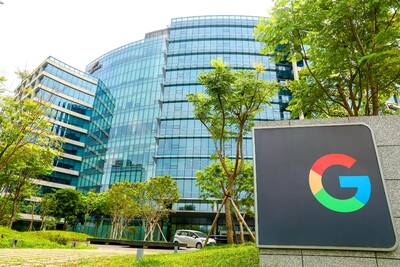
The government yesterday approved applications by Alphabet Inc’s Google to invest NT$27.08 billion (US$859.98 million) in Taiwan, the Ministry of Economic Affairs said in a statement. The Department of Investment Review approved two investments proposed by Google, with much of the funds to be used for data processing and electronic information supply services, as well as inventory procurement businesses in the semiconductor field, the ministry said. It marks the second consecutive year that Google has applied to increase its investment in Taiwan. Google plans to infuse NT$25.34 billion into Charter Investments Ltd (特許投資顧問) through its Singapore-based subsidiary Fructan Holdings Singapore Pte Ltd, and

Micron Technology Inc is a driving force pushing the US Congress to pass legislation that would put new export restrictions on equipment its Chinese competitors use to make their chips, according to people familiar with the matter. A US House of Representatives panel yesterday was to vote on the “MATCH Act,” a bill designed to close gaps in restrictions on chipmaking equipment. It would also pressure foreign companies that sell equipment to Chinese chipmaking facilities to align with export curbs on US companies like Lam Research Corp and Applied Materials Inc. The bill targets facilities operated by China’s ChangXin Memory Technologies Inc

Singapore-based ride-hailing and delivery giant Grab Holdings’ planned acquisition of Foodpanda’s Taiwan operations has yet to enter the formal review stage, as regulators await supplementary documents, the Fair Trade Commission (FTC) said yesterday. Acting FTC Chairman Chen Chih-min (陳志民) told the legislature’s Economics Committee that although Grab submitted its application on March 27, the case has not been officially accepted because required materials remain incomplete. Once the filing is finalized, the FTC would launch a formal probe into the deal, focusing on issues such as cross-shareholding and potential restrictions on market competition, Chen told lawmakers. Grab last month announced that it would acquire


 RSS
RSS