


Benny waddles up to eight-year-old Maya, performs a cheerful pirouette on his short hind legs and then nuzzles in for a cuddle.
Already a little cranky from the long wait for her flight to Turkey with her family, Maya is instantly besotted with the four-year-old dachshund and her father, Michael Uth, a bit less harried.
Berlin’s massively delayed, absurdly over-budget, far-too-small Berlin Brandenburg Airport (BER), which opened in 2020 to heaps of scorn, has had to get creative to try to win over weary passengers.
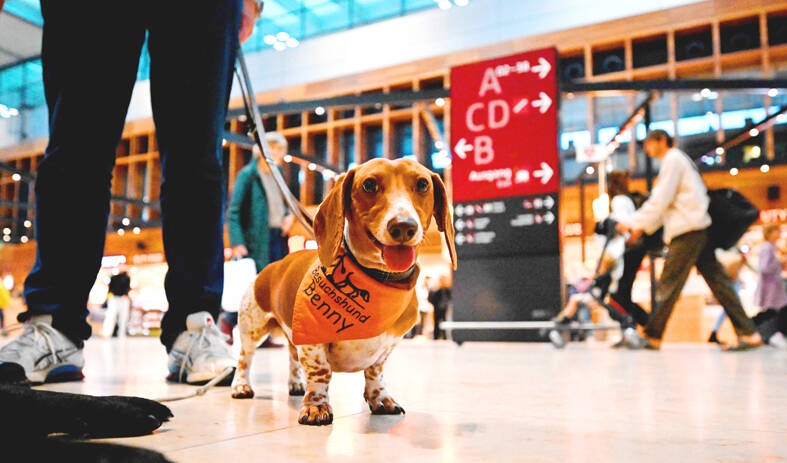
Photo: AFP
A pilot program is dispatching three particularly good-natured pooches along with two human trainers as on-the-ground stress-relief ambassadors.
At the start of the autumn school holiday rush, Benny along with black Labrador Emi and Pepper, a terrier mix, were on their impish mission at Germany’s third-busiest airport.
Patrolling the shiny floors of the terminal on long leashes, it does not take long to find travelers who could use a little comfort or entertainment. Uth arrived at BER with Maya and five-year-old son Vincent three hours early for a three-hour flight to Antalya.
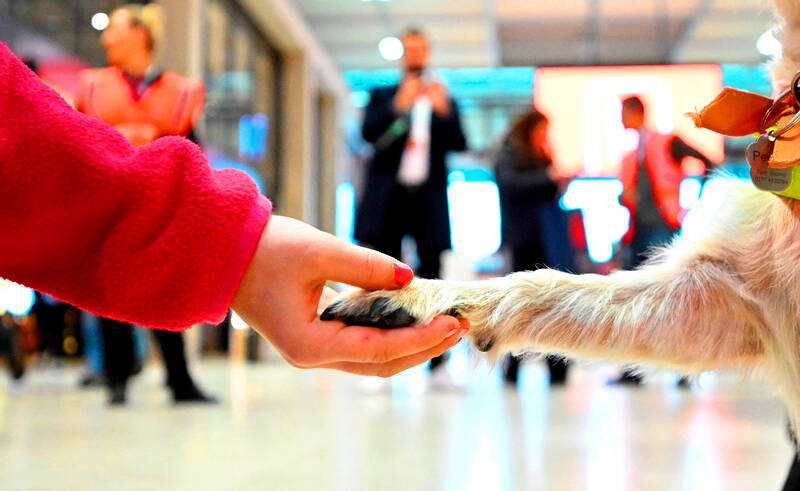
Photo: AFP
“This gives them something fun to do,” Uth, 38, said as his children played catch with the pups. “It’s keeping their minds off the wait and the stress with all the crowds here. Happy kids is a great start to a trip.”
BER had been called “cursed” by local media after the opening was delayed by nine years amid incessant technical difficulties and allegations of corruption. Its 6 billion euro (US$6.43 billion) cost was three times more than planned and BER finally opened just as air travel collapsed with the COVID-19 pandemic.
The facility needed a hefty bailout to stave off bankruptcy, with taxpayers asked to pump in nearly 2 billion euros by 2026.
Passengers often report long check-in lines and big delays for baggage retrieval due to staff shortages. BER is Germany’s second-least popular airport, after former military airfield Frankfurt-Hahn, a poll by claims management company AirHelp showed.
Although conditions have generally improved, a recommendation that passengers allow at least two-and-a-half hours to reach their flights sparked a storm on social media.
There were bitter comparisons with the capital’s decommissioned Berlin Tegel Airport, which was famed for direct access to check-in gates from a taxi drop-off point.
Airport spokesman Jan-Peter Haack said that BER had a rocky start, but touted now “very stable” operations with nearly 20 million passengers served last year.
He said that innovations such as an option to book a time slot at the security gates at no extra cost and self-service check-in and bag-drop machines had cut the crush at various chokepoints.
Nevertheless, on busy days, tempers can run high.
The stress relief dogs, an idea from Los Angeles International Airport, have drawn “very good feedback” from BER passengers, Haack said.
“The dogs only approach people who are really receptive — no one is forced,” he said.
Elisabeth Tornow, 69, who travels often to the Swiss city of Basel to visit her family, said that boarding particularly frayed her nerves.
“I’m not the youngest anymore and you have to climb the stairs and get pushed around finding your seat,” the retired office manager said.
Unable to manage the nighttime walks, Tornow had to let her own pet go when her husband died. Playing with Pepper, she said that all airports could be improved with a few fur balls.
“It just calms you down when a dog’s around,” she said. “I wish I had a treat with me.”
Trainer Joerg Utech, 63, volunteers with Therapy Dogs Association Brandenburg and was on his third outing at BER.
The former information technology specialist said that he first saw the dogs in action five years ago when his wife was dying of cancer at a care home.
Since then, he has watched the animals charm and engage elderly people, help fidgety children focus in school and calm fearful air travelers.
He said that the patrols required a special kind of animal.
“They’ve got to have a calm temperament, but love to play too,” he said. “You have to be careful that you don’t have them out for more than an hour though, because this is a lot of work for a dog. And if one is having a bad day and is showing us he’s unhappy then we stop immediately.”
Utech said that screaming children remained the biggest challenge.
“The first time we were here, a family came along with a child who really didn’t want to sit in the stroller,” he said. “My colleague was there immediately with Pepper who danced for a treat. The tantrum was over and the holiday could begin.”
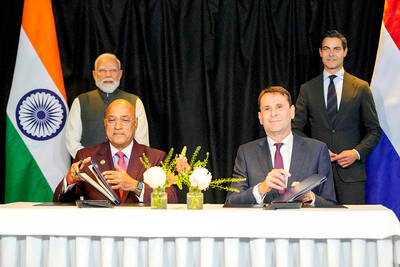
NEW MARKET: The partnership opens up India to the Dutch company, which already has a strong hold in the semiconductor market of South Korea, Taiwan and China ASML Holding NV entered into a partnership agreement with Tata Electronics Pvt Ltd aimed at ramping up India’s goal to develop domestic chip-manufacturing capabilities. The Dutch company’s technology would help power Tata Electronics’ planned 300 millimeter (mm) semiconductor foundry in Gujarat, according to a joint statement from the two companies on Saturday. The signing of a memorandum of understanding coincides with a visit by Indian Prime Minister Narendra Modi to the Netherlands, which is looking to deepen bilateral relations with New Delhi. ASML, whose top customers include Taiwan Semiconductor Manufacturing Co (台積電) and Samsung Electronics Co, makes lithography machines that can print
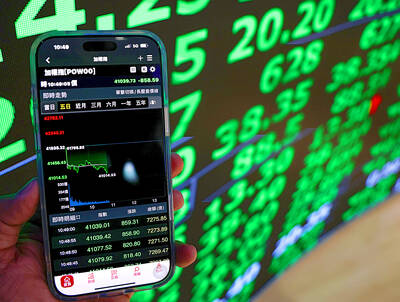
PORTFOLIO REBALANCING: The adjustments in three global equity indices reflect rising investor appetite for semiconductor and artificial intelligence-related stocks Taiwan’s weighting in major global equity indices compiled by MSCI Inc is to rise modestly following the latest quarterly review, underscoring the market’s expanding role in emerging-market portfolios, as global investors continue to favor the nation’s technology sector. Taiwan’s weighting in the MSCI Emerging Markets Index is to increase by 0.30 percentage points to 23.76 percent, after the changes take effect at the close of the May 29 session. Its weighting in the MSCI All-Country Asia ex-Japan Index is to rise 0.37 percentage points to 27.16 percent, while that in the MSCI All Country World Index is to edge up slightly to
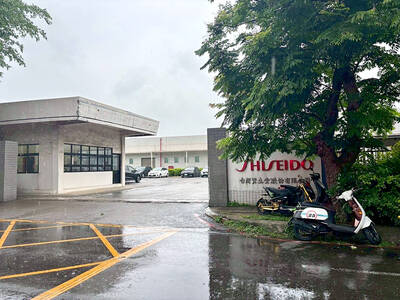
The Hsinchu County Government’s Labor Affairs Department yesterday said that it has received a plan from cosmetics brand Taiwan Shiseido Co (台灣資生堂) detailing mass layoffs at its plant in Hukou Township (湖口). While the labor authorities did not disclose the number of employees to be laid off, Japanese news media earlier in the day reported that the closure of the company’s factory in Hukou would result in 170 employees losing their jobs. Shiseido followed the law by reporting its layoff plan, the department said, adding that authorities would closely monitor negotiations between the management and affected employees and step in if any

Hon Hai Precision Industry Co (鴻海精密) on Tuesday confirmed a cyberattack targeting some of its North American facilities, but said the affected factories were gradually returning to normal. The company, known globally as Foxconn Technology Group (富士康科技集團), said that its cybersecurity team “activated the response mechanism and implemented operational measures to ensure the continuity of production and delivery.” “The affected factories are resuming normal production,” the company said in a statement. Hon Hai had previously described it as a “technical issue,” when news of the cyberattack first surfaced. The confirmation followed media reports of a large-scale information technology system incident that broke out at


 RSS
RSS