


Serbia has emerged as a likely location for crypto fugitive Do Kwon, the fallen 31-year-old entrepreneur facing charges in his native South Korea over the US$60 billion wipeout of digital assets that he created.
The prosecutors’ office in Seoul yesterday said that reports placing the progenitor of the collapsed TerraUSD and Luna tokens in the landlocked Balkan nation “aren’t false.”
Those reports also said that South Korea is in the process of requesting cooperation from Serbia.
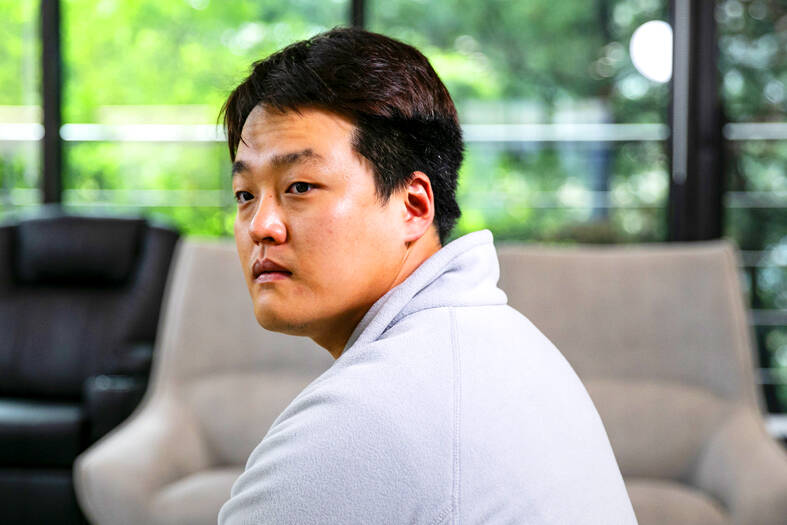
Photo: Woohae Cho, Bloomberg
A South Korean Ministry of Justice official declined to comment.
Kwon’s location became unclear after authorities in mid-September issued a warrant for his arrest on allegations including breaches of capital-markets law. South Korea has stripped him of his passport and said that Kwon is the subject of an Interpol red notice.
Prosecutors in October said that Kwon had flown to Dubai likely as a stopover to destinations unknown after exiting Singapore, where his Terraform Labs project had a base.
The TerraUSD stablecoin was meant to have a constant US$1 value via a mix of algorithms and trader incentives involving sister token Luna. The edifice blew up in May, exacerbating a US$2 trillion crypto market rout and contributing to the downfall of a range of digital asset outfits.
Kwon has denied wrongdoing and Terraform Labs has said that capital markets law does not apply to crypto tokens.
Neither he nor a Terraform Labs spokesperson immediately replied to a request for comment about the latest developments.
The burning question is why Kwon would be in Serbia and what that might mean for his chances of being extradited. South Korea does not have a bilateral extradition treaty with Serbia, but both nations have acceded to the European Convention on Extradition.
Exactly what sparked the implosion of Kwon’s project remains a mystery. US authorities are probing possible links to Sam Bankman-Fried, whose FTX exchange and trading house Alameda Research recently slid into bankruptcy.
The New York Times has reported that US federal prosecutors are examining whether Bankman-Fried engaged in market manipulation by orchestrating trades that led to the collapse of TerraUSD and Luna.
POWERING UP: PSUs for AI servers made up about 50% of Delta’s total server PSU revenue during the first three quarters of last year, the company said Power supply and electronic components maker Delta Electronics Inc (台達電) reported record-high revenue of NT$161.61 billion (US$5.11 billion) for last quarter and said it remains positive about this quarter. Last quarter’s figure was up 7.6 percent from the previous quarter and 41.51 percent higher than a year earlier, and largely in line with Yuanta Securities Investment Consulting Co’s (元大投顧) forecast of NT$160 billion. Delta’s annual revenue last year rose 31.76 percent year-on-year to NT$554.89 billion, also a record high for the company. Its strong performance reflected continued demand for high-performance power solutions and advanced liquid-cooling products used in artificial intelligence (AI) data centers,
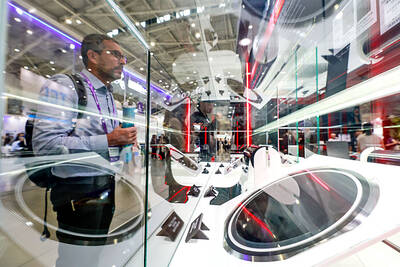
SIZE MATTERS: TSMC started phasing out 8-inch wafer production last year, while Samsung is more aggressively retiring 8-inch capacity, TrendForce said Chipmakers are expected to raise prices of 8-inch wafers by up to 20 percent this year on concern over supply constraints as major contract chipmakers Taiwan Semiconductor Manufacturing Co (TSMC, 台積電) and Samsung Electronics Co gradually retire less advanced wafer capacity, TrendForce Corp (集邦科技) said yesterday. It is the first significant across-the-board price hike since a global semiconductor correction in 2023, the Taipei-based market researcher said in a report. Global 8-inch wafer capacity slid 0.3 percent year-on-year last year, although 8-inch wafer prices still hovered at relatively stable levels throughout the year, TrendForce said. The downward trend is expected to continue this year,
‘BASICALLY A BAN’: Sources said the wording governing H200 imports from officials was severe, but added that the regulations might change if the situation evolves Chinese customs authorities told customs agents this week that Nvidia Corp’s H200 artificial intelligence (AI) chips are not permitted to enter China, three people briefed on the matter said. Chinese government officials also summoned domestic technology companies to meetings on Tuesday, at which they were explicitly instructed not to purchase the chips unless necessary, two of the people and a third source said. “The wording from the officials is so severe that it is basically a ban for now, though this might change in the future should things evolve,” one of the people said. The H200, Nvidia’s second-most powerful AI chip, is one
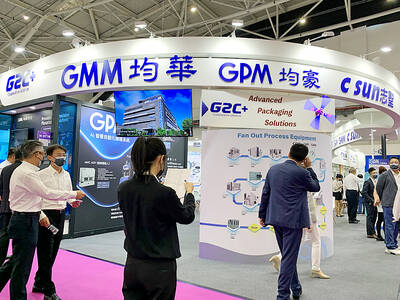
STRONG SALES: The company said that revenue growth momentum would remain strong this year and next year as major customers continue to buy new equipment Semiconductor equipment supplier Gallant Precision Machining Co (均豪) yesterday reported its best annual profit in 19 years last year, as booming artificial intelligence (AI) chip demand boosted sales of its advanced packaging equipment. Net profit surged about 40 percent to NT$415 million (US$13.12 million), compared with NT$297 million in 2024, the company said in a regulatory filing. Earnings per share rose to NT$2.58 from NT$1.82. Revenue grew 5.18 percent annually to NT$4.67 billion from NT$4.44 billion in 2024. Gallant Precision said revenue growth momentum would remain strong this year and next year as major customers continue to spend heavily on new equipment to boost


 RSS
RSS