


ASE Technology Holding Co (日月光投控) yesterday posted 55 percent year-on-year growth in net profit last quarter and retained a revenue growth target this year double that of the global semiconductor industry, given a stable pricing environment and higher factory utilization.
During the quarter ending June 30, ASE posted a net profit of NT$15.99 billion (US$534.28 million), compared with NT$10.34 billion in the second quarter last year.
On a quarterly basis, net profit jumped 24 percent from NT$12.91 billion.
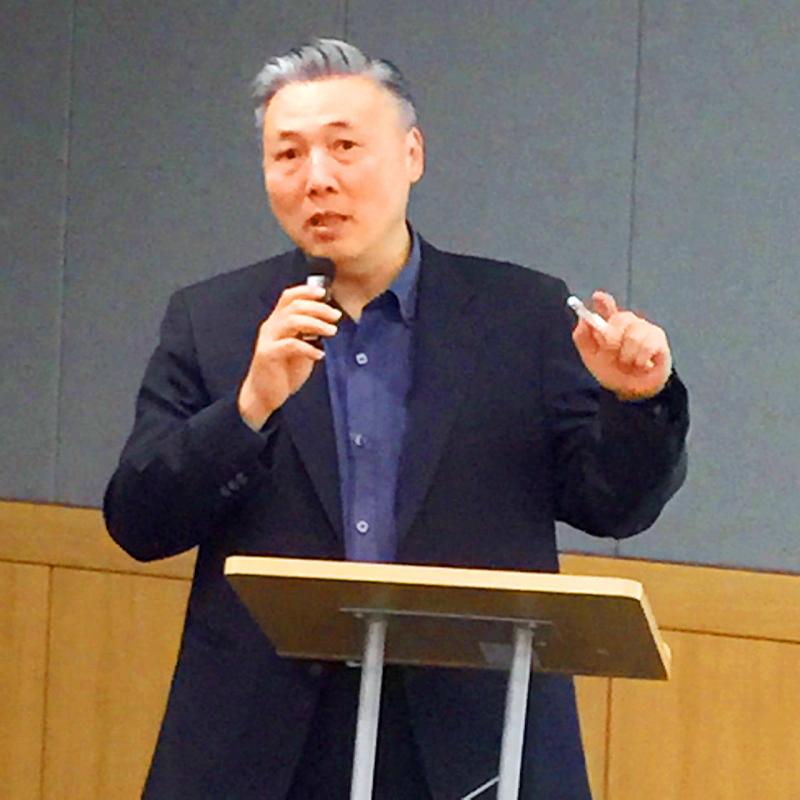
Photo: Grace Hung, Taipei Times
Earnings per share rose to NT$3.69, from NT$2.4 a year earlier and 3.01 percent in the prior quarter.
The company in April said that revenue growth this year would surpass 20 percent on an annual basis.
The world’s largest chip packager and tester’s optimism is built on strong customer engagement, protection of long-term supply agreements, its technology leadership and large manufacturing scale, it said.
About half of ASE’s capacity is covered by long-term agreements. Despite some sectors experiencing inventory corrections, no customers are trying to renegotiate such agreements, ASE chief operating officer Tien Wu (吳田玉) told investors during a teleconference yesterday.
“The overall market is undergoing an inventory correction with some sectors more aggressive than the others. However, some sectors remain constrained,” Wu said.
The data centers, networking, high-performing-computing and automotive devices are still under capacity constraint, Wu said.
“With our diversified customer portfolio and manufacturing flexibility, we are seeing a solid second half of 2022 with quarter-on-quarter growth of our holding company revenues,” he said.
ASE prices remain stable across all service categories in the second half, and the stability is expected to extend into next year, Wu said.
Equipment loading for chip packaging services this quarter is expected to stay at a similar level as last quarter’s range of between 80 percent and 85 percent, with advanced packaging equipment higher than others, the company said. While testing equipment factory usage should be about 80 percent this quarter, it said.
ASE this year expects further margin expansion for its core chip packing and testing services, as well as for its electronic manufacturing services business, notably its system-in-package service, compared with last year, Wu said.
The Kaohsiung-based company raised its gross margin target to between 25 percent and 30 percent in the next few years, compared with a range from 20 percent to 25 percent over the past decade.
The company expects revenue for its chip packaging and testing services to rise slightly this quarter, from NT$160.44 billion last quarter.
Gross margin for the services should also rise from 28 percent in the fourth quarter last year, Wu said.
Next year is likely to be full of challenges and headwinds, with changes being experienced in potential end market demand, Wu said, adding that the company expects seasonality to return in the first quarter, during which ASE usually sees a slowdown in revenue strength.
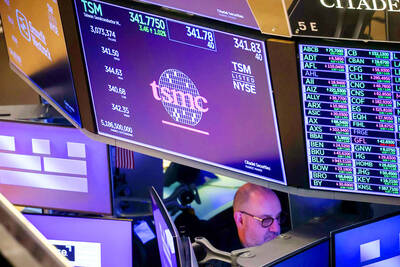
STRONG INTEREST: Analysts have pointed to optimism in TSMC’s growth prospects in the artificial intelligence era as the cause of the rising number of shareholders The number of people holding shares of chipmaker Taiwan Semiconductor Manufacturing Co (TSMC, 台積電) hit a new high last week despite a decline in its stock price, the Taiwan Depository and Clearing Corp (TDCC, 台灣集保) said. The number of TSMC shareholders rose to 2.46 million as of Friday, up 75,536 from a week earlier, TDCC data showed. The stock price fell 1.34 percent during the same week to close at NT$1,840 (US$57.55). The decline in TSMC’s share price resulted from volatility in global tech stocks, driven by rising international crude oil prices as the war against Iran continues. Dealers said
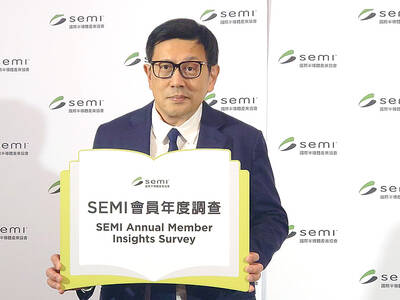
PRICE HIKES: The war in the Middle East would not significantly disrupt supply in the short term, but semiconductor companies are facing price surges for materials Taiwan’s semiconductor companies are not facing imminent supply disruptions of essential chemicals or raw materials due to the war in the Middle East, but surges in material costs loom large, industry association SEMI Taiwan said yesterday. The association’s comments came amid growing concerns that supplies of helium and other key raw materials used in semiconductor production could become a choke point after Qatar shut down its liquefied natural gas (LNG) production and helium output earlier this month due to the conflict. Qatar is the second-largest LNG supplier in the world and accounts for about 33 percent of global helium output. Helium is
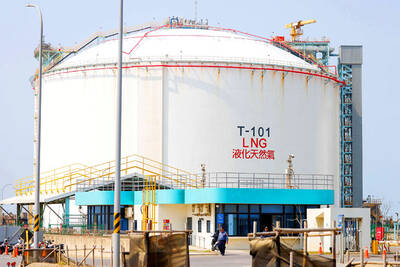
Taiwan’s natural gas supply remains stable through the end of May, despite rising concerns about potential disruptions to Qatari liquefied natural gas (LNG) supplies due to escalating conflicts in the Middle East, the Ministry of Economic Affairs said yesterday. The ministry in a statement said that Taiwan has completed preparations for natural gas supply and shipping schedules through the end of May. It has also made plans to increase natural gas imports from regions outside the Middle East in June to ensure a stable supply, it added. Taiwan sources natural gas from 14 countries and is not solely dependent on the Middle East,
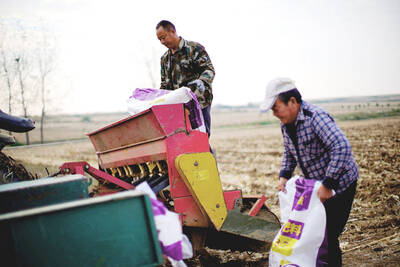
China is clamping down on fertilizer exports to protect its domestic market, industry sources said, putting an additional strain on global markets that were already grappling with shortages caused by the US-Israeli war on Iran. China is among the largest fertilizer exporters — shipping more than US$13 billion of it last year — and it has a history of controlling exports to keep prices low for farmers. Shipments through the war-blocked Strait of Hormuz account for about one-third of the sea-borne supply. This month, Beijing banned exports of nitrogen-potassium fertilizer blends and certain phosphate varieties, sources said. The ban, which has not


 RSS
RSS