


Sri Lanka’s tea exports have dropped to their lowest level in 23 years, official figures showed yesterday, hit by a fertilizer ban and Russia’s war against Ukraine.
Tea is the country’s biggest export commodity, bringing in about US$1.3 billion annually before the current economic downturn, the worst since independence in 1948.
However, a ban on fertilizer imports last year — introduced in a doomed effort to save foreign currency and avoid a debt default — hit growers hard, with production falling 18 percent year-on-year for the period from November last year to February.

Photo: AFP
Customs data showed that first-quarter exports this year correspondingly plunged to 63.7 million kilograms, down from 69.8 million kilograms in the first quarter of last year.
The tally was the lowest since the first quarter of 1999, when the country shipped out 60.3 million kilograms of tea.
Export earnings for the first quarter also declined, to US$287 million from US$338 million.
Tea brokering firm Asia Siyaka Commodities PLC blamed the drop on the agrochemical ban, which was portrayed by the government as a push to turn Sri Lankan farming 100 percent organic.
The ban was lifted by October last year following a backlash from the industry, but farmers were left unable to access imported fertilizer as the country simultaneously ran out of US dollars.
Industry officials added that about 10 percent of Sri Lanka’s tea exports had also been affected by Russia’s invasion of Ukraine. Both countries are top buyers of the country’s aromatic black tea.
The country of 22 million lacks enough foreign currency to finance even the most essential imports such as food, fuel and medicines. Dire shortages and galloping inflation have led to widespread protests calling for Sri Lankan President Gotabaya Rajapaksa to step down.
Sri Lanka plans to replace its “unrealistic” budget and is in talks with the World Bank to extend its support by US$300 million, Sri Lankan Minister of Finance Ali Sabry said yesterday.
The country, hit hard by COVID-19 and short of revenue after steep tax cuts by Rajapaksa’s government, has sought an emergency bailout from the IMF.
“The existing budget is unrealistic, given our challenges,” Sabry told parliament. “We will bring in a new budget that will seek to address core issues of low public revenue.”
Sabry said he wanted to increase tax revenue from 8.7 percent of GDP to 14 percent within the next two years.
Sri Lanka is within the next two weeks to appoint financial and legal advisers for a proposed restructure of its sovereign debt, Sabry said, adding that the government is eager to work with the IMF on structural reforms.
“This is the only way to put the economy on a sustainable footing,” Sabry added.
Additional reporting by Reuters


Taiwanese firms have increased investment in the Philippines in recent years as Manila’s ties with Washington deepen and global supply chains continue to shift away from China, an expert at the Chung-Hua Institution for Economic Research (CIER, 中華經濟研究院) said yesterday. The Philippines had not been among Taiwanese investors’ top choices in Southeast Asia, CIER Taiwan ASEAN Studies Center director Kristy Hsu (徐遵慈) said at a seminar in Taipei. However, Taiwan’s investment in the country has grown significantly since the COVID-19 pandemic, reaching US $257 million last year, a high in recent years, she said. Although Taiwan’s total investment in the Philippines still lags

Intel Corp regards Taiwan Semiconductor Manufacturing Co (TSMC, 台積電) as a longstanding partner, as the US chipmaker would continue outsourcing production of advanced chips to TSMC, Intel chief executive officer Lip-Bu Tan (陳立武) said yesterday. “I don’t look at people as competitors. I look at the collaboration... Nvidia is also, you know, a good friend,” Tan told a news conference following his keynote speech at the Computex trade show in Taipei. “It’s a very trusted partnership for us... We are a big, top customer for them, and we’re going to continue doing that,” he said, referring to TSMC, the world’s largest foundry

Hon Hai Precision Industry Co (鴻海精密) yesterday said it would work with US chipmaker Intel Corp to jointly develop and deploy next-generation artificial intelligence (AI) infrastructure and intelligent computing platforms in a move to capture booming demand for AI computing systems. Hon Hai, also known as Foxconn Technology Group (富士康), said in a statement that the partnership would combine its global manufacturing scale, system integration expertise and AI data center deployment capabilities with Intel’s strengths in processor architecture, silicon technologies and software ecosystem. The companies said they plan to work on equipment used in AI data centers, including server racks powered by
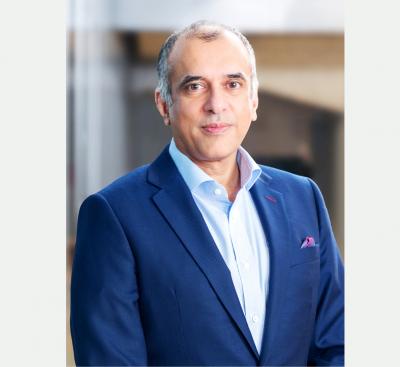
HSBC Holdings PLC is deepening its commitment to Taiwan as the economy emerges as one of the bank’s fastest-growing markets globally, driven by an artificial intelligence (AI) investment boom, expanding cross-border trade, and rising wealth creation. “The advantage that Taiwan has is a growth story linked to the semiconductor and broader AI industries, strong underlying corporate performance, and wealth creation,” said Surendra Rosha, HSBC’s co-chief executive for Asia and the Middle East, in an exclusive interview with the Taipei Times on June 2, during this year’s HSBC Taiwan Conference. That combination has helped HSBC cement its position as the most profitable international


 RSS
RSS