


Pan Jit International Inc’s (強茂) board of directors last week approved a tender offer for a stake of up to 30 percent in power management IC supplier Champion Microelectronic Corp (虹冠電子), as the diode maker seeks merger and acquisition (M&A) opportunities.
Pan Jit said in a statement on Monday last week that it would offer NT$80.8 per Champion share on the open market from Wednesday to March 17, with the minimum number of shares to be acquired set at 4 million, or a 5 percent stake in Champion, and the maximum set at 24 million, or a 30 percent stake.
The company said it estimates that the tender offer would cost between NT$323.2 million and NT$1.94 billion (US$11.6 billion and US$69.6 million).
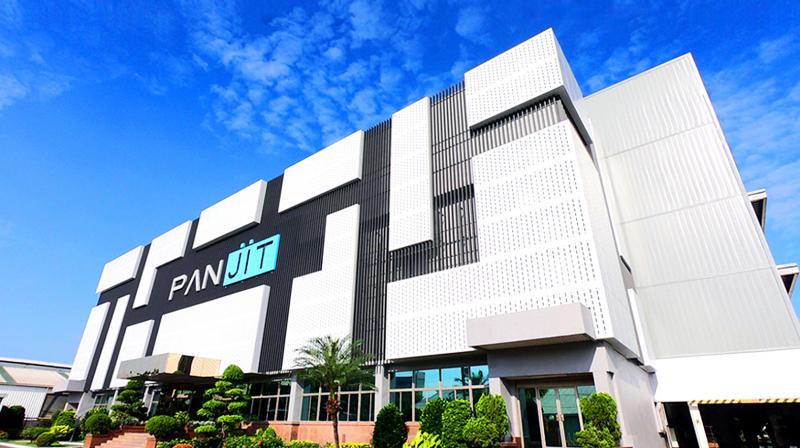
Photo: screen grab from Internet
Pan Jit, a maker of semiconductor discrete components — such as diodes, MOSFETs and transient voltage suppressors — said the public offer is mainly for financial investment purposes.
The company would use its own funds to finance the acquisition, it added.
In an M&A opportunity last year, the company acquired a 20 percent stake in connector supplier Alltop Technology Co Ltd (凡甲科技) for NT$1.53 billion to expand its product portfolio and create business synergy.
Champion, which was established in 1998, produces power ICs, power modules, field-effect transistors and fast recovery diodes. The company reported revenue of NT$1.296 billion for last year, up 20.96 percent from 2020. Its net profit last year was NT$401.15 million, or earnings per share of NT$5.03, up from NT$239.75 million in 2020, or earnings per share of NT$3.03.
Pan Jit said that it also seeks to expand its product portfolio, further integrate resources and enhance strategic cooperation with Champion through the deal.
Global demand for discrete components, power ICs and power modules — three major categories of power semiconductors — are expected to grow by a compound annual rate of 7.4 percent from US$36.7 billion in 2020 to US$52.4 billion in 2025 thanks to robust demand for electric vehicles, industrial automation and the green energy business, a projection released by consulting group Omdia showed.
Pan Jit, one of the world’s 20 leading power semiconductor suppliers, would this year continue to benefit from a tight supply of power semiconductors, and greater exposure to high-margin products with automotive and industrial applications, analysts said.
In the first three quarters of last year, Pan Jit reported net profit of NT$1.48 billion, up 1,171.5 percent from NT$680.98 million in the same period of 2020, or an increase in earnings per share from NT$2.05 to NT$4.45. For the whole of last year, revenue totaled NT$13.86 billion, up 32.13 percent year-on-year.

Singapore-based ride-hailing and delivery giant Grab Holdings Ltd has applied for regulatory approval to acquire the Taiwan operations of Germany-based Delivery Hero SE's Foodpanda in a deal valued at about US$600 million. Grab submitted the filing to the Fair Trade Commission on Friday last week, with the transaction subject to regulatory review and approval, the company said in a statement yesterday. Its independent governance structure would help foster a healthy and competitive market in Taiwan if the deal is approved, Grab said. Grab, which is listed on the NASDAQ, said in the filing that US-based Uber Technologies Inc holds about 13 percent of

The domestic unit of the Chinese-owned, Dutch-headquartered chipmaker Nexperia BV will soon be able to produce semiconductors locally within China, according to two company sources. Nexperia is at the center of a global tug-of-war over critical semiconductor technology, with a Dutch court in February ordering a probe into alleged mismanagement at the company. The geopolitical tussle has disrupted supply chains, with some carmakers reportedly forced to cut production due to chip shortages. Local production would allow Nexperia’s domestic arm, Nexperia Semiconductors (China) Ltd (安世半導體中國), to bypass restrictions in place since October on the supply of silicon wafers — etched with tiny components to

Taiwan Semiconductor Manufacturing Co (TSMC, 台積電) yesterday received government approval to deploy its advanced 3-nanometer (3nm) process at its second fab currently under construction in Japan, the Ministry of Economic Affairs said in a news release. The ministry green-lit the plan for the facility in Kumamoto, which is scheduled to start installing equipment and come online in 2028 with a monthly production capacity of 15,000 12-inch wafers, the ministry said. The Department of Investment Review in June 2024 authorized a US$5.26 billion investment for the facility, slated to manufacture 6- to 12nm chips, significantly less advanced than 3nm process. At a meeting with

Taiwan’s food delivery market could undergo a major shift if Singapore-based Grab Holdings Ltd completes its planned acquisition of Delivery Hero SE’s Foodpanda business in Taiwan, industry experts said. Grab on Monday last week announced it would acquire Foodpanda’s Taiwan operations for US$600 million. The deal is expected to be finalized in the second half of this year, with Grab aiming to complete user migration to its platform by the first half of next year. A duopoly between Uber Eats and Foodpanda dominates Taiwan’s delivery market, a structure that has remained intact since the Fair Trade Commission (FTC) blocked Uber Technologies Inc’s


 RSS
RSS