


German food delivery service provider Foodpanda GmbH is planning to establish a global research and development (R&D) center in Taiwan to create innovative applications, it said yesterday.
Foodpanda is to hire 100 employees in Taiwan for the center, including software and cloud technology engineers, app developers and senior managers, targeting tech professionals with cross-border working experience, it said in a statement.
As the global digital economy has been growing at a rapid pace, the company needs talent to take advantage of the growth by providing competitive compensation, it said.

Photo: CNA
The company would continue to take advantage of technology to boost the efficiency of the food delivery industry supply chain and cut waste, thereby increasing the industry’s sustainability, it said.
The R&D investment aims to expand the company’s operations in Taiwan, Foodpanda said.
The project came after the largest food delivery services provider in the country announced the opening of an Asia-Pacific digital technology support center in Taiwan in the second half of last year with a NT$600 million (US$21.69 million) investment.
The Taiwan R&D team would work closely with its counterparts in Germany and Singapore, Foodpanda said, adding that the Taiwan center would provide products to more than 20 countries across Asia and Europe.
Foodpanda Taiwan Co (富胖達) president John Fang (方俊強) said that since the opening of the Asia-Pacific digital technology support center last year, the company’s operations in the region have expanded, while several new apps are in the pipeline.
Fang said that the establishment of a global R&D center in Taiwan recognizes the country’s technological strength and talent pool.
Taiwan is expected to become a focal point of Foodpanda’s R&D efforts as the company seeks to provide customers with better services, he added.
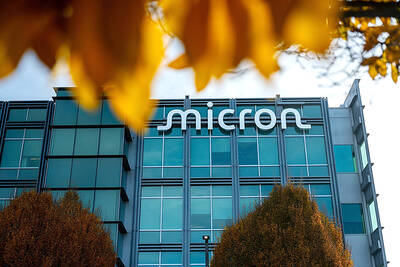
Micron Memory Taiwan Co (台灣美光), a subsidiary of US memorychip maker Micron Technology Inc, has been granted a NT$4.7 billion (US$149.5 million) subsidy under the Ministry of Economic Affairs A+ Corporate Innovation and R&D Enhancement program, the ministry said yesterday. The US memorychip maker’s program aims to back the development of high-performance and high-bandwidth memory chips with a total budget of NT$11.75 billion, the ministry said. Aside from the government funding, Micron is to inject the remaining investment of NT$7.06 billion as the company applied to participate the government’s Global Innovation Partnership Program to deepen technology cooperation, a ministry official told the
Taiwan Semiconductor Manufacturing Co (TSMC, 台積電), the world’s leading advanced chipmaker, officially began volume production of its 2-nanometer chips in the fourth quarter of this year, according to a recent update on the company’s Web site. The low-key announcement confirms that TSMC, the go-to chipmaker for artificial intelligence (AI) hardware providers Nvidia Corp and iPhone maker Apple Inc, met its original roadmap for the next-generation technology. Production is currently centered at Fab 22 in Kaohsiung, utilizing the company’s first-generation nanosheet transistor technology. The new architecture achieves “full-node strides in performance and power consumption,” TSMC said. The company described the 2nm process as
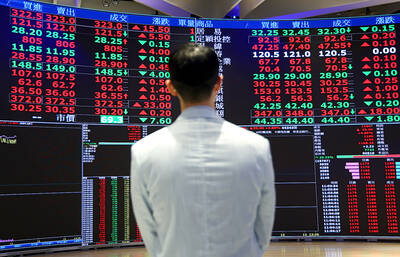
Shares in Taiwan closed at a new high yesterday, the first trading day of the new year, as contract chipmaker Taiwan Semiconductor Manufacturing Co (TSMC, 台積電) continued to break records amid an artificial intelligence (AI) boom, dealers said. The TAIEX closed up 386.21 points, or 1.33 percent, at 29,349.81, with turnover totaling NT$648.844 billion (US$20.65 billion). “Judging from a stronger Taiwan dollar against the US dollar, I think foreign institutional investors returned from the holidays and brought funds into the local market,” Concord Securities Co (康和證券) analyst Kerry Huang (黃志祺) said. “Foreign investors just rebuilt their positions with TSMC as their top target,
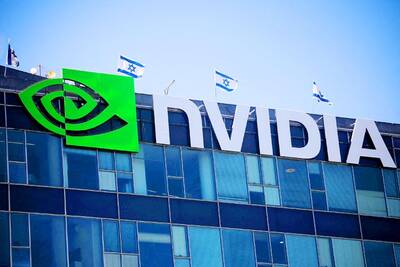
H200 CHIPS: A source said that Nvidia has asked the Taiwanese company to begin production of additional chips and work is expected to start in the second quarter Nvidia Corp is scrambling to meet demand for its H200 artificial intelligence (AI) chips from Chinese technology companies and has approached contract manufacturer Taiwan Semiconductor Manufacturing Co (TSMC, 台積電) to ramp up production, sources said. Chinese technology companies have placed orders for more than 2 million H200 chips for this year, while Nvidia holds just 700,000 units in stock, two of the people said. The exact additional volume Nvidia intends to order from TSMC remains unclear, they said. A third source said that Nvidia has asked TSMC to begin production of the additional chips and work is expected to start in the second


 RSS
RSS