


Fubon Financial Holding Co(富邦金控) yesterday said it has reached an initial consensus with the labor union of Jih Sun International Bank (日盛銀行), promising that it would not dismiss any bank employees in the next three years.
Fubon Financial acquired the bank’s parent company, Jih Sun Financial Holding Co (日盛金控), earlier this year and it had held talks with the bank’s labor union and Jih Sun Financial’s labor union separately.
None of the more than 1,000 employees of Jih Sun Bank would be sacked in the next three years after the acquisition, while those who are eligible to retire and apply to do so would receive an additional five months of wages, Fubon Financial said in a statement yesterday.
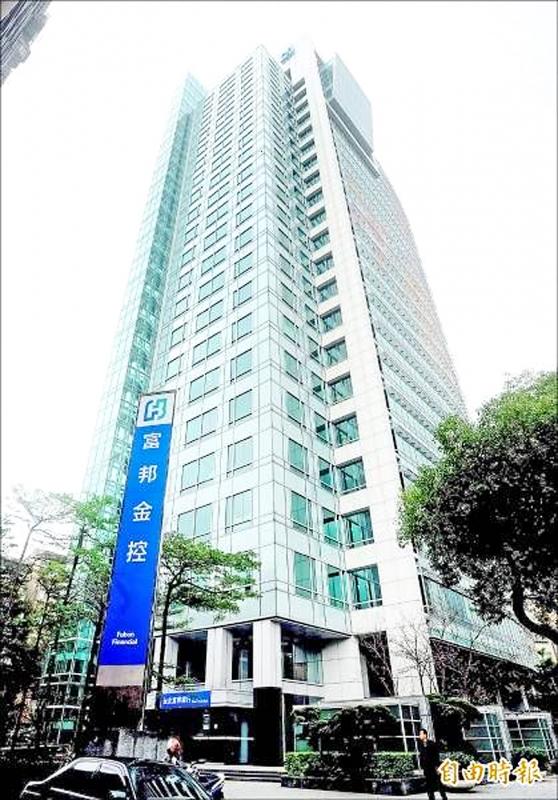
Photo: Wu Chi-lun, Taipei Times
Fubon Financial and the bank’s labor union would sign a formal agreement after the proposal is approved by the labor union’s members in a convention next year and approved by Jih Sun Bank’s board of directors, the company said.
“Fubon Financial had promised us that in principle, it would not adjust the position and salary of each employee of Jih Sun Bank over the next three years,” Jih Sun labor union president Jack Chen (陳建志) told the Taipei Times by telephone.
The financial conglomerate would send offer letters to each employee 30 days before it integrates Jin Sun bank’s operations into that of Taipei Fubon Commercial Bank (台北富邦銀行), with the letter indicating the employee’s position and wage, Chen said.
As Jih Sun Bank has 44 branches and Taipei Fubon Commercial Bank has 135 branches, it is likely that Fubon Financial would combine some branches to consolidate services, but he is not worried that employees’ positions would be greatly changed, Chen said.
Fubon Financial plans to integrate the operations of Jih Sun Financial into that of Fubon Financial before integrating the businesses of the units, he added.
During the negotiations, the two parties talked about how long Fubon Financial should promise not to dismiss any employee of Jih Sun Bank, and finally agreed on three years, Chen said.
“The guarantee of three years [of not sacking any employee] would give our colleagues more time to assimilate into the culture of Fubon Financial,” Chen said.
“It was our goal to obtain better conditions than those offered to employees of Ta Chong Bank (大眾銀行) by Yuanta Commercial Bank (元大銀行) after its acquisition, and I think that we have succeeded,” he said.
Fubon Financial said that it would continue talking with the labor union of Jih Sun Financial in hopes of reaching an agreement as soon as possible.

The domestic unit of the Chinese-owned, Dutch-headquartered chipmaker Nexperia BV will soon be able to produce semiconductors locally within China, according to two company sources. Nexperia is at the center of a global tug-of-war over critical semiconductor technology, with a Dutch court in February ordering a probe into alleged mismanagement at the company. The geopolitical tussle has disrupted supply chains, with some carmakers reportedly forced to cut production due to chip shortages. Local production would allow Nexperia’s domestic arm, Nexperia Semiconductors (China) Ltd (安世半導體中國), to bypass restrictions in place since October on the supply of silicon wafers — etched with tiny components to

Singapore-based ride-hailing and delivery giant Grab Holdings Ltd has applied for regulatory approval to acquire the Taiwan operations of Germany-based Delivery Hero SE's Foodpanda in a deal valued at about US$600 million. Grab submitted the filing to the Fair Trade Commission on Friday last week, with the transaction subject to regulatory review and approval, the company said in a statement yesterday. Its independent governance structure would help foster a healthy and competitive market in Taiwan if the deal is approved, Grab said. Grab, which is listed on the NASDAQ, said in the filing that US-based Uber Technologies Inc holds about 13 percent of

Taiwan Semiconductor Manufacturing Co (TSMC, 台積電) yesterday received government approval to deploy its advanced 3-nanometer (3nm) process at its second fab currently under construction in Japan, the Ministry of Economic Affairs said in a news release. The ministry green-lit the plan for the facility in Kumamoto, which is scheduled to start installing equipment and come online in 2028 with a monthly production capacity of 15,000 12-inch wafers, the ministry said. The Department of Investment Review in June 2024 authorized a US$5.26 billion investment for the facility, slated to manufacture 6- to 12nm chips, significantly less advanced than 3nm process. At a meeting with

Taiwan’s food delivery market could undergo a major shift if Singapore-based Grab Holdings Ltd completes its planned acquisition of Delivery Hero SE’s Foodpanda business in Taiwan, industry experts said. Grab on Monday last week announced it would acquire Foodpanda’s Taiwan operations for US$600 million. The deal is expected to be finalized in the second half of this year, with Grab aiming to complete user migration to its platform by the first half of next year. A duopoly between Uber Eats and Foodpanda dominates Taiwan’s delivery market, a structure that has remained intact since the Fair Trade Commission (FTC) blocked Uber Technologies Inc’s


 RSS
RSS