


The US made an offer to Japan aimed at resolving disputes over tariffs imposed on Japanese steel and aluminum under former US president Donald Trump in 2018, people familiar with the situation said.
The US Department of Commerce and Office of the US Trade Representative submitted the proposal to officials in the new government of Japanese Prime Minister Fumio Kishida — who took office in Tokyo in October — on Friday, said the people, who declined to be identified because the talks are private.
The Japanese government is holding out for a better deal, an official with knowledge of the talks said.
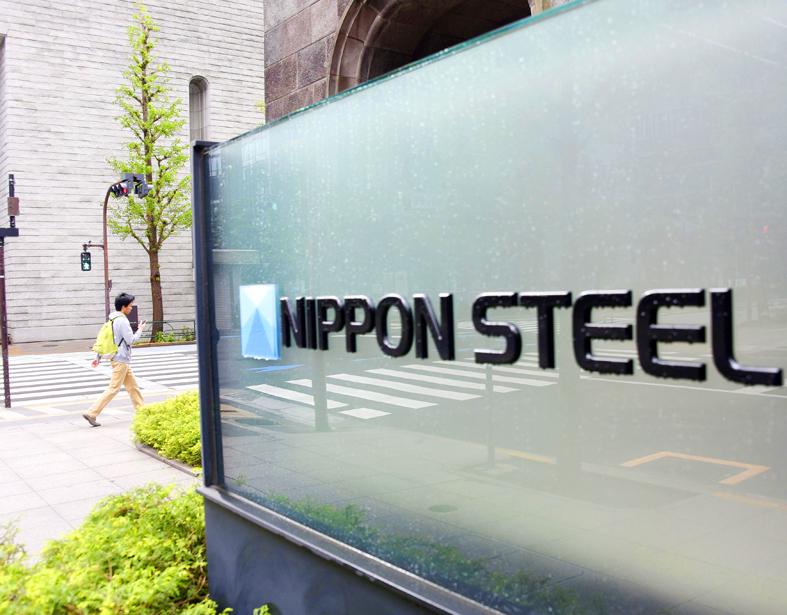
Photo: AP / Kyodo News
The metals dispute started in 2018, when Trump imposed duties on steel and aluminum from the EU, Asia and elsewhere, citing risks to national security.
The EU subsequently retaliated, targeting products including Harley-Davidson Inc motorcycles, Levi Strauss & Co jeans and bourbon whiskey.
In October, the US and EU clinched a tariff-busting trade accord, with Washington suspending the 25 percent levy on incoming steel and 10 percent duty on aluminum imports from Europe up to a certain threshold, and anything beyond that still subject to additional charges.
The EU also suspended it retaliatory duties, effectively ending punitive measures on as much as US$10 billion of each other’s goods.
As part of the resolution, the US and the EU have committed to negotiate the first-ever carbon-based arrangement on steel and aluminum trade and create greater incentives for reducing carbon intensity, US Trade Representative Katherine Tai (戴琪) said last week.
The US’ proposal to Japan is similar to the deal with the EU, in that a certain amount of steel and aluminum — based on the historical averages shipped — would be allowed to enter the US free of duties, the people said.
Japan is calling for the tariffs to be abolished completely, a government official who asked not to be named said, in line with policy.
While there had been hopes of resolving the dispute by the end of the year, it is now unclear whether that deadline can be met, the official said.
The US imported about 1.7 million tonnes of steel from Japan in 2017, the most recent year not affected by the tariffs, and 1.9 million tonnes in 2016, US Census Bureau data show.
Last year, inbound steel shipments to the US from Japan totaled 732,158 tonnes, census data showed.
While the EU responded with retaliatory tariffs on the US, Japan took a softer approach. Asia’s second-largest economy had been expected to suffer relatively little damage because only 5 percent of its steel exports went to the US at the time, although more is thought to reach the market via Mexico.
The proposed truce comes as US President Joe Biden’s administration aims to sign what could prove a “very powerful” economic framework agreement with Asian nations — focusing on areas including coordination on supply chains, export controls and standards for artificial intelligence — next year, US Secretary of Commerce Gina Raimondo said last week.

Real estate agent and property developer JSL Construction & Development Co (愛山林) led the average compensation rankings among companies listed on the Taiwan Stock Exchange (TWSE) last year, while contract chipmaker Taiwan Semiconductor Manufacturing Co (TSMC, 台積電) finished 14th. JSL Construction paid its employees total average compensation of NT$4.78 million (US$159,701), down 13.5 percent from a year earlier, but still ahead of the most profitable listed tech giants, including TSMC, TWSE data showed. Last year, the average compensation (which includes salary, overtime, bonuses and allowances) paid by TSMC rose 21.6 percent to reach about NT$3.33 million, lifting its ranking by 10 notches
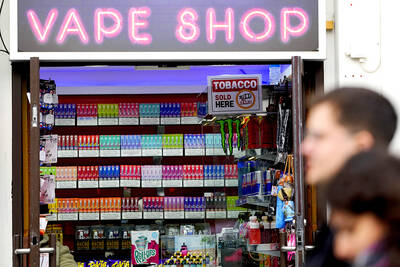
Popular vape brands such as Geek Bar might get more expensive in the US — if you can find them at all. Shipments of vapes from China to the US ground to a near halt last month from a year ago, official data showed, hit by US President Donald Trump’s tariffs and a crackdown on unauthorized e-cigarettes in the world’s biggest market for smoking alternatives. That includes Geek Bar, a brand of flavored vapes that is not authorized to sell in the US, but which had been widely available due to porous import controls. One retailer, who asked not to be named, because
SEASONAL WEAKNESS: The combined revenue of the top 10 foundries fell 5.4%, but rush orders and China’s subsidies partially offset slowing demand Taiwan Semiconductor Manufacturing Co (TSMC, 台積電) further solidified its dominance in the global wafer foundry business in the first quarter of this year, remaining far ahead of its closest rival, Samsung Electronics Co, TrendForce Corp (集邦科技) said yesterday. TSMC posted US$25.52 billion in sales in the January-to-March period, down 5 percent from the previous quarter, but its market share rose from 67.1 percent the previous quarter to 67.6 percent, TrendForce said in a report. While smartphone-related wafer shipments declined in the first quarter due to seasonal factors, solid demand for artificial intelligence (AI) and high-performance computing (HPC) devices and urgent TV-related orders
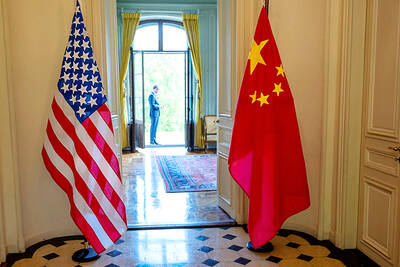
MINERAL DIPLOMACY: The Chinese commerce ministry said it approved applications for the export of rare earths in a move that could help ease US-China trade tensions Chinese Vice Premier He Lifeng (何立峰) is today to meet a US delegation for talks in the UK, Beijing announced on Saturday amid a fragile truce in the trade dispute between the two powers. He is to visit the UK from yesterday to Friday at the invitation of the British government, the Chinese Ministry of Foreign Affairs said in a statement. He and US representatives are to cochair the first meeting of the US-China economic and trade consultation mechanism, it said. US President Donald Trump on Friday announced that a new round of trade talks with China would start in London beginning today,


 RSS
RSS