


UNITED STATES
Fed poll sees faster growth
The economy grew at a somewhat faster pace in April and last month, despite disruptions that choked supplies to the nation’s manufacturers, the Federal Reserve reported on Wednesday. In the Fed’s latest survey of economic conditions around the nation, known as the “beige book,” several of the central bank’s districts reported that increased vaccination rates and relaxed social distancing measures were having a positive impact on the economy. However, offsetting those gains were headwinds coming from supply chain problems, the report said, adding that the supply chain disruptions added to price pressures. The report is to form the basis of discussion when Fed policymakers meet on June 15 to 16 to decide interest rate trends.
SHIPPING
Ships avoid virus-hit port
The world’s shipping lines are avoiding a key port in China hit by a COVID-19 outbreak, causing increased congestion at other seaports across the nation that could delay the delivery of goods to the US and Europe. Tightened health and safety checks have caused congestion and reduced productivity at the port of Yantian, prompting the cancelation of calls there, a notice from Mediterranean Shipping Co on Wednesday said. The port in Shenzhen stopped accepting export-bound container boxes last week and suspended three berths after a COVID-19 cluster emerged among the port staff and broader community. Shenzhen is the world’s fourth-busiest container port.
TRADE
UK, Australia hold talks
Britain is seeking to remove a 5 percent tariff on exports of Scotch whisky to Australia in an upcoming trade deal, British Secretary of State for International Trade Liz Truss said yesterday. “A UK-Australia trade agreement would be significant for Scotch whisky and the Union,” she said in a statement. Britain and Australia held another round of talks to progress a free-trade deal, the British High Commissioner to Australia Vicki Treadell said in Canberra, as they seek to strike an agreement in the middle of this month. The proposed deal with Australia is the most advanced of several pacts London is pursuing.
MEXICO
Economy to grow 6%: bank
The COVID-19 pandemic-hit economy is expected to grow by 6 percent this year, the Bank of Mexico said on Wednesday, upgrading its outlook for the second time since March. The central bank had predicted growth of 4.8 percent for Latin America’s second-largest economy this year. The brighter outlook reflects strong external demand, mainly from the US, as well as an easing of the pandemic in the nation, one of the worst affected by the virus. The economy shrank 8.5 percent last year, in the worst slump since the Great Depression about nine decades ago.
CRYPTOCURRENCY
Google to allow crypto ads
Alphabet Inc’s Google, the world’s largest digital advertising seller, is to allow companies offering cryptocurrency wallets to run ads beginning in August. Starting in August, Google is to let wallets run ads on search, YouTube and other properties as long as they go through the company’s certification process. Google is making the change “in order to better match existing FinCEN regulations and requirements,” a spokesperson said in a statement on Wednesday. In a blog post, Google specified that the ad ban still exists for initial coin offerings and services that aggregate or compare issuers of cryptocurrencies.

Cairo’s new monorail slices across the city skyline, running above the familiar chaos of blaring horns and aging buses’ exhaust fumes that mark rush hour below. The US$4.5 billion monorail, opened this month, is among Egypt’s most prominent new transport projects, part of a debt-funded infrastructure drive criticized for sapping state finances while bringing limited benefits to most of the country’s 109 million people. “It feels like you’re in a different country,” said Ramy Sayed, a restaurant manager, aboard a driverless Innovia 300 train. “No noise, no traffic, we’re not used to this.” The eastern line runs 56km from the bustling middle-class
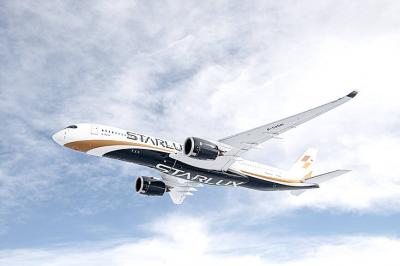
Starlux Airlines Co (星宇航空) today unveiled a long-haul network expansion plan at a shareholders’ meeting in Taipei, including direct flights to Barcelona, Spain, and Zurich, Switzerland, as well as a service connecting Taipei, Sydney and New Zealand. Starlux is to become the first Taiwanese carrier to offer non-stop services to the two European cities, while the inaugural oceanic route is expected to expand transit opportunities within the Australia-New Zealand market, Starlux said. Flight services to Chicago, Dallas, Washington and New York are under evaluation, the airline added. Prior to the shareholders’ meeting, the airline earlier this year announced that it would be

Taiwanese prosecutors suspect that three people successfully smuggled at least one shipment of Nvidia Corp artificial intelligence (AI) chips to China after first exporting them to Japan, people familiar with the matter said. The trio was detained last week by the Keelung District Prosecutors’ Office for allegedly falsifying documents related to exports of Super Micro Computer Inc servers containing advanced Nvidia chips, which the US has barred from sale to China without a license from Washington. The move marked Taiwan’s first public crackdown on AI chip diversion after years of pressure from the US to take a more active role in curtailing
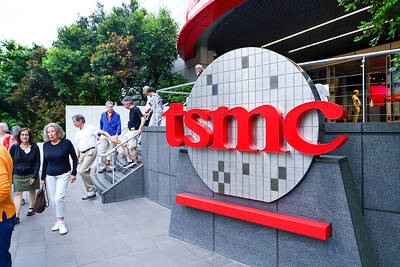
Taiwan Semiconductor Manufacturing Co (TSMC, 台積電) employee bonuses are likely to grow more than 30 percent this year, in line with the past few years as the company’s profits continue to set new records, an anonymous source cited TSMC chairman C.C. Wei (魏哲家) as saying yesterday. TSMC, the world’s largest contract chipmaker, is committed to taking care of its workers, the source said, citing Wei’s meeting with employees yesterday morning. Wei also expressed gratitude to employees for their contribution to the company’s improving bottom line, the source added. Since 2023, TSMC’s employee bonuses have grown at an annual rate of


 RSS
RSS