


Hotels across the nation are racking their brains for ways to woo customers ahead of the release of stimulus vouchers and the summer vacation.
Starting on July 15, the government is to distribute NT$3,000 worth of Triple Stimulus Vouchers per person to spur consumer spending, which has been hit hard by the COVID-19 pandemic in the first half of the year.
All Taiwanese nationals and foreign spouses with resident certificates are eligible for the vouchers. Regent Taipei (台北晶華酒店), the flagship property of Formosa International Hotels Corp (晶華麗晶酒店集團), is to launch a cruise-like vacation package that provides guests with meals, accommodation, entertainment, and fashion and cooking lessons for NT$3,980 per person from July 15 to Aug. 31.
Charges for children under 12 are 50 percent off and guests who make a reservation by Tuesday next week can waive charges for one child, the hotel said.
“The pandemic has changed lives and spending behavior... People now assign more importance to health and time spent with family,” Regent Taipei managing director Simon Wu (吳偉正) said, adding that the package targets family travelers.
For an extra NT$2,000, guests can buy family passes for four at the group’s buffet restaurants Brasserie (?麗廳) and Spice Market (泰市場), a NT$1,000 spa discount and a NT$1,000 hotel voucher, suggesting savings of up to NT$6,884, it said.
Landis Taipei Hotel (台北亞都麗緻飯店) said that guests who use the vouchers at its facilities would augment their value by 1.5 times.
“That means the more guests spend at Landis Taipei, the more savings they can enjoy,” it said.
Alternatively, guests can stay at Landis Taipei for NT$3,999 per night and win NT$3,000 in discounts for dining at its Michelin-starred Chinese restaurant Tien Hsiang Lo (天香樓) or French restaurants La Brasserie (巴賽麗廳) and Paris 1930 de Hideki Takayama (巴黎廳).
Guests may also win a NT$999 hotel voucher for repeat visits.
Courtyard by Marriott (六福萬怡) in Taipei’s Nangang District (南港) is offering guests an overnight stay for NT$3,666 and the chance to win two tickets to affiliated Leofoo Village Theme Park (六福村) in Hsinchu, the Taipei 101 Observatory and Taipei Sightseeing Bus between next month and September.
Hotel room rates are higher in Hualien County, where Farglory Hotel (遠雄悅來大飯店) is inviting guests to stay at the resort property for NT$6,888 a day, including two free breakfasts and a NT$600 discount for paid facilities between July 15 and Aug. 29.
The charges represent a 77 percent pickup from room rates of NT$3,880 this month, signs of a rapid recovery for hospitality facilities outside the greater Taipei area.
Domestic visitors account for a big chunk of Farglory Hotel’s clientele, making it less vulnerable to the sharp decline in foreign travelers, its communication official said by telephone.
Similarly, Promised Land Resort & Lagoon (花蓮理想大地渡假飯店) in Hualien is also faring well and is seeking to attract guests with pets.
The pet-friendly package features a one night-stay at its villa rooms for NT$7,200 from next month, the hotel said, adding that the costs cover two adults and one dog, snacks, special amenities for dogs and breakfasts in-room or at the buffet restaurant.
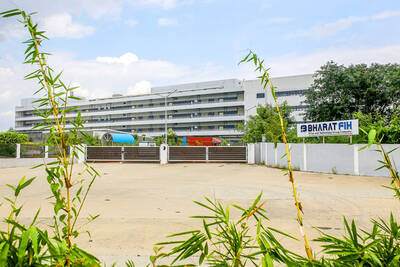
SETBACK: Apple’s India iPhone push has been disrupted after Foxconn recalled hundreds of Chinese engineers, amid Beijing’s attempts to curb tech transfers Apple Inc assembly partner Hon Hai Precision Industry Co (鴻海精密), also known internationally as Foxconn Technology Group (富士康科技集團), has recalled about 300 Chinese engineers from a factory in India, the latest setback for the iPhone maker’s push to rapidly expand in the country. The extraction of Chinese workers from the factory of Yuzhan Technology (India) Private Ltd, a Hon Hai component unit, in southern Tamil Nadu state, is the second such move in a few months. The company has started flying in Taiwanese engineers to replace staff leaving, people familiar with the matter said, asking not to be named, as the
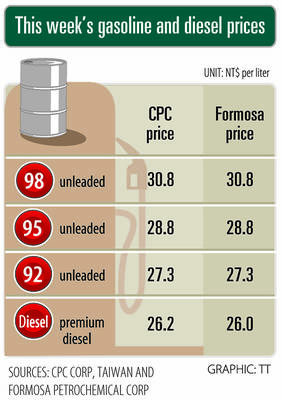
The prices of gasoline and diesel at domestic fuel stations are to rise NT$0.1 and NT$0.4 per liter this week respectively, after international crude oil prices rose last week, CPC Corp, Taiwan (台灣中油) and Formosa Petrochemical Corp (台塑石化) announced yesterday. Effective today, gasoline prices at CPC and Formosa stations are to rise to NT$27.3, NT$28.8 and NT$30.8 per liter for 92, 95 and 98-octane unleaded gasoline respectively, the companies said in separate statements. The price of premium diesel is to rise to NT$26.2 per liter at CPC stations and NT$26 at Formosa pumps, they said. The announcements came after international crude oil prices
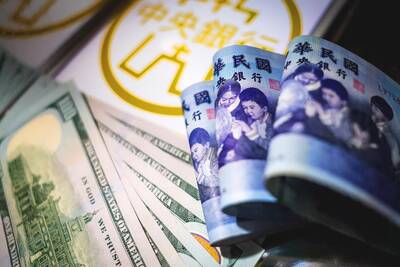
DOLLAR SIGNS: The central bank rejected claims that the NT dollar had appreciated 10 percentage points more than the yen or the won against the greenback The New Taiwan dollar yesterday fell for a sixth day to its weakest level in three months, driven by equity-related outflows and reactions to an economics official’s exchange rate remarks. The NT dollar slid NT$0.197, or 0.65 percent, to close at NT$30.505 per US dollar, central bank data showed. The local currency has depreciated 1.97 percent so far this month, ranking as the weakest performer among Asian currencies. Dealers attributed the retreat to foreign investors wiring capital gains and dividends abroad after taking profit in local shares. They also pointed to reports that Washington might consider taking equity stakes in chipmakers, including Taiwan Semiconductor
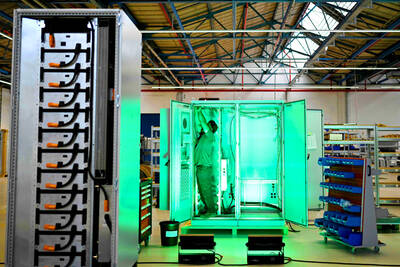
A German company is putting used electric vehicle batteries to new use by stacking them into fridge-size units that homes and businesses can use to store their excess solar and wind energy. This week, the company Voltfang — which means “catching volts” — opened its first industrial site in Aachen, Germany, near the Belgian and Dutch borders. With about 100 staff, Voltfang says it is the biggest facility of its kind in Europe in the budding sector of refurbishing lithium-ion batteries. Its CEO David Oudsandji hopes it would help Europe’s biggest economy ween itself off fossil fuels and increasingly rely on climate-friendly renewables. While


 RSS
RSS