


Apple Inc said it is to reopen more than 25 stores across the US and 12 stores in Canada this week, adding to nearly 100 global locations that have reopened to customers after closures due to the COVID-19 pandemic.
Some stores would offer only curbside or storefront service, the company said in an e-mailed statement.
In a letter to customers by Deirdre O’Brien, Apple’s senior vice president for retail and people, the company said that it is “focused on limiting occupancy and giving everybody lots of room,” with a renewed emphasis on one-to-one service throughout each store.

Photo: Reuters
There are to be temperature checks conducted at entrances and face coverings would be required for all employees and provided to any shoppers without one.
“A store opening in no way means that we won’t take the preventative step of closing it again should local conditions warrant,” O’Brien wrote.
The US Apple stores set to reopen are in Arkansas, California, Colorado, Florida, Hawaii, Oklahoma and Washington state.
The Cupertino, California-based tech giant is in the process of reopening most of its retail sales network across Italy, Germany, Austria, Switzerland and Australia. It plans to reopen 10 of its 17 stores in Italy this week, it said on Friday.
Apple closed all of its stores in mainland China early on in the novel coronavirus outbreak, which it reopened a few weeks later as the pandemic was reined in across the country. It then closed all of its stores outside greater China until it started a gradual reopening with its Seoul location recently.
Separately, Walt Disney Co is to partially reopen its Disney Springs entertainment and shopping complex at Walt Disney World Resort in Florida on Wednesday, it said on Saturday.
Disney and unions representing workers at Florida’s Walt Disney World reached an agreement on safeguards to protect employees from the coronavirus, a union statement said on Thursday, removing one of the company’s hurdles to reopening its popular theme parks.
The company said third-party operating participants would open at Disney Springs this week and three stores and venues owned and operated by Disney — World of Disney, D-Luxe Burger and the Marketplace Co-Op — would reopen later this month.
“While our theme parks and resort hotels remain temporarily closed, the phased reopening of Disney Springs is a welcome milestone as we navigate through this unprecedented time together as responsibly as we can,” Disney Springs vice president Matt Simon said in a statement.
The entertainment giant said that it was implementing safety measures and operational changes such as cashless or contactless payment options, a requirement to wear “appropriate” face covering, temperature screenings, social distancing practices, increased cleaning and disinfection procedures.
In the US, Florida is ahead of California, home to Disneyland, in reopening businesses that were closed starting in the middle of March.
Shutting theme park gates cost the company US$1 billion from January through March, Disney said earlier this month.
About 120,000 of the company’s workers were placed on unpaid furlough, many of them theme park “cast members,” as Disney calls them.
Additional reporting by Reuters

CAUTIOUS RECOVERY: While the manufacturing sector returned to growth amid the US-China trade truce, firms remain wary as uncertainty clouds the outlook, the CIER said The local manufacturing sector returned to expansion last month, as the official purchasing managers’ index (PMI) rose 2.1 points to 51.0, driven by a temporary easing in US-China trade tensions, the Chung-Hua Institution for Economic Research (CIER, 中華經濟研究院) said yesterday. The PMI gauges the health of the manufacturing industry, with readings above 50 indicating expansion and those below 50 signaling contraction. “Firms are not as pessimistic as they were in April, but they remain far from optimistic,” CIER president Lien Hsien-ming (連賢明) said at a news conference. The full impact of US tariff decisions is unlikely to become clear until later this month

With an approval rating of just two percent, Peruvian President Dina Boluarte might be the world’s most unpopular leader, according to pollsters. Protests greeted her rise to power 29 months ago, and have marked her entire term — joined by assorted scandals, investigations, controversies and a surge in gang violence. The 63-year-old is the target of a dozen probes, including for her alleged failure to declare gifts of luxury jewels and watches, a scandal inevitably dubbed “Rolexgate.” She is also under the microscope for a two-week undeclared absence for nose surgery — which she insists was medical, not cosmetic — and is
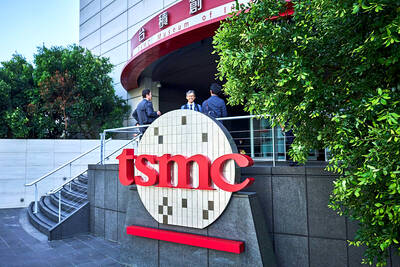
GROWING CONCERN: Some senior Trump administration officials opposed the UAE expansion over fears that another TSMC project could jeopardize its US investment Taiwan Semiconductor Manufacturing Co (TSMC, 台積電) is evaluating building an advanced production facility in the United Arab Emirates (UAE) and has discussed the possibility with officials in US President Donald Trump’s administration, people familiar with the matter said, in a potentially major bet on the Middle East that would only come to fruition with Washington’s approval. The company has had multiple meetings in the past few months with US Special Envoy to the Middle East Steve Witkoff and officials from MGX, an influential investment vehicle overseen by the UAE president’s brother, the people said. The conversations are a continuation of talks that

Alchip Technologies Ltd (世芯), an application-specific integrated circuit (ASIC) designer specializing in artificial-intelligence (AI) chips, yesterday said that small-volume production of 3-nanometer (nm) chips for a key customer is on track to start by the end of this year, dismissing speculation about delays in producing advanced chips. As Alchip is transitioning from 7-nanometer and 5-nanometer process technology to 3 nanometers, investors and shareholders have been closely monitoring whether the company is navigating through such transition smoothly. “We are proceeding well in [building] this generation [of chips]. It appears to me that no revision will be required. We have achieved success in designing


 RSS
RSS