


US President Donald Trump has promised European Commission President Jean-Claude Juncker that he will not impose additional import tariffs on European cars for the time being, Juncker was quoted as saying in an interview on Monday.
A confidential US Department of Commerce report sent to Trump over the weekend is widely expected to clear the way for him to threaten tariffs of up to 25 percent on imported cars and auto parts by designating the imports a national security threat.
“Trump gave me his word that there won’t be any car tariffs for the time being. I view this commitment as something you can rely on,” Juncker told the German daily Stuttgarter Zeitung in an interview.
He did not specify when Trump made the promise.
If Trump imposed tariffs on European cars nonetheless, the EU would react immediately and not feel obliged to stick to its promise to buy more soybeans and liquefied gas from the US, Juncker added.
The contents of the US report are expected to remain classified while Trump considers its recommendations, leaving the industry and major car exporters, such as Germany, Japan and South Korea, in the dark about its consequences.
Auto industry officials said that they expect the report to recommend at least some tariffs so that the US administration can use the findings of the inquiry as leverage during negotiations this year with Japan and the EU.
The EU wanted to improve trade relations with the US, but would react swiftly if Trump decided to hit EU car imports with tariffs, European Commission spokesman Margaritis Schinas said.
“The European Union will stick to its word as long as the US does the same,” he said.
Any US tariffs on European cars would hit Germany’s important automobile industry particularly hard. The US is Germany’s most important single export destination after the bloc of EU countries.
The BDI industry association called on the US administration to provide more clarity and publish the findings of the national security report swiftly.
“The US Department of Commerce should now publish its report on automobile imports quickly, so as not to further increase business uncertainty for companies,” BDI president Dieter Kempf said.
“The import of automobiles is not a threat to US national security, and US President Donald Trump must abide by applicable trade law and he should refrain from imposing any tariffs or quotas,” Kempf said.
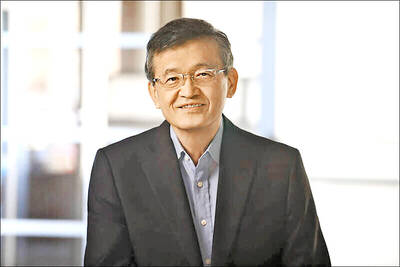
Intel Corp chief executive officer Lip-Bu Tan (陳立武) is expected to meet with Taiwanese suppliers next month in conjunction with the opening of the Computex Taipei trade show, supply chain sources said on Monday. The visit, the first for Tan to Taiwan since assuming his new post last month, would be aimed at enhancing Intel’s ties with suppliers in Taiwan as he attempts to help turn around the struggling US chipmaker, the sources said. Tan is to hold a banquet to celebrate Intel’s 40-year presence in Taiwan before Computex opens on May 20 and invite dozens of Taiwanese suppliers to exchange views

Application-specific integrated circuit designer Faraday Technology Corp (智原) yesterday said that although revenue this quarter would decline 30 percent from last quarter, it retained its full-year forecast of revenue growth of 100 percent. The company attributed the quarterly drop to a slowdown in customers’ production of chips using Faraday’s advanced packaging technology. The company is still confident about its revenue growth this year, given its strong “design-win” — or the projects it won to help customers design their chips, Faraday president Steve Wang (王國雍) told an online earnings conference. “The design-win this year is better than we expected. We believe we will win
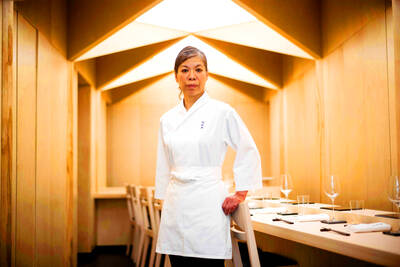
Chizuko Kimura has become the first female sushi chef in the world to win a Michelin star, fulfilling a promise she made to her dying husband to continue his legacy. The 54-year-old Japanese chef regained the Michelin star her late husband, Shunei Kimura, won three years ago for their Sushi Shunei restaurant in Paris. For Shunei Kimura, the star was a dream come true. However, the joy was short-lived. He died from cancer just three months later in June 2022. He was 65. The following year, the restaurant in the heart of Montmartre lost its star rating. Chizuko Kimura insisted that the new star is still down
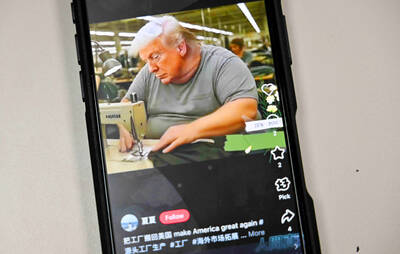
While China’s leaders use their economic and political might to fight US President Donald Trump’s trade war “to the end,” its army of social media soldiers are embarking on a more humorous campaign online. Trump’s tariff blitz has seen Washington and Beijing impose eye-watering duties on imports from the other, fanning a standoff between the economic superpowers that has sparked global recession fears and sent markets into a tailspin. Trump says his policy is a response to years of being “ripped off” by other countries and aims to bring manufacturing to the US, forcing companies to employ US workers. However, China’s online warriors


 RSS
RSS