


Kha’s wedding day looked perfect from the outside, but she was hiding a dark secret: The 27-year-old was three months pregnant and her husband was fake, hired for a staged wedding to avoid the social stigma of becoming a single mother.
Breaking from tradition in socially conservative Vietnam can come at a high price for the whole family.
“My parents would have been the first to be filled with shame if I was pregnant and without a husband,” Kha told Agence France-Presse a month after the US$1,500 fake marriage, which was quietly paid for by her baby’s father, who is married to another woman.

Photo: AFP
The wedding-guests-for-hire business is growing in Vietnam — where about 70 percent of people older than 15 are married — and not just among pregnant women like Kha looking for stand-in husbands.
Young couples are shelling out thousands of dollars to rent parents, aunts, uncles, godparents and friends to appease familial pressure to tie the knot or avoid clashes between in-laws who disapprove of the union.
Kha and her fake husband were never legally married — a formality often overshadowed by lavish wedding parties in Vietnam — but she is forever grateful to him for playing the part in front of her friends and relatives.
“I felt like I was about to drown, but I grabbed a life jacket,” said a smiling Kha, whose name has been changed to protect her identity.
Her parents were in on the secret, but Kha plans to tell the rest of her family that her “husband” left her — preferring to be a divorced single mother over having a baby out of wedlock.
Relationship norms are changing fast among youth in Vietnam, where more than half of the population of 93 million are younger than 30. More couples are opting to live together before marriage or shunning the family home afterward and renting their own apartments.
Abortions are on the rise too, with as many as 300,000 officially documented last year, but the stigma remains high.
However, when it comes to wedding ceremonies, many still feel immense family or social pressure to hew to tradition, especially from ultraconservative elders.
“People don’t have the courage to live true to their hearts, they face traditional habits and customs, cultures and views,” psychology researcher Nguyen Duy Cuong said.
“We should put ourselves in the shoes of those who have no way out,” he said, offering sympathy for those who pay for the actors to avoid causing a family rift.
That is what led Huong and her boyfriend Quan to stage a fake ceremony. His family shunned her, because she came from a poor province, but Huong’s parents insisted she marry during the lunar Year of the Rooster on the advice of a fortune-teller.
So the couple hosted a fake wedding in her home province of Nghe An, although they refused to say exactly how much they spent. Her wedding guests were real, but his — father, mother, uncles, aunts, friends — were all hired.
Despite the charade, Quan said their commitment is genuine.
“It was both fake and real,” he told AFP after the traditional ceremony last month, although is circumspect on how he will handle his parents expectations for his future.
The day almost went off without a hitch until a hired uncle got Quan’s childhood neighborhood wrong in his wedding speech to hundreds of guests.
Still, Quan was relieved when it was all over, although he must still keep the wedding a secret from his real parents.
“It’s good to spend a bit of money and make everyone happy. We settled the headaches in peace,” Quan said.
Quan and Huong are among hundreds of couples who hired wedding guests from Vinamost, one of a handful of Hanoi-based companies offering such services for as much as US$4,400 for a full package.
Company founder Nguyen Xuan Thien said it has staged thousands of weddings over the years, although there are no statistics on how many fake weddings are held annually across Vietnam.
Thien said business has steadily grown, with more than 400 guests for hire today from less than a dozen about a decade ago.
However, even he has mixed feelings about social pressures that have carved out a market for his business.
“The message to society is that we are very worried. Like a hospital treating illnesses, we are helping brides and their families, but we don’t want this to grow,” Thien said, adding that he considers his work a kind of community service and does not make much a profit.
Kha, who is due sometime next month, said her fake marriage finally freed her from her lie.
“Hiding my pregnancy was so exhausting, but now I feel very confident about the present and the future,” she said.

Real estate agent and property developer JSL Construction & Development Co (愛山林) led the average compensation rankings among companies listed on the Taiwan Stock Exchange (TWSE) last year, while contract chipmaker Taiwan Semiconductor Manufacturing Co (TSMC, 台積電) finished 14th. JSL Construction paid its employees total average compensation of NT$4.78 million (US$159,701), down 13.5 percent from a year earlier, but still ahead of the most profitable listed tech giants, including TSMC, TWSE data showed. Last year, the average compensation (which includes salary, overtime, bonuses and allowances) paid by TSMC rose 21.6 percent to reach about NT$3.33 million, lifting its ranking by 10 notches

Popular vape brands such as Geek Bar might get more expensive in the US — if you can find them at all. Shipments of vapes from China to the US ground to a near halt last month from a year ago, official data showed, hit by US President Donald Trump’s tariffs and a crackdown on unauthorized e-cigarettes in the world’s biggest market for smoking alternatives. That includes Geek Bar, a brand of flavored vapes that is not authorized to sell in the US, but which had been widely available due to porous import controls. One retailer, who asked not to be named, because
SEASONAL WEAKNESS: The combined revenue of the top 10 foundries fell 5.4%, but rush orders and China’s subsidies partially offset slowing demand Taiwan Semiconductor Manufacturing Co (TSMC, 台積電) further solidified its dominance in the global wafer foundry business in the first quarter of this year, remaining far ahead of its closest rival, Samsung Electronics Co, TrendForce Corp (集邦科技) said yesterday. TSMC posted US$25.52 billion in sales in the January-to-March period, down 5 percent from the previous quarter, but its market share rose from 67.1 percent the previous quarter to 67.6 percent, TrendForce said in a report. While smartphone-related wafer shipments declined in the first quarter due to seasonal factors, solid demand for artificial intelligence (AI) and high-performance computing (HPC) devices and urgent TV-related orders
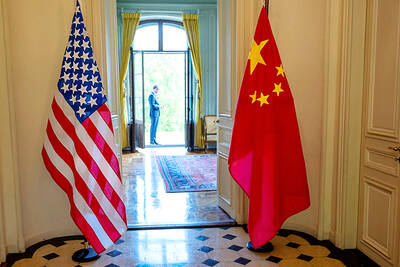
MINERAL DIPLOMACY: The Chinese commerce ministry said it approved applications for the export of rare earths in a move that could help ease US-China trade tensions Chinese Vice Premier He Lifeng (何立峰) is today to meet a US delegation for talks in the UK, Beijing announced on Saturday amid a fragile truce in the trade dispute between the two powers. He is to visit the UK from yesterday to Friday at the invitation of the British government, the Chinese Ministry of Foreign Affairs said in a statement. He and US representatives are to cochair the first meeting of the US-China economic and trade consultation mechanism, it said. US President Donald Trump on Friday announced that a new round of trade talks with China would start in London beginning today,


 RSS
RSS