


Bacardi Ltd is tapping into the fast-growing market for tequila by acquiring Patron Spirits International AG in a deal valuing the company at US$5.1 billion.
The purchase is to combine two of the world’s largest closely held distillers, putting Grey Goose vodka, Dewar’s scotch and Bacardi rum under the same banner as Patron’s famous tequilas.
The merger is to give incoming CEO Mahesh Madhavan a prestigious brand as he works to expand Bacardi’s global footprint.
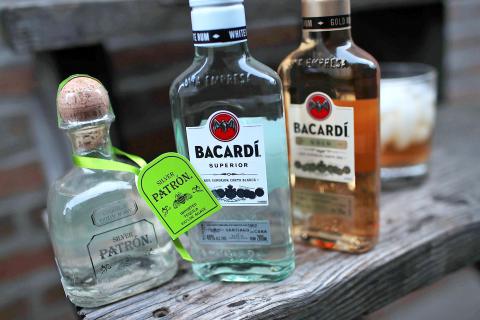
Photo: AFP
The executive, who is poised to take the reins on April 1, plans to boost sales by getting overseas consumers to trade up from local spirits.
Bermuda-based Bacardi, which already sells Cazadores tequila, accounted for 5.8 percent of the total alcoholic beverage market last year, research firm IRI’s data showed.
“Adding Patron to the Bacardi portfolio creates a tremendous opportunity for the brand outside of the United States, as Bacardi’s international distribution network will help grow Patron around the world, increasing scale in the US and globally,” Madhavan said in a statement.
Bacardi is to tap debt markets to help finance the deal, according to a person familiar with the deal.
Bacardi acquired an initial 30 percent stake in Patron for less than US$500 million in 2008, said the person, who asked not to be named because the details are private.
Agave-based beverages, which include tequila and mezcal, have seen sales accelerate over the past decade.
Super-premium tequila grew eightfold between 2002 and 2016, the Distilled Spirits Council trade group said.
That is attractive compared with other spirits segments, such as rum and vodka: rum volumes declined by 0.2 percent in the same period, and vodka gained 2.4 percent.
The combined company could be the top spirits maker in the super-premium segment in the US, IWSR data showed.
Patron, an early pioneer in the market for upscale tequila, was founded by John Paul DeJoria and Martin Crowley in 1989.
DeJoria — who was once homeless, according to a biography on Patron’s Web site — initially found success in hair care company John Paul Mitchell Systems before helping to start Patron, where he now serves as chairman.
The company succeeded in marketing the spirit to a more sophisticated clientele and broadening its market base.
The deal with Bacardi helps cement tequila’s status as a key product in the global market for spirits.
As sales in the category surged, Diageo PLC last year paid US$1 billion to acquire George Clooney’s start-up Casamigos.
Pernod Ricard SA also boosted its tequila portfolio by acquiring the Del Maguey brand in June last year.
Becle SAB, the producer of Jose Cuervo tequila, rode the wave by raising US$790 million in an initial public offering a year ago.

The domestic unit of the Chinese-owned, Dutch-headquartered chipmaker Nexperia BV will soon be able to produce semiconductors locally within China, according to two company sources. Nexperia is at the center of a global tug-of-war over critical semiconductor technology, with a Dutch court in February ordering a probe into alleged mismanagement at the company. The geopolitical tussle has disrupted supply chains, with some carmakers reportedly forced to cut production due to chip shortages. Local production would allow Nexperia’s domestic arm, Nexperia Semiconductors (China) Ltd (安世半導體中國), to bypass restrictions in place since October on the supply of silicon wafers — etched with tiny components to

Singapore-based ride-hailing and delivery giant Grab Holdings Ltd has applied for regulatory approval to acquire the Taiwan operations of Germany-based Delivery Hero SE's Foodpanda in a deal valued at about US$600 million. Grab submitted the filing to the Fair Trade Commission on Friday last week, with the transaction subject to regulatory review and approval, the company said in a statement yesterday. Its independent governance structure would help foster a healthy and competitive market in Taiwan if the deal is approved, Grab said. Grab, which is listed on the NASDAQ, said in the filing that US-based Uber Technologies Inc holds about 13 percent of

Taiwan Semiconductor Manufacturing Co (TSMC, 台積電) yesterday received government approval to deploy its advanced 3-nanometer (3nm) process at its second fab currently under construction in Japan, the Ministry of Economic Affairs said in a news release. The ministry green-lit the plan for the facility in Kumamoto, which is scheduled to start installing equipment and come online in 2028 with a monthly production capacity of 15,000 12-inch wafers, the ministry said. The Department of Investment Review in June 2024 authorized a US$5.26 billion investment for the facility, slated to manufacture 6- to 12nm chips, significantly less advanced than 3nm process. At a meeting with
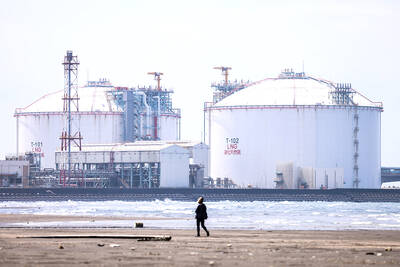
Taiwan is open to joining a global liquefied natural gas (LNG) program if one is created, but on the condition that countries provide delivery even in a scenario where there is a conflict with China, an energy department official said yesterday. While Taiwan’s priority is to have enough LNG at home, the nation is open to exploring potential strategic reserves in other countries such as Japan or South Korea, Energy Administration Deputy Director-General Chen Chung-hsien (陳崇憲) said. While the LNG market does not have a global reserve for emergencies like that of oil, the concept has been raised a few times —


 RSS
RSS