


Leofoo Tourism Group (六福旅遊集團) yesterday held a ground-breaking ceremony for a new hotel in Tainan as it seeks to expand into the south, unfazed by the lukewarm market.
The new facility, part of a development project owned by Nan Shan Life Insurance Co (南山人壽) in Tainan, is to have 350 rooms under the Leofoo Resort (六福莊) brand, intended to tap into the city-resort market, group chief operating officer Lulu Chuang (莊豐如) said.
“With total hotel revenue of NT$6.47 billion [US$211.49 million] last year, the market in Tainan has expanded for the past six years and appears to have more room for growth,” Chuang said.
The hotel is expected to start operations in 2020, after Nan Shan completes construction of the mixed-use Nan Shan Tainan Plaza in 2019.
The life insurer has increased its stakes in real-estate properties across Taiwan to generate rental income and better utilize idle funds, company officials said, adding that a total of eight large development projects are under way, including the Nan Shan Taipei Plaza at Taipei World Trade Center Exhibition Hall 2.
The Tainan project is on a 1.69 hectare plot on the intersection of Simen and Lisian roads, near two night markets, Nan Shan president Ernest Chan (陳潤權) said.
The new building is to have 12 floors above ground and two basement floors covering a total floorspace of 20,700 ping (68,430m2), part of which would be reserved for office space, Chan said.
The complex is intended to revive the neighborhood, create new job opportunities and boost tourism revenue by taking advantage of Leofoo Group’s experience in the industry, he said.
Leofoo Group operates the Westin Taipei, the Courtyard by Marriott Taipei, the Leofoo Hotel, the Leofoo Resort, the Leofoo Village Theme Park, the Leofoo Water Park and other entertainment facilities.
The Leofoo Resort Tainan is to be the largest five-star hotel in the southern city, Chuang said.
The facility is targeting wealthy travelers who want to explore Tainan’s history, culture, urban scenery and food in a leisurely fashion, she said.
The group has been able to expand despite a sharp decline in the number of Chinese tourists because it has a diversified portfolio, Chuang said.
Taiwan received 3.46 million tourists in the first five months of the year, a 7.1 percent decline from the same period last year, according to tourism bureau statistics.
That depressed hotel revenues nationwide 5.6 percent and their food and beverage sales by 1.8 percent over the period, government data show.
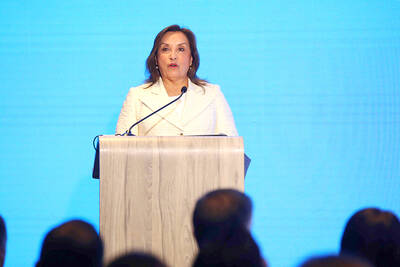
With an approval rating of just two percent, Peruvian President Dina Boluarte might be the world’s most unpopular leader, according to pollsters. Protests greeted her rise to power 29 months ago, and have marked her entire term — joined by assorted scandals, investigations, controversies and a surge in gang violence. The 63-year-old is the target of a dozen probes, including for her alleged failure to declare gifts of luxury jewels and watches, a scandal inevitably dubbed “Rolexgate.” She is also under the microscope for a two-week undeclared absence for nose surgery — which she insists was medical, not cosmetic — and is

CAUTIOUS RECOVERY: While the manufacturing sector returned to growth amid the US-China trade truce, firms remain wary as uncertainty clouds the outlook, the CIER said The local manufacturing sector returned to expansion last month, as the official purchasing managers’ index (PMI) rose 2.1 points to 51.0, driven by a temporary easing in US-China trade tensions, the Chung-Hua Institution for Economic Research (CIER, 中華經濟研究院) said yesterday. The PMI gauges the health of the manufacturing industry, with readings above 50 indicating expansion and those below 50 signaling contraction. “Firms are not as pessimistic as they were in April, but they remain far from optimistic,” CIER president Lien Hsien-ming (連賢明) said at a news conference. The full impact of US tariff decisions is unlikely to become clear until later this month
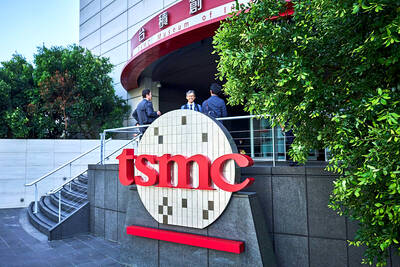
GROWING CONCERN: Some senior Trump administration officials opposed the UAE expansion over fears that another TSMC project could jeopardize its US investment Taiwan Semiconductor Manufacturing Co (TSMC, 台積電) is evaluating building an advanced production facility in the United Arab Emirates (UAE) and has discussed the possibility with officials in US President Donald Trump’s administration, people familiar with the matter said, in a potentially major bet on the Middle East that would only come to fruition with Washington’s approval. The company has had multiple meetings in the past few months with US Special Envoy to the Middle East Steve Witkoff and officials from MGX, an influential investment vehicle overseen by the UAE president’s brother, the people said. The conversations are a continuation of talks that
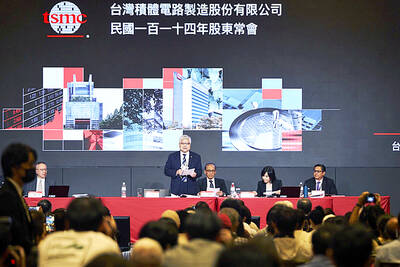
CHIP DUTIES: TSMC said it voiced its concerns to Washington about tariffs, telling the US commerce department that it wants ‘fair treatment’ to protect its competitiveness Taiwan Semiconductor Manufacturing Co (TSMC, 台積電) yesterday reiterated robust business prospects for this year as strong artificial intelligence (AI) chip demand from Nvidia Corp and other customers would absorb the impacts of US tariffs. “The impact of tariffs would be indirect, as the custom tax is the importers’ responsibility, not the exporters,” TSMC chairman and chief executive officer C.C. Wei (魏哲家) said at the chipmaker’s annual shareholders’ meeting in Hsinchu City. TSMC’s business could be affected if people become reluctant to buy electronics due to inflated prices, Wei said. In addition, the chipmaker has voiced its concern to the US Department of Commerce


 RSS
RSS