


China Development Financial Holding Corp’s (CDFHC, 中華開發金控) and China Life Insurance Co (中國人壽) shares rose yesterday following a major acquisition deal announced on Friday last week.
CDFHC had announced plans to acquire a 25.33 percent stake in Taipei-based China Life Insurance at an estimated 17.3 percent premium in a NT$30.8 billion (US$1 billion) tender offer.
CDFHC shares rose 2.16 percent to NT$8.51, while China Life Insurance gained 8.21 percent to NT$32.95 in Taipei trading yesterday.
The acquisition would add a life insurance arm to CDFHC, which includes KGI Securities (凱基證券) and KGI Bank (凱基銀行), CDFHC acting president Hsu Daw-yi (許道義) said in a media briefing at the Taiwan Stock Exchange on Friday.
As of the end of the first quarter, China Life Insurance ranked fifth among the nation’s life insurers.
CDFHC controls a 9.6 percent stake in China Life Insurance and the acquisition would increase its stake to about 35 percent, meeting the requirement for CDFHC to file consolidated financial reports that include part of the insurers’ earnings.
Upon the completion of the acquisition, CDFHC would see its total net asset value rise from NT$165 billion to NT$217.9 billion, raising the company’s ranking among its peers in terms of size, Hsu said.
CDFHC has adequate cash reserves and the company would limit the use of leverage to prevent share dilution for its investors, Hsu said.
CDFHC has been sitting on NT$20 billion in cash reserves as it wound down China Development Industrial Bank (CDIB, 中華開發工業銀行), the nation’s last industrial bank focusing on direct investments, as the business model soon lost favor to more viable commercial banks.
Hsu said that company would work with the life insurer in private equity and venture capital investments, which are the specialties of CDIB Capital Group (中華開發資本), the new company reorganized from CDIB.
Meanwhile, CDFHC yesterday said that its net income was NT$1.03 billion, compared with NT$57 million a year ago.
Aggregate earnings in the first half were NT$3.54 billion, gaining 74 percent annually. Earnings per share were NT$0.24 in the period.
China Life Insurance reported net income of NT$1.71 billion last month, bringing cumulative net income in the first half to NT$2.34. Earnings per share were NT$0.67 in the first half.
The insurer has taken heavy foreign-exchange losses due to a stronger New Taiwan dollar. Its net income in the first six months last year was NT$5.92 billion. Earnings per share were NT$1.77 in the period.
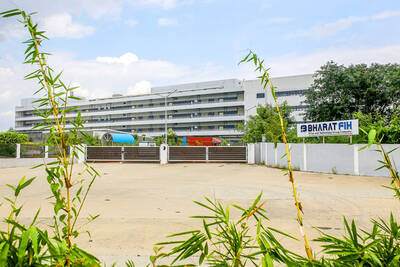
SETBACK: Apple’s India iPhone push has been disrupted after Foxconn recalled hundreds of Chinese engineers, amid Beijing’s attempts to curb tech transfers Apple Inc assembly partner Hon Hai Precision Industry Co (鴻海精密), also known internationally as Foxconn Technology Group (富士康科技集團), has recalled about 300 Chinese engineers from a factory in India, the latest setback for the iPhone maker’s push to rapidly expand in the country. The extraction of Chinese workers from the factory of Yuzhan Technology (India) Private Ltd, a Hon Hai component unit, in southern Tamil Nadu state, is the second such move in a few months. The company has started flying in Taiwanese engineers to replace staff leaving, people familiar with the matter said, asking not to be named, as the
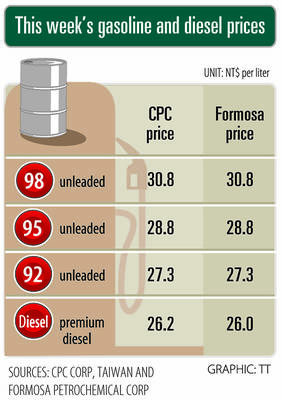
The prices of gasoline and diesel at domestic fuel stations are to rise NT$0.1 and NT$0.4 per liter this week respectively, after international crude oil prices rose last week, CPC Corp, Taiwan (台灣中油) and Formosa Petrochemical Corp (台塑石化) announced yesterday. Effective today, gasoline prices at CPC and Formosa stations are to rise to NT$27.3, NT$28.8 and NT$30.8 per liter for 92, 95 and 98-octane unleaded gasoline respectively, the companies said in separate statements. The price of premium diesel is to rise to NT$26.2 per liter at CPC stations and NT$26 at Formosa pumps, they said. The announcements came after international crude oil prices
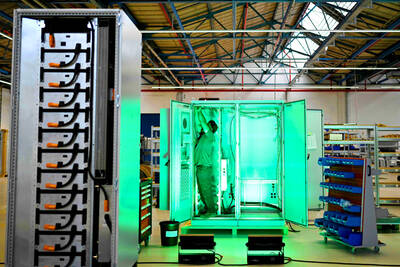
A German company is putting used electric vehicle batteries to new use by stacking them into fridge-size units that homes and businesses can use to store their excess solar and wind energy. This week, the company Voltfang — which means “catching volts” — opened its first industrial site in Aachen, Germany, near the Belgian and Dutch borders. With about 100 staff, Voltfang says it is the biggest facility of its kind in Europe in the budding sector of refurbishing lithium-ion batteries. Its CEO David Oudsandji hopes it would help Europe’s biggest economy ween itself off fossil fuels and increasingly rely on climate-friendly renewables. While
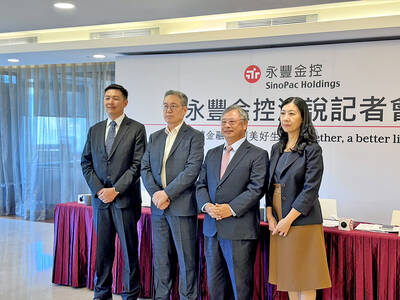
SinoPac Financial Holdings Co (永豐金控) is weighing whether to add a life insurance business to its portfolio, but would tread cautiously after completing three acquisitions in quick succession, president Stanley Chu (朱士廷) said yesterday. “We are carefully considering whether life insurance should play a role in SinoPac’s business map,” Chu told reporters ahead of an earnings conference. “Our priority is to ensure the success of the deals we have already made, even though we are tracking some possible targets.” Local media have reported that Mercuries Life Insurance Co (三商美邦人壽), which is seeking buyers amid financial strains, has invited three financial


 RSS
RSS